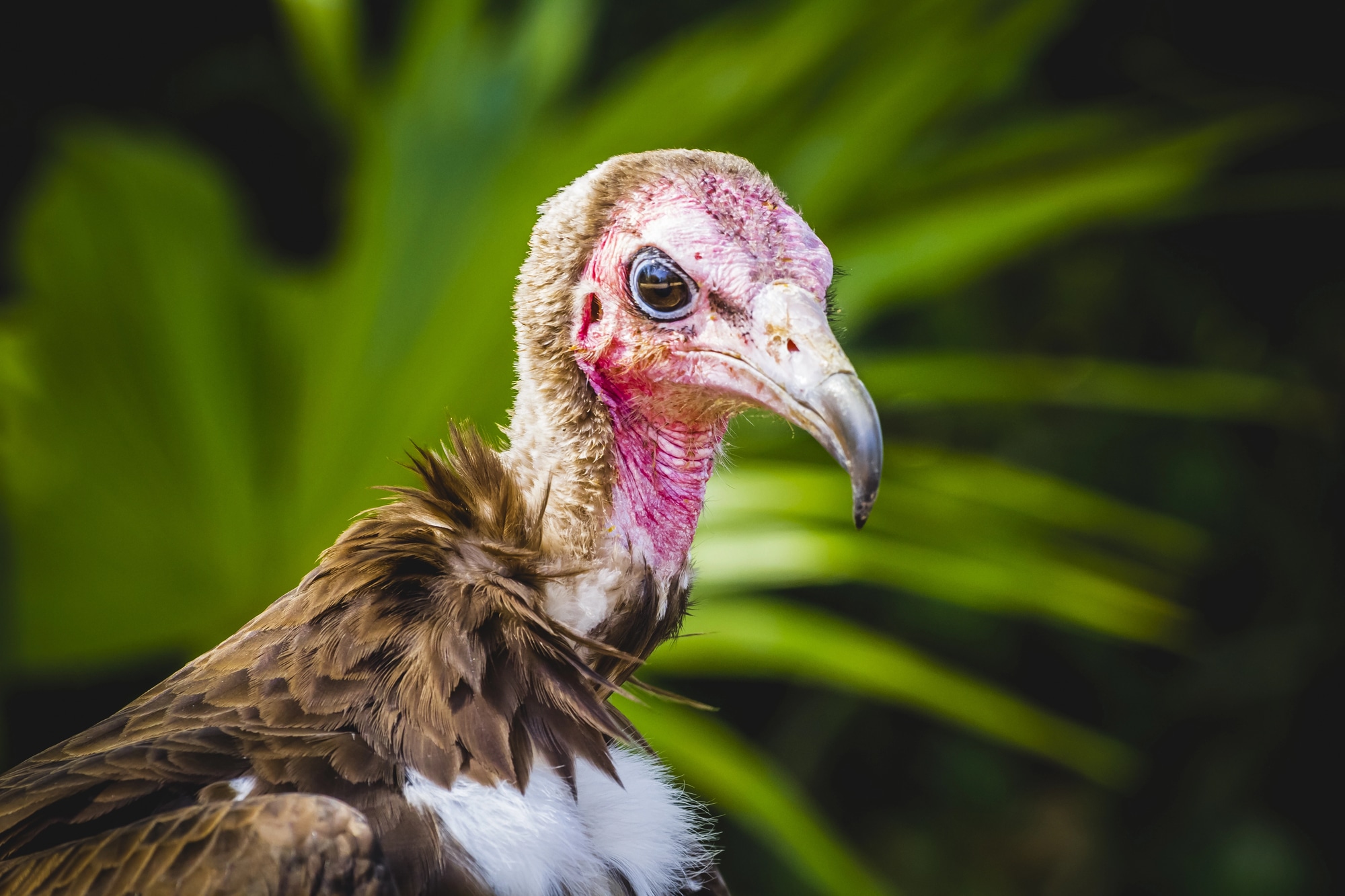
In the early 80s, India hosted more than 40 million vultures. By the mid-90s, almost all of them were dead, and no one could explain why.
Why are vultures so important anyway?
Many species have become extinct over the centuries, and vultures, unlike parrots and cockatoos, aren’t the most likable birds anyway. With their beady eyes, beaky faces and a fondness for feasting on dead meat, they seem to have an evil aura. And, maybe, at first glance, the extinction of vultures may appear to be a problem for nature conservationists rather than the average person. But despite appearances, vultures play a far greater role than just good villains in cartoons.
You see, life may seem linear. We are born, we grow old and older still, and then we die. But if we pay attention to the grander scheme of things, we notice a circle to life. Herbivores eat plants before they are, in turn, eaten by predators like lions. Once these lions have finished eating, vultures swoop in to clean up. With acids in their stomachs that can dissolve germs that cause anthrax, botulism and cholera, these vultures prevent disease while helping recycle nutrients back into the soil. Plants grow again, other herbivores eat this grass, and the cycle continues.

But this circle of life is sensitive, and even the tiniest disruption can be catastrophic, and this is precisely what happened in India in the mid-90s. While Indian farmers breed cows for other purposes, like their milk, a majority of the Indian population is vegetarian and does not consume beef, which means their cattle mostly die of natural causes . That is approximately 65 million carcasses a year. For their disposal, these farmers have developed an unspoken relationship with vultures: fresh carcasses in exchange for quick disposal. When vultures suddenly began to die in the 90s at an unnatural rate, these carcasses began to rot in the open. While dogs and rats fed on this meat, their stomachs could not kill germs like a vulture’s could. These animals became carriers, spreading it to other animals and humans. Water sources became contaminated. The population of flies and rabid dogs also grew, causing further fatalities. The situation became so dire that between the years 2000 and 2005, an estimated 500,000 people died.

What was killing all the vultures?
Finding the cause of death of these vultures proved to be very difficult, mainly because it is illegal to kill vultures in India, so scientists were limited to autopsies of vultures that were already dead, and in the infamous heat of Indian weather, these bodies decayed faster than average, which meant that researchers had a small window to find and examine their bodies.
Through autopsies, scientists discovered how these birds were dying: by kidney failure. But why? Andrew Cunningham, a scientist at the Zoological Society of London, crossed out probable causes like industrial pollutants, pesticide poisoning and infections.
In 2003, Dr. Lindsay Oaks and his team at The Peregrine Fund finally discovered the cause: Diclofenac. While the drug was a common anti-inflammatory drug, given to livestock to treat inflammation and fever or as a painkiller, it became deadly to vultures who ate the meat of a recently treated animal. So fatal is this drug to vultures that only 1% of infected carcasses are needed to kill 60-90% of vultures annually. Data showed that an average of 10% of carcasses had the drug.
Once the cause became apparent, scientists quickly began to work on developing a safe alternative. This alternative, called Meloxicam, was then tested on vultures in captivity before being introduced to the market. But simply producing an alternative was not enough. Pharmaceutical companies were encouraged to increase their production and reduce Meloxicam’s cost to make it a viable economical replacement for Diclofenac for farmers. Then, in March 2006, the Indian government finally banned the use of Diclofenac in cattle. Other South Asian countries, including Pakistan and Nepal, quickly followed suit.
Meanwhile, sanctuaries began breeding them. Vultures are notoriously difficult to breed in captivity. The hope was to release enough of them into the wild to make a difference.
It was a commendable effort, but it came after a tremendous loss. And the worst part? The cause was manmade, and by far not the only disaster created by our species. Plastic waste is hurting different animals on land and sea, human expansion is making creatures homeless, and global warming is causing damage to the Earth itself. We, individually, may not seem to be capable of much. Yet, we can make a significant impact by reducing our non-biodegradable waste, holding big industries accountable and learning more about the world around us. We must do better than the generations before us. Earth and the survival of all its creatures, including us, depends on it.
References
Copyright @smorescience. All rights reserved. Do not copy, cite, publish, or distribute this content without permission.
SUBSCRIBE TO OUR NEWSLETTER
.......... ..........Subscribe to our mailing list to get updates to your email inbox.
Monthly Newsletter