An animal, in scientific terms, is a multicellular organism that belongs to the Kingdom Animalia. These creatures are characterized by their ability to move voluntarily, consume organic material, breathe oxygen, and reproduce sexually. They are also known to grow from a hollow sphere of cells, the blastula, during embryonic development . From the tiniest insects to the most gigantic whales, animals present a world of diversity.
To be human, on the other hand, is a concept that goes beyond the biological and ventures into the realms of philosophy and culture. Humans have all the basic features of mammals and living beings – much like other animals. But there’s a multitude of traits – such as advanced reasoning, complex language, culture, and the ability to manipulate environments – that set us apart. The question is, are these differences enough to separate us from the animal kingdom, or are we simply a part of it, albeit with a few unique quirks?
Biological similarities between humans and animals
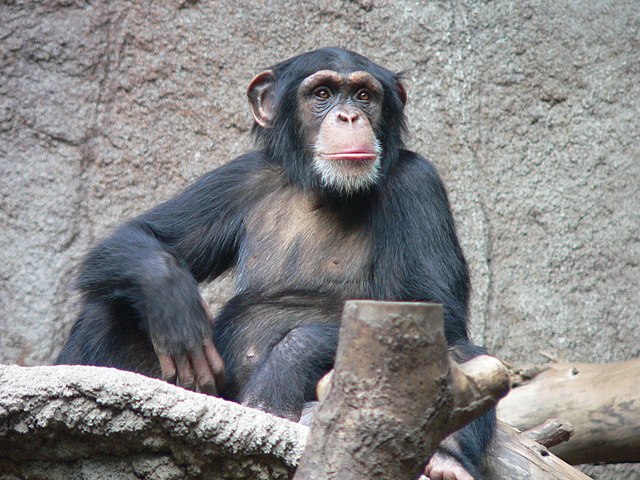
Our genes, the tiny sequences of DNA that act as a blueprint for every living organism, bind us together in the great web of life. It might surprise you to know that a large portion of our DNA is identical to that of many animals. For instance, we share around 98.7% of our genetic code with chimpanzees, our closest non-human relatives. This genetic commonality extends to other species too, proving that we’re all made of the same stuff when you break it down.
The brain, the epicenter of thoughts, emotions, and control of bodily functions, is another commonality between humans and animals. While the size, shape, and complexity of the brain differ across species, the basic function remains the same. Brains manage everything from instinctive behaviors, like hunting for food, to more complex actions such as social interaction and, in humans, abstract thought.
Chimpanzee, Credit: Wikimedia/Thomas Lersch
Cognitive abilities: How we think and learn
We often attribute our dominance on Earth to our superior intelligence and problem-solving skills. But consider this: many animals have displayed exceptional problem-solving abilities. For example, crows have been observed to use tools, such as sticks, to retrieve food from hard-to-reach places, and dolphins can recognize themselves in mirrors – a sign of self-awareness . These behaviors suggest a level of cognitive ability that challenges our exclusive claim to intelligence.
As humans, our rich emotional life is a fundamental part of our identity. But what about animals? Do they experience feelings similar to ours? While it’s impossible to know exactly what an animal feels, studies suggest that many animals display behaviors indicative of emotions. Joy, fear, anger, and love seem to be not only human experiences but are shared across the animal kingdom.
Societal structure: The ways we live together
Our human societies revolve around familial relationships and bonds, and we’re not alone in this regard. Many animals, including elephants, wolves, and dolphins, form intricate social structures based around familial units. These animals demonstrate behaviors such as communal child-rearing, cooperation, and displays of affection, reminding us of our own families.
Communication is another shared trait between humans and animals. Although human language is uniquely complex, animals have their own ways of communicating. Honeybees perform intricate ‘waggle dances’ to inform their hive mates about the location of food sources, while canines use a combination of body language, facial expression, and vocalization to express a range of intentions and emotions. Even in human communication, non-verbal cues like facial expressions and body language play a vital role, indicating that words are not the only way to get a message across.
Elephants, Credit: Wikimedia/diego_cue
Conclusion: Embracing our animal heritage
Understanding and accepting our biological and behavioral similarities with other animals can lead us down a path of compassion. It can remind us that we are not isolated entities but are linked to the vast web of life, sharing our planet with millions of other species. It isn’t alone at the top, but a great position to help the ones who needs a little compassion fron our side.
Being part of the animal kingdom doesn’t diminish our humanity; rather, it enriches it. We are part of the diverse facets of life on Earth. And that is truly a reason to embrace wildlife
Glossary
Organism: An individual animal, plant, or single-celled life form.
Embryonic development: The process by which the embryo forms and develops.
DNA: Deoxyribonucleic acid, a self-replicating material present in nearly all living organisms as the main constituent of chromosomes. It is the carrier of genetic information.
Genetic code: The nucleotide triplets of DNA and RNA molecules that carry genetic information in living cells.
Cognitive ability: The mental action or process of acquiring knowledge and understanding through thought, experience, and the senses.
Self-awareness: Conscious knowledge of one’s own character, feelings, motives, and desires.
Non-verbal communication: The transmission of information or thoughts via body language, eye contact, or other nonverbal means.