From floating duckweeds absorbing heavy metals to the popular aquarium plant Bacopa caroliniana with antimicrobial properties, the spectrum of plants that grow in water only is as fascinating as it is diverse. Let’s explore the various aquatic habits, adaptations that act as “survival kits” in the water plant lifestyles and some popular hydrophytes often planted in aquariums.
Habitat Diversity of Water Plants
Plants that live in water can be submerged, floating on the surface without anchorage, emergent, or anchored in wetland environments. In these varied habitats, water plants flourish and create a breathtaking biodiversity waiting to be explored.
Submerged species like hornwort (Ceratophyllum demersum) and eelgrass (Zostera marina) grow entirely underwater. Emergent hydrophytes like cattails (Typha) have portions above water rooted in submerged soil. Wetland plants, such as bulrushes (Schoenoplectus) and sedges (Carex), are rooted in saturated soils at water edges.
Pistia stratiotes (Water Lettuce), Credit: Wikimedia Commons/ Kristjan
The Science Behind Hydrophytes
Hydrophytic plants, or aquatic plants, are masters of adaptation. They have evolved a range of structural and physiological adaptations that help them survive in watery habitats.
Plants that grow in water only adapt to aquatic life with reduced protective, supporting, and conducting tissues. Roots are poorly developed (since water is abundant and they don’t need to make extra effort to obtain it) and primarily take up the function of anchorage, while specialized air chambers aid internal aeration for optimal survival underwater.
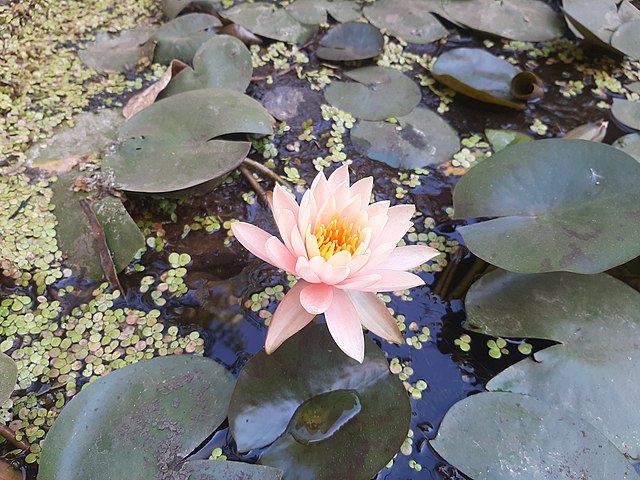
Water Lily, Credit: Wikimedia Commons/Dhondudagde
A key structural adaptation in floating water plants is the presence of aerenchyma, a tissue with air-filled spaces, which not only provides buoyancy to hydrophytes but also ensures the circulation of gases necessary for survival in waterlogged environments. For example, the water hyacinth (Eichhornia crassipes) and the water lily (Nymphaea spp.) have prominent aerenchyma.
Lemna minor (Common Duckweed), Credit: Wikimedia Commons/Mokkie
Physiologically, hydrophytes excel in water regulation and nutrient management. An example is the duckweed (Lemna spp.), known for its nutrient storage mechanisms. Duckweed shows an exceptional ability to accumulate large amounts of nutrients from its surroundings, making it a prime candidate for phytoremediation of wastewater. Further, gas exchange in aquatic plants occurs via surface cells, and reliance on asexual reproduction is seen, especially in deep-water habitats.
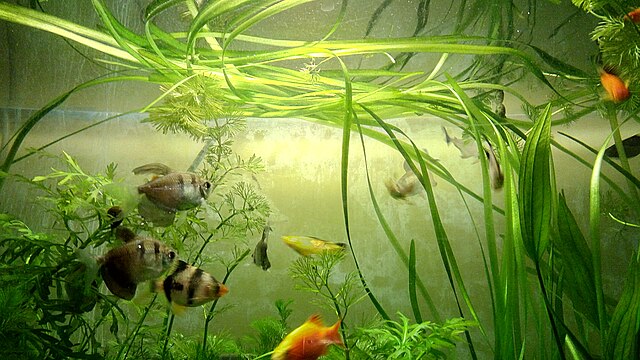
Fish Aquarium with Vallisneria, Credit: Wikimedia Commons/Damitr
Some Popular Water Plants: Aquarium Friendly and Easy to Grow
Since we are already on the quest to explore the science of plants that grow only in water, why not learn more about diverse aquatic plants that can be easily spotted in beautiful aquariums? Here is a curated list of 5 popular, easy-to-grow water plants that are the favorite of aquarists.
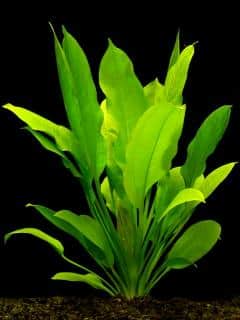
Amazon Sword plants have long, broad leaves that resemble swords, hence their name. This classic and popular aquatic species typically has a lush green coloration and can grow to impressive sizes (reaching almost 20 inches in height) under optimal conditions, giving a “forest-like effect” in an aquarium.
Amazon Swords are popular choices for freshwater aquariums due to their robust growth and ability to provide shelter for fish. They are also known for their role in oxygenating the water and absorbing nitrate, creating a healthy and balanced aquatic environment.
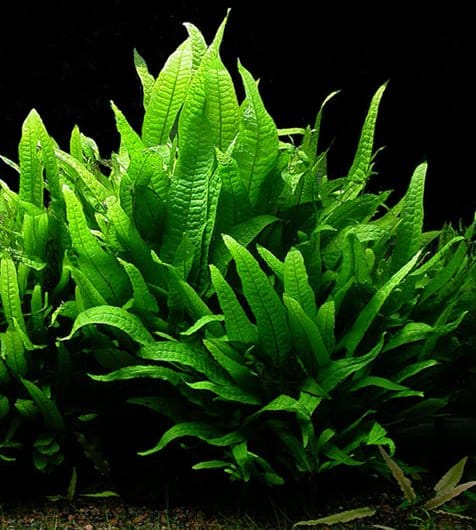
Java Fern, one of only a few ferns capable of growing underwater, Credit: Wikimedia Commons/Tsunamicarlos
2. Java Fern
Java Ferns are known for their distinctive, leathery leaves that are often serrated or lobed. They generally have a dark green coloration and grow attached to rocks or driftwood in aquatic habitats.
Often labelled as the best-selling aquarium plants, Java Ferns are praised for their hardiness and adaptability to various water conditions, making them ideal for beginner aquarists. They can also tolerate low light levels and do not require nutrient substrate for growth. Even without nutrition, the plant can still grow, just a little slower.
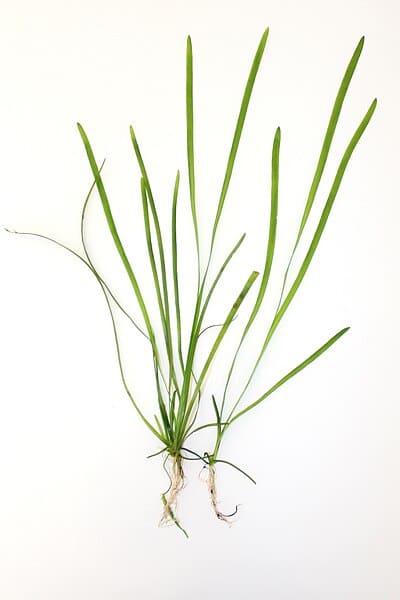
Vallisneria plants, also known as eelgrass or tape grass, boasts long, bright green ribbon-like leaves that grow from a central rosette. They can grow to considerable lengths in aquariums or natural water bodies. In Vallisneria, the peduncle (the stalk bearing a flower or fruit) shows a unique spiral motion called circumnutation which is important for water pollination and fruit anchoring. Once the flowers are fertilized, the flower stalk pulls the fruit underwater by coiling downwards.
Anubias barteri var. nana in the Botanischer Garten Halle, Credit: Wikimedia Commons/Krzysztof Ziarnek, Kenraiz
4. Anubias
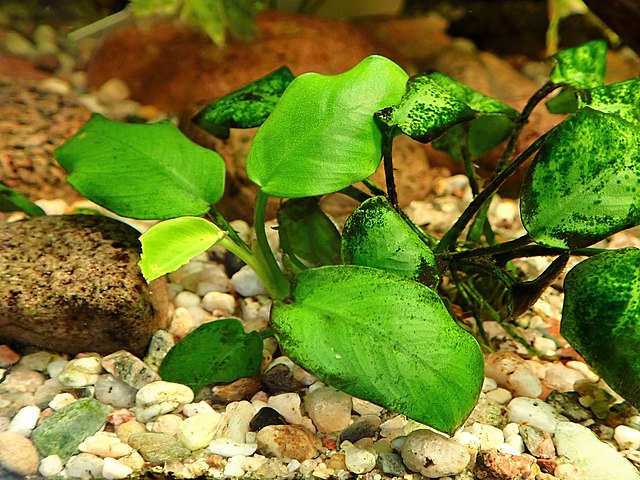
Anubias plants can be seen with broad and thick green leaves that grow from a rhizome. The leaves can vary in size depending on the species. You can find them growing in the shadiest of places such as under a larger plant or a rock, which means that they can thrive even in low lit aquarium and under a wide range of water conditions.
Anubias plants are known for their tolerance to low light levels and CO2-deficient environments, making them suitable for low-tech aquarium setups. They also have a slow growth rate (no need for frequent trimming), making them low-maintenance additions to aquariums.
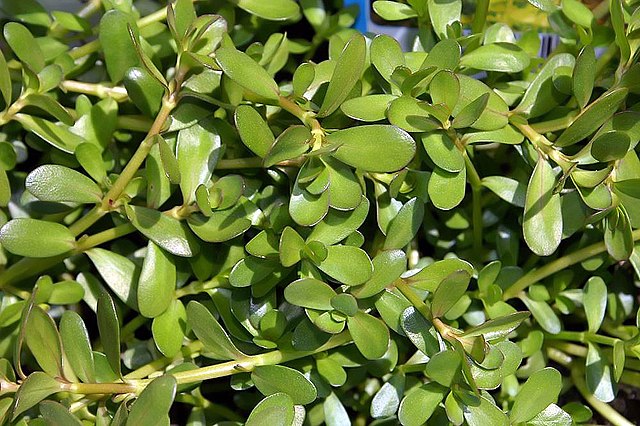
Bacopa caroliniana, also known as water hyssop, has small, rounded leaves that grow in opposite pairs along trailing stems. It typically forms dense mats in aquatic habitats. It is interesting to note that B. caroliniana ethanol extract shows antimicrobial effects against various pathogens, especially Staphylococcus aureus and Pseudomonas aeruginosa.
Bacopa caroliniana is valued for its ornamental appearance and ability to grow in a wide range of water conditions. It is often used as a background or midground plant in aquariums, providing contrast and visual interest.
References
Mahmood, Q., Siddiqi, M. R., Islam, E.u, Azim, M. R., Zheng, P., & Hayat, Y. (2005). Anatomical studies on water hyacinth (Eichhornia crassipes (Mart.) Solms) under the influence of textile wastewater. Journal of Zhejiang University. Science. B, 6(10), 991–998. https://doi.org/10.1631/jzus.2005.B0991
Sree, K. S., & Appenroth, K. J. (2024). Duckweeds: Bioremediation of surface wastewater and biorefinery. In Bioremediation and Bioeconomy (pp. 311-335). Elsevier.
Eckert, C. G., Dorken, M. E., & Barrett, S. C. (2016). Ecological and evolutionary consequences of sexual and clonal reproduction in aquatic plants. Aquatic Botany, 135, 46-61.
Kosuge, K., Iida, S., Katou, K., & Mimura, T. (2013). Circumnutation on the water surface: female flowers of Vallisneria. Scientific reports, 3, 1133. https://doi.org/10.1038/srep01133
Dulger, Basaran, and Nurcihan Hacioglu. “Antimicrobial activity of Bacopa caroliniana.” Asian Journal of Chemistry 21.5 (2009): 4077.
Copyright @smorescience. All rights reserved. Do not copy, cite, publish, or distribute this content without permission.
Join 20,000+ parents and educators
To get the FREE science newsletter in your inbox!
SUBSCRIBE TO OUR NEWSLETTER
.......... ..........
Subscribe to our mailing list to get updates to your email inbox.