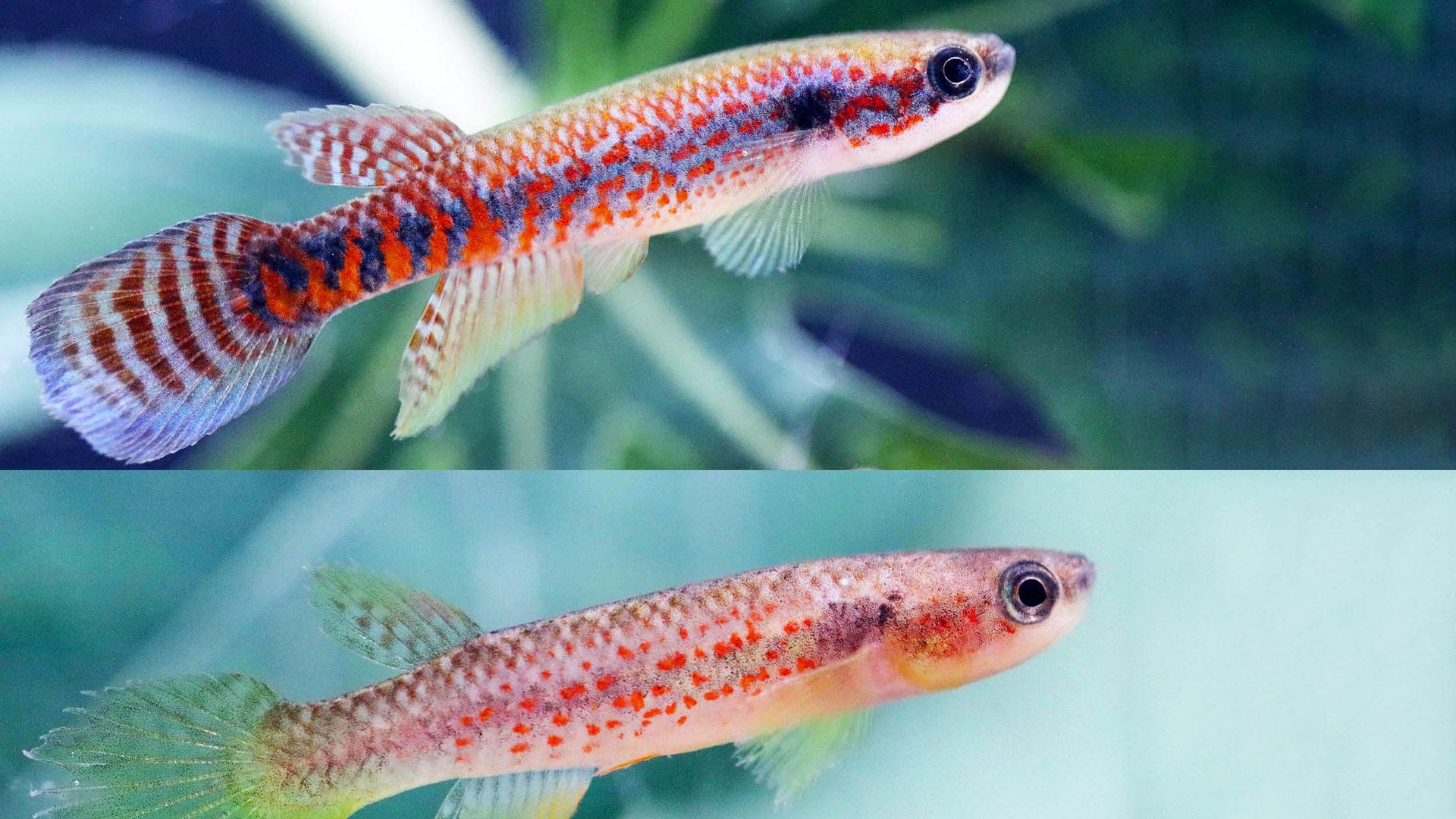
Scientists have discovered a tiny fish with bright orange markings in Brazil’s Amazon rainforest. Named Laimosemion laranja, it measures less than 3 centimeters long. But there is a worrying discovery: scientists have found it at only three locations, where its habitat faces serious threats.
The researchers recommend that this little fish be classified as Endangered. Its discovery is another reminder of how much wildlife remains hidden in the Amazon.
Meet the Tiny Orange Fish
The new fish belongs to a group of freshwater fish called killifish. It was found in the Rio Cajari region of Amapá, in northern Brazil.
Male fish have rows of bright orange spots along the front part of their bodies. Near the tail, these spots form striking patterns shaped like tiny arrows.
The fish has a pale grey body, making its orange markings stand out.
Its scientific name has an interesting meaning. The Portuguese word laranja means orange, but it also refers to the fruit. The name also honors Laranjal do Jari, the Brazilian municipality where the fish was found.
How Did Scientists Know It Was a New Species?
Finding a colorful fish does not automatically mean scientists have discovered a new species. Researchers needed to compare it carefully with related fish.
They studied the fish’s body shape, scales, fins and skeleton. They also examined its DNA, which carries genetic information.
One important test examined a section of mitochondrial DNA called COI. This helped scientists compare the fish with closely related species.
The genetic results showed a difference of about 5.3% from its closest known relatives in the gene region studied. Combined with its physical features, this helped confirm that it was a distinct species.
The research was published in the scientific journal Zoosystematics and Evolution in August 2026.
A Beautiful Fish With a Serious Problem
The researchers found the fish in just three forest locations. These small water pools and streams are its only known homes so far.
Unfortunately, these habitats are already under pressure.
- Deforestation: Cutting and burning trees can destroy the fish’s forest habitat.
- Mining: Mining activities can send soil and sediment into nearby water.
- Plastic pollution: Plastic waste can damage small wetlands and streams.
- Urban expansion: Growing towns can reduce natural habitats.
The researchers calculated that the fish’s known geographic range covers approximately 25 square kilometers.
Based on its restricted range and declining habitat, they recommended that it be classified as Endangered under the International Union for Conservation of Nature (IUCN) criteria.
This is a scientific recommendation, not confirmation that an official IUCN Red List assessment has already been completed.
Why This Discovery Matters
The Amazon is home to an extraordinary variety of plants and animals. Yet many small freshwater fish receive less scientific attention than larger, commercially important species.
Discoveries like this show why protecting small streams, pools and wetlands matters.
A habitat may look like an ordinary patch of water. But it could be home to species found nowhere else.
The researchers have also recommended expanding the nearby Rio Cajari Extractive Reserve to help protect the fish’s habitat.
What Scientists Still Don’t Know
There is much more to learn about Laimosemion laranja.
Scientists do not yet know its full population size or whether undiscovered populations exist elsewhere.
They also have not established whether this particular species has an annual life cycle. Some related killifish can survive seasonal drying through eggs that pause development, but that ability should not automatically be assumed for this newly described fish.
Future research could help answer these questions and guide conservation efforts.
For now, this tiny orange fish has given scientists a big reason to look more closely at the hidden wildlife of the Amazon.
Test Your Knowledge!
How well did you read the story? Answer these five questions to find out!
Learn More
Explore the original scientific research behind this discovery:
A New Killifish of the Genus Laimosemion from Rio Cajari in the Brazilian Amazon – Zoosystematics and Evolution (2026)
Quiz Answers and Explanations
- Answer: A – Its orange color and the town where it was found. The name refers to the fish’s orange markings and Laranjal do Jari, the municipality where it was found.
- Answer: B – By comparing its body features and DNA with related fish. Researchers examined its physical features and compared its mitochondrial DNA with related fish.
- Answer: B – It is found in three known locations with declining habitat. The fish has a very restricted known range, and its habitat is under pressure.
- Answers: A, B and C – Deforestation, mining sediment and plastic pollution. These human activities threaten the small streams and pools where the fish lives.
- Answer: False. Some related killifish have dormant eggs, but scientists have not confirmed this ability in the newly discovered species.