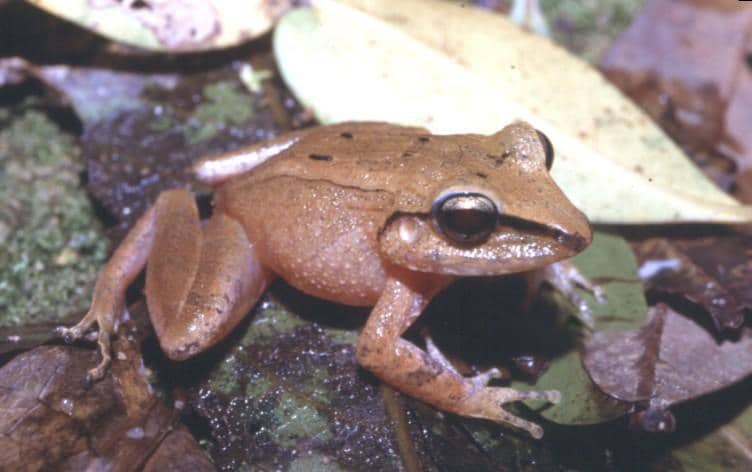
When frogs began to vanish from a forest in Brazil nearly 50 years ago, no one knew why. Now biologist Jack Boyette and his team have found a strong clue on the skin of frogs kept in a museum. Their study links the local die-off to a strain of fungus that has killed frogs around the world.
Five species seemed to vanish
From 1979 to 1982, frog numbers fell at the Boracéia Biological Station in Brazil’s Atlantic Forest. Six species dropped sharply in number, and five others seemed to vanish from the site. Yet many other kinds of frogs held steady in the same forest.
The team wanted to know if the fungus had lived there for years or if a new strain had arrived around the time of the die-off. To find out, they turned to the Smithsonian’s National Museum of Natural History. It held frogs from the forest that scientists had collected both before and after the decline.
The clue on the frogs’ skin
The team swabbed the skin of 327 museum frogs to look for DNA from a chytrid fungus called Bd. Frogs take up water and salts through their skin. A severe Bd infection can disrupt that balance and even stop a frog’s heart.
A swab could pick up bits of fungus floating in the jar, so the team rinsed each frog first. They also tested the liquid from the jars and looked at thin slices of skin under a microscope.
The tests found no trace of Bd in 230 frogs collected before the decline. Of the 97 frogs collected in the 1980s, 57 tested positive. In the first set of frogs collected after the decline, all the fungal DNA the team could identify by strain pointed to the form linked to frog losses around the world.
The frogs that stayed held another clue
Here’s the strange part. In the 1980s samples, the fungus turned up in 34 of 42 frogs from species whose numbers held steady. It turned up in none of the 15 frogs tested from species known to have declined. Why would the fungus show up most often in frogs from species that seemed to be doing fine?
Part of the answer may lie in which frogs were still around to collect. Several hard-hit species bred in streams, where frogs could come into contact with the fungus. The team had no specimens from those species in the later samples.
The frogs they did have from declining species bred on land. Those frogs may have had fewer chances to pick up the fungus. Some of the frogs from stable species, meanwhile, may have been better able to live with an infection.
Why this discovery matters
A frog kept in a jar can help answer questions that no one thought to ask when it was collected. Here, having frogs from both sides of the die-off let the team see when the fungus showed up in the record. Having samples from several species also mattered. If the team had tested only the species known to have declined, their DNA tests would have missed the fungus in the old samples.
What scientists still don’t know
The museum record has a gap from 1978 through 1982, so the team could not say just when Bd arrived. And the fungus is still there. About three in ten swabs from frogs sampled at the station between 2022 and 2024 tested positive. How some frogs manage to live with the fungus remains an open question.