The animal kingdom is filled with remarkable creatures that defy the bounds of age, living for decades or even centuries. This blog explores the top 10 animals with longest lifespan, delving into their habitats, unique behaviors, and what scientific studies have revealed about their secrets to a long life.
10- The Majestic Greenland Shark
Greenland shark in its natural habitat, Credit: Wikimedia/Gdr
Geographic Location: Greenland sharks are found in the North Atlantic and Arctic Oceans, from the deep waters off Greenland to the northeastern Atlantic.
Scientific Insights: The extreme longevity of Greenland sharks has sparked significant scientific interest, particularly in their aging process and resistance to diseases associated with aging, including cancer and degenerative diseases. Therefore, studies related to their biology and genetics can provide relevant information to increase lifespan and improve human health.
Lifespan: Some tortoise species are known to live for more than 150 years. One well-known example is a tortoise named Harriet, which was captured by Charles Darwin, and it was estimated that she had lived for around 175 years. Their slow metabolism, which results in a more gradual accumulation of harmful genetic mutations and toxic biochemical byproducts, and stress-free life on isolated islands contribute to their extended lifespans.
Scientific Insights: Studies of their genetics and environmental adaptations have implications for conservation biology and understanding how life span can be extended in other species.
8- The Mysterious Bowhead Whales
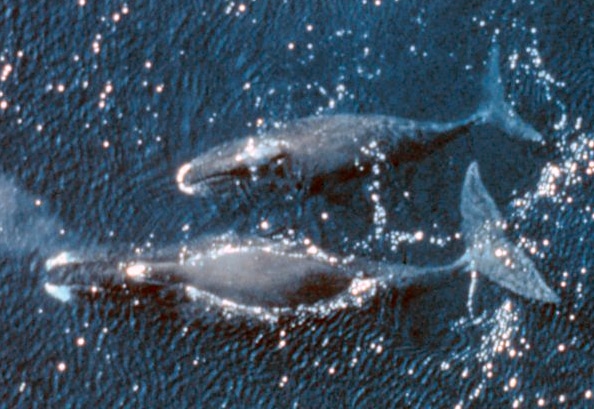
A majestic bowhead whale swimming in the Arctic waters, Credit: Wikimedia/Soerfm
Geographic Location: Bowhead whales are found in the cold waters of the Arctic and sub-Arctic.
Lifespan: Bowhead whales can live over 200 years, making them the longest-lived mammals. These whales are known for their massive skulls, which can break through sea ice to breathe. Their songs, complex and varied, are thought to play a role in communication and mating.
Scientific Insights: Studies related to the genetics and biochemistry of these animals are shedding light on mechanisms of disease resistance and longevity. In fact, it was being described that whales are highly resistant to cancer, a disease strongly related to aging and accumulating damage over time. Therefore, this characteristic makes whales a relevant model to study, providing us with a track to delay aging and avoid associated pathologies, such as cancer.
7- The Enigmatic Ocean Quahog
A close-up of an Ocean Quahog, Credit: Wikimedia/S. Rae
Geographic Location: The ocean quahog (Arctica islandica) is a species of clam found in the North Atlantic Ocean.
Lifespan: Ocean quahogs can live for over 500 years, making them one of the longest-living marine organisms. These bivalves grow very slowly, a factor that contributes to their long lives. Their age can be determined by counting growth rings on their shells, similar to trees.
Scientific Insights: Research on ocean quahogs has determined the effects of climate change on marine life, with their long lifespan and growth rings offering a historical record of ocean conditions. For example, studies demonstrated that the growth rate of these animals significantly increased due to the higher temperatures registered in the last decades.
Geographic Location: The immortal jellyfish (Turritopsis dohrnii) live in the open seas from tropical to Arctic waters.
Lifespan: This tiny jellyfish, also called the “immortal jellyfish,” has a unique approach to cheating death. When faced with stress or injury, it becomes a bloblike cyst, which then develops into a polyp colony, essentially the first stage in jellyfish life. This process can theoretically go on indefinitely, making it a fascinating subject for studies on regeneration and aging.
Scientific Insights: The immortal jellyfish’s ability to reverse its aging process has fascinated scientists and has implications for understanding aging in other organisms. Research into the cellular mechanisms for this reversal may offer groundbreaking insights into aging, regenerative medicine, and potential human longevity therapies.
5- Koi Fish – The Ornamental Marvels
A colorful Koi fish elegantly swimming in a pond, Creddit: Wikimedia/Sarbast.T.Hameed
Geographic Location: Koi fish, originally bred in Japan, are now found in ornamental ponds and water gardens worldwide.
Lifespan: Koi fish are renowned for longevity, with some individuals living over 200 years. These colorful and peaceful fish symbolize strength, prosperity, and good luck in Japanese culture. Their extended lifespans are attributed to their care in captivity, including high-quality diets and meticulously maintained environments.
Scientific Insights: The study of koi fish has contributed to a broader understanding of genetics, selective breeding, and the impact of the environment on longevity. Research into their care and breeding has also offered insights into stress f
4- The Long-lived Birds of Prey
An Andean Condor in flight, Credit: Wikimedia/Thomas Fuhrmann
Geographic Location: Birds of prey, such as eagles and vultures, are found worldwide, inhabiting diverse environments from mountains and forests to grasslands and deserts.
Lifespan: Some birds of prey have been known to live for 60-70 years. These majestic birds have keen eyesight, powerful talons, and beaks, playing a crucial role in their ecosystems as apex predators. Their long lifespans are attributed to their position at the top of the food chain, with few natural predators. Their survival strategies include efficient hunting skills, strong social bonds, and vast territories, which reduce competition and threats.
Scientific Insights: Research on birds of prey has provided insights into the role of predators in ecosystem health, including controlling populations of smaller animals and thus preventing overgrazing and disease spread.
3- The Resilient Lobsters
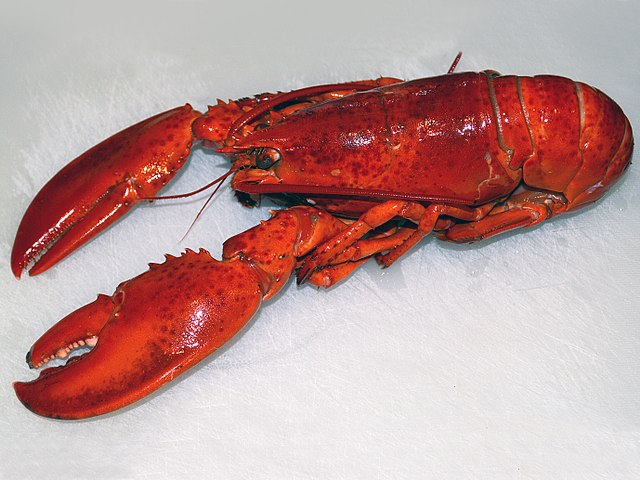
A lobster, highlighting its distinctive claws and shell, Credit: Wikimedia/Sven Kullander
Geographic Location: Lobsters are found in the cold waters of the Atlantic Ocean, from the northeastern United States and Canada to the British Isles and the northernmost parts of the European and African coasts.
Lifespan: Lobsters are fascinating creatures with the potential to live for over 100 years. Unlike most animals, their longevity is partly due to their ability to grow and repair their DNA continually. This characteristic of lobsters provides relevant information for research into cellular regeneration and aging.
Scientific Insights: Scientific interest in lobsters has focused on their telomeres, the protective ends of chromosomes that typically shorten with age in most organisms. In lobsters, telomerase’s enzyme keeps their telomeres from shortening, potentially explaining their long lives and resistance to aging. Understanding this mechanism could have implications for human aging and longevity research.
2- Elephants – The Gentle Giants
A majestic elephant roaming in its natural environment, Credit: Wikimedia/Muhammad Mahdi Karim
Geographic Location: Elephants are found in sub-Saharan Africa, South Asia, and Southeast Asia, with African and Asian elephants being the primary species.
Lifespan: Elephants can live up to 60-70 years in the wild, with their matriarchal society, strong familial bonds, and complex social structures contributing to their longevity. These intelligent animals have remarkable memories, are empathetic, and can recognize themselves in mirrors.
Scientific Insights: Studies on elephants have significantly advanced our understanding of animal intelligence, social behavior, and communication. Research has also focused on their unique biology, such as their resistance to cancer, which could provide crucial insights into longevity and disease resistance in humans.
1- The Ancient Tuataras
A close-up of a Tuatara, emphasizing its ancient reptilian features, Credit: Wikimedia/TimVickers
Geographic Location: Tuataras are endemic to New Zealand, inhabiting the cooler parts of the islands and several protected offshore islands.
Lifespan: Tuataras are often called “living fossils,” mainly because they have remained unchanged for over 150 million years. These reptiles have a slow metabolism and growth rate, contributing to their long lifespan, with some individuals living for over 100 years. They are known for their third “parietal eye” on top of their head, thought to help regulate their circadian rhythms.
Scientific Insights: Research on tuataras has provided valuable insights into vertebrate evolution. Their unique biological features, such as their slow metabolism and temperature-dependent sex determination, offer clues into the survival strategies of ancient reptiles and how these might be applied to modern conservation efforts and understanding climate change’s impact on biodiversity.
Copyright @smorescience. All rights reserved. Do not copy, cite, publish, or distribute this content without permission.
Join 20,000+ parents and educators
To get the FREE science newsletter in your inbox!
SUBSCRIBE TO OUR NEWSLETTER
.......... ..........
Subscribe to our mailing list to get updates to your email inbox.