It’s hard not to be in awe of elephants. Not only are elephants one of the largest animals extant on planet Earth, they also have an agile trunk accompanied by ivory tusks, and magnificent ears to go with it. What’s not to love about them? They seem to have it all! Let’s take a closer look into two main types of elephants: the Asian and African elephants.
The Asian Elephants
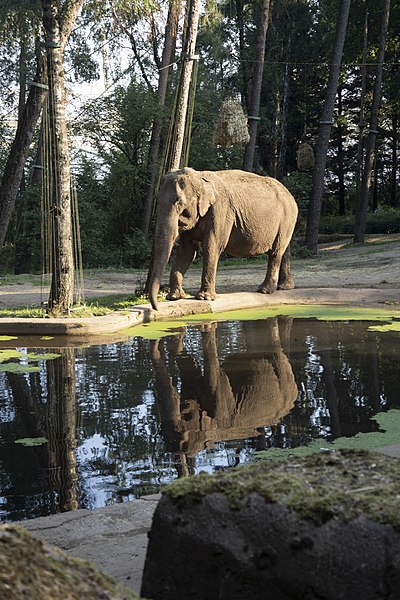
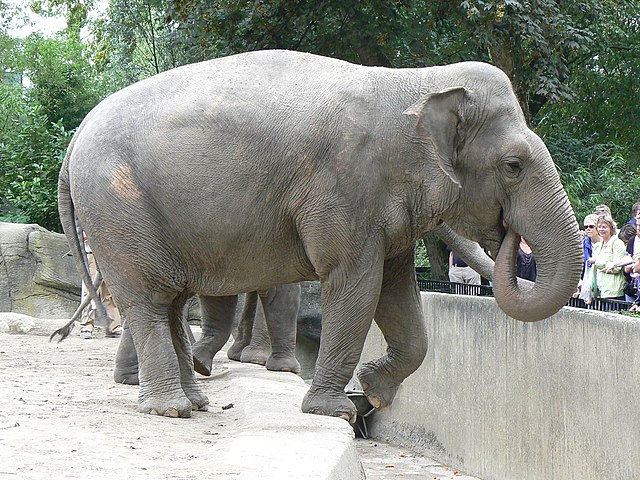
The Asian elephants, Credit: Wikimedia/Mira Meijer Burgers' Zoo
You might spot the Asian elephant, or Elephas maximus, in its native habitat if you tread through the forests, shrublands , and grasslands in several Asian countries including India, Sri Lanka, and Thailand.
Asian elephants are social and can be found within a herd of 6–10 elephants. These elephants, which can live up to 80 years, form loosely collected groups that break apart and come together over time. Living in social groups allows them to make sense and adapt to their environment better.
Their greyish-brown skin is quite thick and wrinkled, offering them protection from the sun and the insects around them. Like all elephants, Asian elephants have two long curved tusks that help them dig for food and water, defend themselves, and even find a partner to mate with!
The trunk of an Asian elephant has a finger-like addition at the end, and they use this trunk to suck up water or grab tiny objects. That’s not all they use their trunk for – it helps them drink, breathe, and trumpet, and even acts as a way to hug other elephants when they need some reassurance!
On average, an individual elephant stands somewhere between 7 to 10 ft tall and weighs anywhere between 4,000 to 11,00 pounds. These elephants are raised on a diet of grasses, roots, and tree bark. When they get the chance, they also seek out cultivated fruits like bananas, rice, and sugarcane. Compared to its African counterpart, the Asian elephant has shorter limbs and rounder ears.
The African Elephant
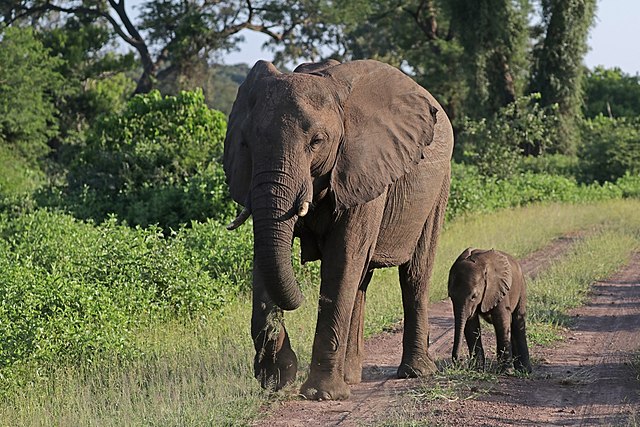
African elephants – the largest land animals on Earth today, Credit: Wikimedia/Charles J. Sharp
If we move to the African continent, we can find Loxodonta, or the African elephants – the largest land animals on Earth today. The African elephants have two species. Savannah elephants find homes in the plains of Sub-Saharan Africa. On the other hand, forest elephants are known to dwell and roam the forests of West and Central Africa.
Like Asian elephants, the African elephants are also social, but they have a different structure to their herd. The leader of the African elephants is the matriarch, or the oldest, biggest, and most experienced female elephant. The individuals in the herd are female elephants and their young ones. The adult males tend to roam around by themselves, or on occasion form a flexible all-male group.
Within their ecosystem , African elephants play a critical role in shaping their habitats . They use their tusks to dig up and form new watering holes to drink from. They also help to clear paths for smaller animals in the savannah, which allows the smaller animals to roam around and thrive.
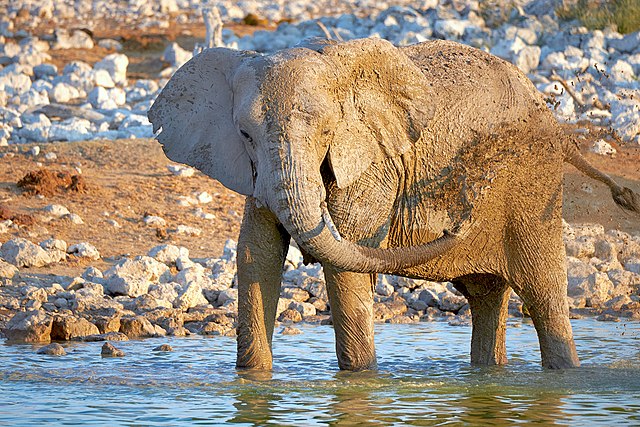
Elephants use their trunks to suck up and shower themselves with water, Credit: Wikimedia/Axel Tschentscher
Just like the Asian elephants, these giants also use their trunks to suck up and shower themselves with water. While Asian elephants only have one finger-like feature on the end of their trunks, African elephants have two. The Asian and African elephants share the same diet, too, though they tend to adapt to what they find closest to them.
Flesch Kincaid Grade Level: 10.3
Flesch Kincaid Reading Ease: 57.4
Glossary
Extant: A species that is currently living; not extinct
Ecosystem: A functioning system where living beings interact with each other and their physical environment
Grasslands: The area that is covered by grass continuously
Habitats: The environment of an organism where it lives, grows, and survives
Shrub lands: Areas where vegetation is primarily made up of woody plants smaller than trees
Swarna Ramakrishnan has been fascinated by the natural world ever since she was a young girl! She graduated from Azim Premji University, India with a Bachelor’s in Biology and a minor in applied mathematics. During her research, she trekked through the beautiful forests of the Western Ghats in India to answer questions about stomata and climate change. Currently, she is pursuing her Master’s in Biophysics from Ulm University, Germany. Swarna writes for Smore magazine to spread stories of nature in hopes of inspiring the next generation of scientists!