Have you ever spotted those tall, purple flower spikes growing near a pond or lake? If so, you were probably looking at a pickerelweed plant. This genuinely fascinating plant has survived in shallow waters throughout the North American continent. So, without any further adieu, let’s jump right in and learn more about this fantastic water plant!
What is a Pickerelweed?
The pickerelweed is an aquatic plant rooted in the freshwater pond’s mud, marshes, and moving streams and rivers. People named this plant “pickerelweed” because they found it growing in the same waters as the small fish called pickerel.
Unique plant features
Heart shaped leaf of pickerelweed. Credits: Wikimedia/T.Voekler
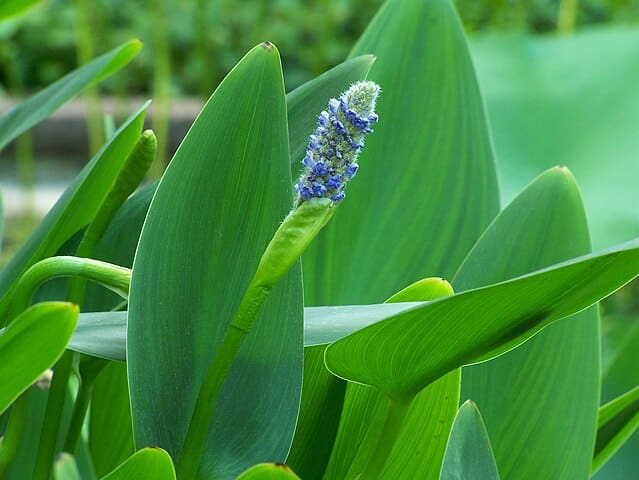
Pickerelweed is a plant species with distinctive characteristics that make it adaptable to watery surroundings. It has deep green, heart-shaped leaves, which can grow up to 10 inches (25.4 cm) in length. A flag-type stem structure with spiral-shaped leaves can reach over 3 feet (0.9 meters) in height. The stems can form a strong bond with the muddy underwater ground, transforming the plant into a firmly planted entity.
Beautiful flowering spikes
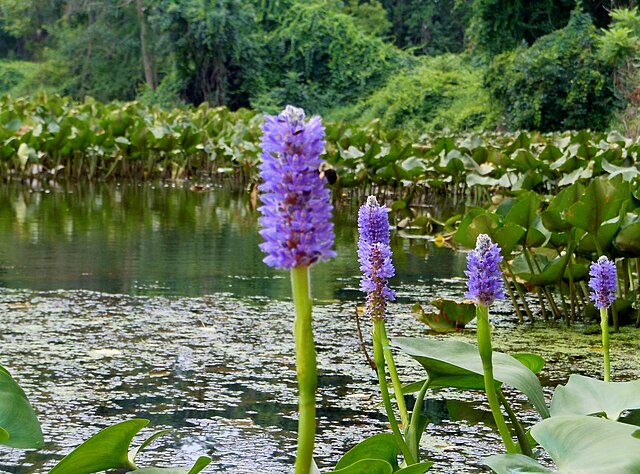
In the latter part of spring and summer, pickerelweeds launch into action with their alluring shades of blue and purple, seen as flower spikes. Each spike can measure approximately 6 inches (15 cm) and comprises many tiny, tightly packed flowers. They are a colorful display, bringing the bees, butterflies, and other pollinators to the plant.
Specialized air pockets
The most important adaptation is the presence of air spaces in the pickerelweed leaves and stems. It allows the plant to float on the water surface when it matures. These gas pockets also benefit from carbon dioxide uptake by the plant’s underwater roots.
Spreading and survival
Pickerelweeds spread in two ways – by underground stems called rhizomes and by seeds. The seeds can stay dormant for a long time until the right conditions allow them to germinate. This helps the plants re-grow after a dry period or if the water they live in dries up temporarily.
In cold climates, the parts of the plant above the ground die in winter, but the rhizomes buried in the mud survive frozen until spring comes back.
Environmental importance and uses
Pickerelweed plants growing near a river. Credits: Wikimedia/Schmiebel
Pickerelweeds are very important plants in ponds and lakes. They provide food and shelter for ducks, fish, and other animals that live in the water. The thick patches of pickerelweed help hold the shoreline in place so it doesn’t get washed away. They also filter out extra nutrients and pollutants, keeping the water clean.
Native Americans used to eat the starchy rhizomes and seeds of the pickerelweed after cooking them. The plant was also known for its medicinal uses. People still grow pickerelweeds in backyard ponds and water gardens because they have pretty purple flower spikes and help put oxygen in the water to keep it fresh.
The pickerelweed shows how well nature can adapt to living in water environments. Even though some consider it a weed, this aquatic plant is essential in wetland areas across eastern and central North America. Unique traits like heart-shaped leaves, purple flowers, floating stems, and the ability to spread in shallow water make the pickerelweed suited for life in ponds and lakes. It is a remarkable water plant!