Be it cell phone, or medicines and food items, everything comes with a warranty or an expiry date. Our body is a living machine with parts, a body run on chemical reaction. That is all that is to life in a biological sense, and it is a constant across animal and plant life.
Plants have a lifespan too. A marked beginning and an end. The answer to “Do plants die of old age?” is relative. Crop plants barely last a year, while trees live for years, even centuries.
Do plants die of old age?
The idea of plants living forever may seem possible. However, old age eventually catches up. The plants lose leaves, and wilt. These are all signs of senescence, a fancy term for growing old. In the world of botany , the death of a plant is a real possibility. Some plants, especially those that grow in optimum conditions, can survive for thousands of years, or even indefinitely. This idea is called plant ‘ immortality .’
However, plant longevity is complex and dependent on many factors. Healthy soil, plenty of sunlight, the right amount of water, and favourable weather conditions all contribute to a plant’s lifespan. Unfortunately, changes in these conditions can lead to a plant’s demise.
Image of the Life Cycle of a Plant, Credit: Wikimedia/Mariana Ruiz
Understanding annual plants
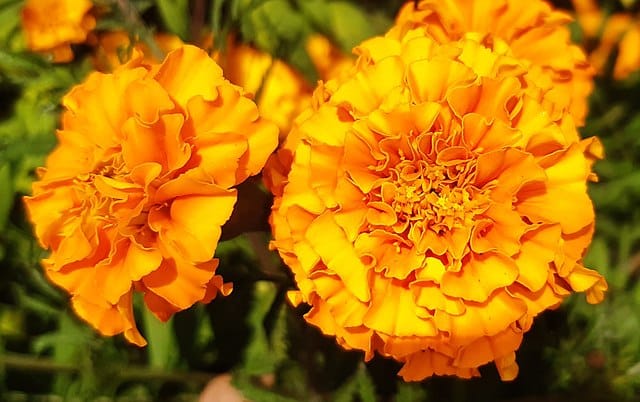
Some plants see through the six seasons of a year, and then they perish. Only for new ones to take their place in the fields. These are plants that complete their entire life cycle, from germination to producing seeds, in just one year. Examples include marigolds, tomatoes, and corn.
But why do annual plants die after seeding? It’s all part of their survival strategy. After they produce seeds, they’ve completed their mission – to pass on their genes to the next generation. Once this is done, the parent plant withers and dies, making room for their offspring to grow the following year.
Image of an Annual Plant (Marigold), Credit: Wikimedia/Sabina Bajracharya
Effects of external conditions on plants
While some plants can theoretically live forever, changes in external conditions can pose challenges. These challenges can be as simple as a lack of water or too much shade, or as complex as changing climate conditions .
Plants, like all living beings, need specific conditions to thrive. When these conditions change, it can be hard for plants to adapt quickly. The result? Some plants may not survive. The health and longevity of plants are intimately tied to the health of their environment.
Usually lack of nutrition can cause a plant to die. Plants need nutrients like magnesium, calcium, iron, etc. to live a healthy life. Magnesium usually contributes to the formation of chlorophyll in plants. Calcium forms tough portions of tissues by combining with a chemical called pectin to form calcium pectate. The importance of these nutrients can be well understood, and a lack thereof can cause plant leaves to get discolored, poor photosynthesis, and eventually lower the lifespan.
Glossary
Botany: The scientific study of plants, including their physiology, structure, genetics, ecology, distribution, classification, and economic importance.
Annual Plants: Plants that complete their entire life cycle, from germination to the production of seeds, within one year, and then die.
Germination: The process by which a plant grows from a seed.
Immortality: In the context of this article, it refers to the concept of a plant living indefinitely under optimum conditions.
Lifespan: The length of time for which a plant (or any organism) lives or a thing functions.
Genes: Units of heredity which are transferred from a parent to offspring and are held to determine some characteristic of the offspring.
Climate Conditions: The weather conditions prevailing in an area over a long period. This includes temperature, precipitation, humidity, and wind patterns.