In the world around us, there are tiny critters to large plants that work tirelessly, day and night, to keep our planet healthy. Had plants not used carbon dioxide as food, life would have been pretty much impossible, let alone the presence of humans. As we enter the peak of human technology, we forget how trees and plants have helped us survive. Now in the wake of global warming, we do realise that years of deforestation have left us with so much carbon dioxide in air, that we are seeing a galloping rise in average temperature across the planet.
How do plants absorb carbon dioxide?
Photosynthesis is similar to cooking. Plants have green leaves, which can be called the ‘kitchen’. This is where plants use sunlight as their energy source, carbon dioxide and water as raw materials and supply electrons to them to make their food – a sugar called glucose . As they do this, they also create oxygen, which they send back out into the air for us to breathe.
Bamboo forest, Credit: Wikimedia/Lance Vanlewen
Which plants absorb the most carbon dioxide?
While most plants are good cooks, even though it is just one dish, not all plants are equal when it comes to how much carbon dioxide they can absorb. Some gobble much more CO2 than others. These carbon sequestering champs come in all shapes and sizes and are found all around the world.
The powerhouses of photosynthesis
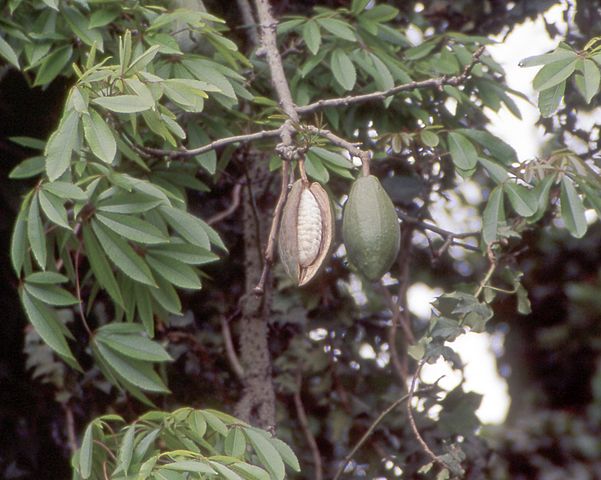
Did you know that the Amazon rainforests are called the lungs of the planet. These rainforests, for example, are home to trees like the Kapok and the Ceiba that can reach incredible heights, providing more leafy areas to absorb CO2. The Mangrove forests that line coastlines are excellent carbon capturers too, even better than some rainforest trees.
Grasses such as bamboo and switchgrass are also excellent carbon sequester . They might not be as big as trees, but they make up for it by growing super fast, absorbing CO2 as they do.
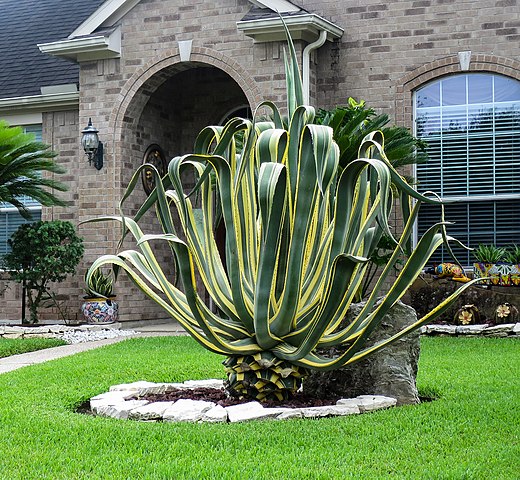
Then there are plants like the Agave, a desert plant that’s not only great at taking in CO2 but also very good at surviving in tough, dry conditions. This makes it a great option for planting in areas where other plants might not survive.
Kapok tree, Credit: Wikimedia/Velela
Can plants reduce global warming?
These carbon-absorbing superheroes play a vital role in our fight against climate change. By taking in carbon dioxide, they help to reduce the amount of this gas in our atmosphere, helping to slow down global warming.
We can all help by planting more of these plants, especially the ones that are good at sequestering carbon. Whether it’s a forest of Kapoks, a grove of bamboos, or a garden full of agave, every plant makes a difference.
Agave plant, Credit: Wikimedia/Jim Evans
Glossary
Carbon dioxide (CO2): A colorless, odorless gas that’s a major contributor to climate change.
Photosynthesis: The process by which green plants and some other organisms use sunlight to synthesize foods with the aid of chlorophyll. In this process, they absorb CO2 and release oxygen.
Glucose: A type of sugar that plants produce during photosynthesis. It is used as an energy source for the plant’s growth.
Sequester: To isolate or hide away. In this context, it refers to the absorption and storage of CO2 by plants.