What is tiny but an expert at flying? You can find this little guy all over your garden, and even hear it go “Buzz buzz”?
You must have figured it out!
Why it’s the bee, of course!
While we often associate bees with honey, there is so much more to these remarkable insects. Lets take a look at the different types of bees that exist. From honeybees to bumblebees and solitary bees, each type brings its own unique characteristics and contributions to our environment.
The common honeybee. Credit: Wikimedia Commons/Fir0002
We all know of the common honeybee. It’s quite popular, with its sleek black and yellow outfit, but it’s not the only bee out there! In fact, there are over 25,000 species of bees that we know of… and there could be even more out there! A young scientist like you could be the one to discover new species.
While we might not be able to cover all 25,000 species today, let’s learn about some of the bees you might be able to spot on your next walk!
Honey Bees
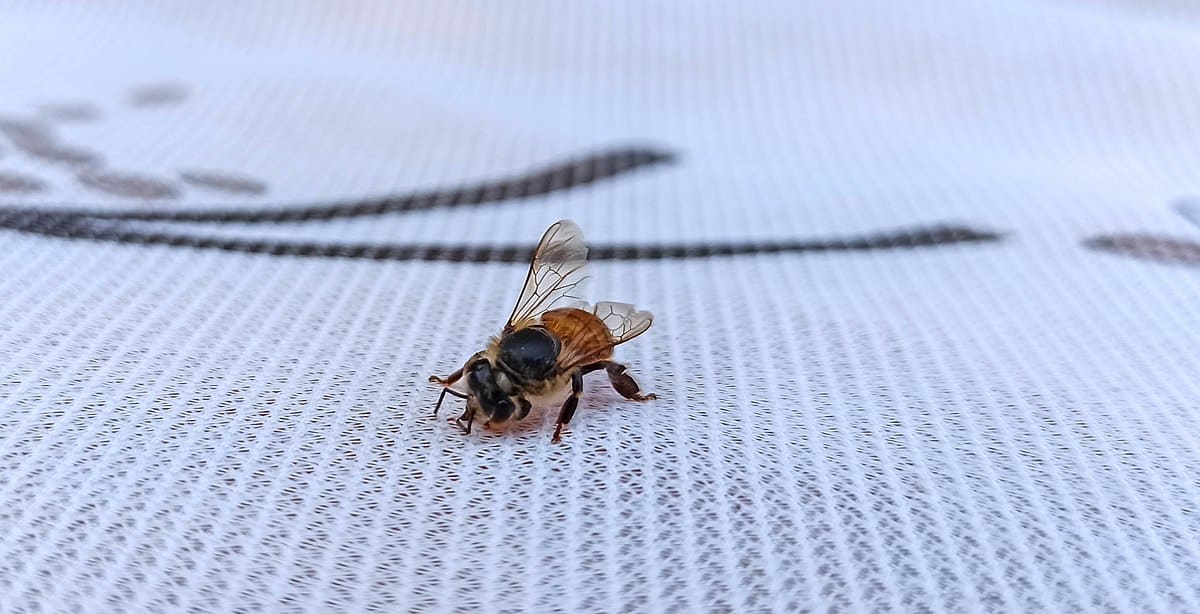
The honey bee. Credit: Wikimedia Commons/Ավետիսյան91
Honey bees are probably the most well-known type of bee. What’s interesting about honey bees is that they are social insects! Honey bees are known for their ability to produce honey, which they store in their hives as a food source for the winter.
Honey bees are also important for our ecosystems because they are fantastic pollinators. They visit flowers to collect nectar and pollen, inadvertently transferring pollen from one flower to another. This process helps plants produce fruit and seeds.
Bumble Bees
The Bumble Bee. Credit: Wikimedia Commons/Richard Bartz
Honey bees aren’t only bees that are social! Bumble bees are another type of social bee, although their colonies are much smaller than those of honey bees. Bumble bees are often recognized by their fuzzy bodies and bright yellow and black stripes.
Just like honey bees, they are also important pollinators, but they put their own spin on it! They pollinate flowers by a method called “buzz pollination.” Buzz pollination happens when the bee vibrates its wings at a certain frequency, causing the pollen to be released from the flower!
Sweat Bees
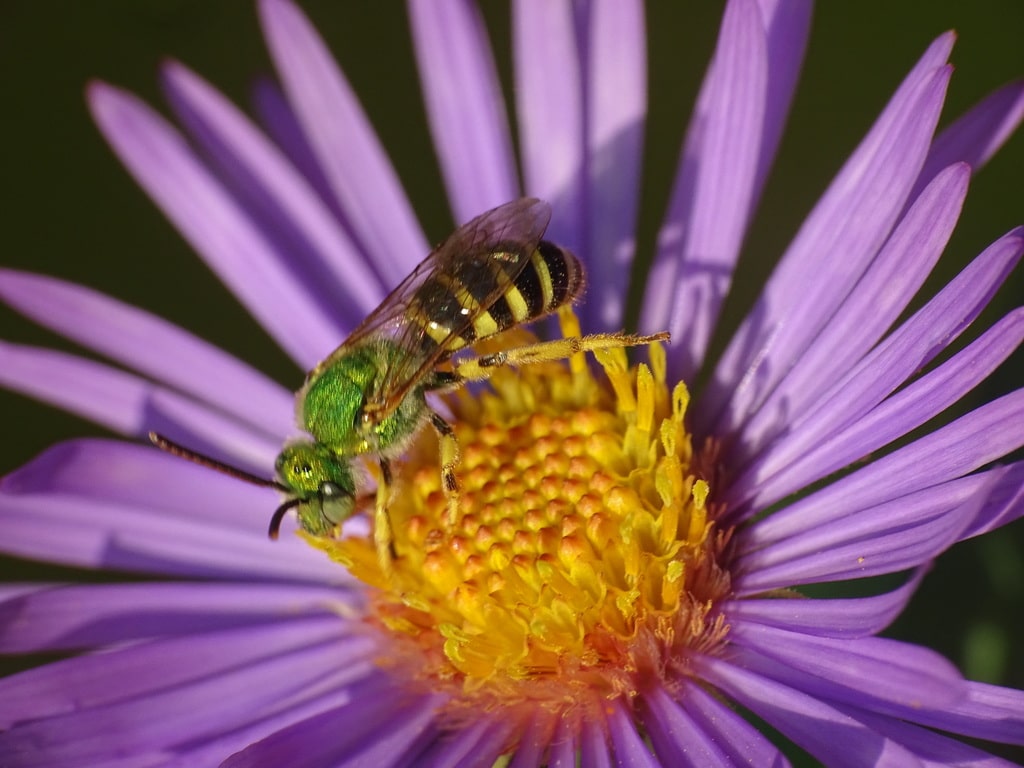
The Sweat Bee. Credit: Wikimedia Commons/ Reuven Martin
Our next bees aren’t the most social bunch. Meet the sweat bees. Instead of living in colonies like the honey bee or bumble bee, sweat bees are solitary bees. These bees are often small and have a shiny metallic color to them. You can find them in in a variety of habitats – from forests to deserts. Sweat bees are not aggressive and rarely sting. Nectar and sweetness is not everyone’s jam! Instead, these pollinators prefer small flowers, and also feed on a steady diet of sweat and other salty substances!
Mason Bees
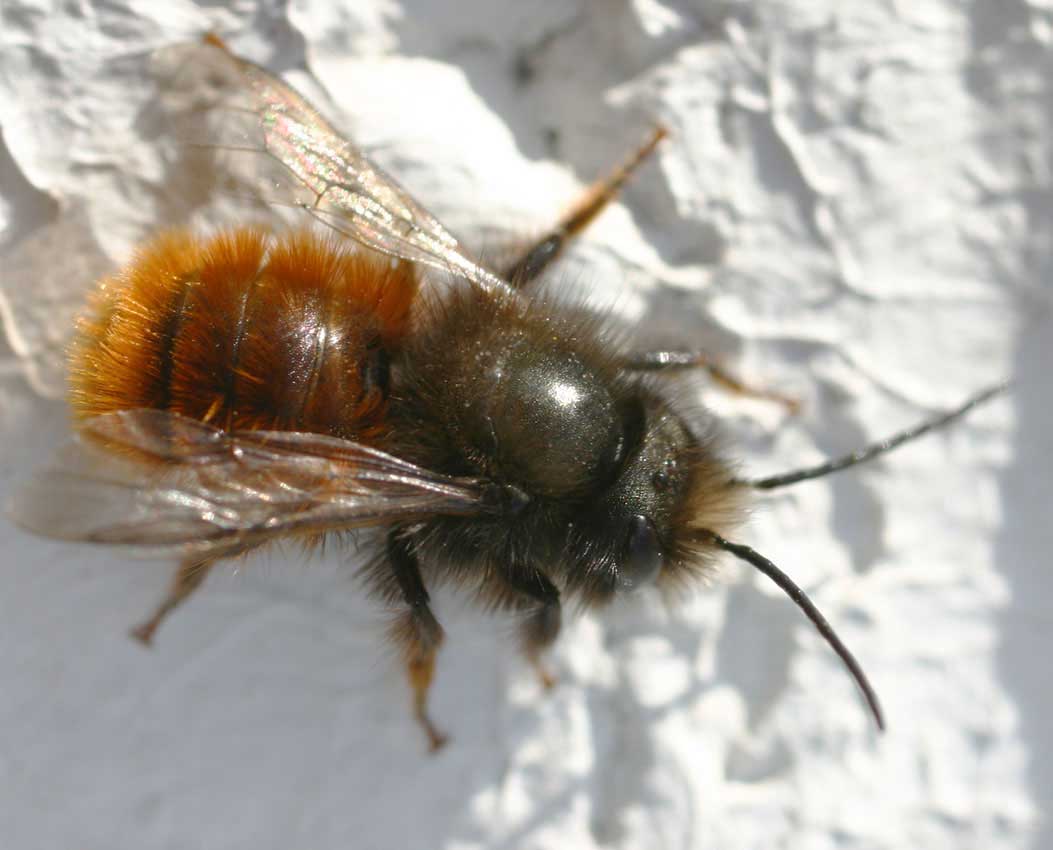
The Mason Bee. Credit: Wikimedia Commons/Entomart
Mason bees are another type of solitary bee that are important pollinators. They are called “mason bees” because they use mud or clay to build their nests.
Mason bees are often smaller than honey bees and have a metallic blue or green color. They are known for their efficiency as pollinators, as they can visit up to 100 flowers in a single day.
Carpenter Bees
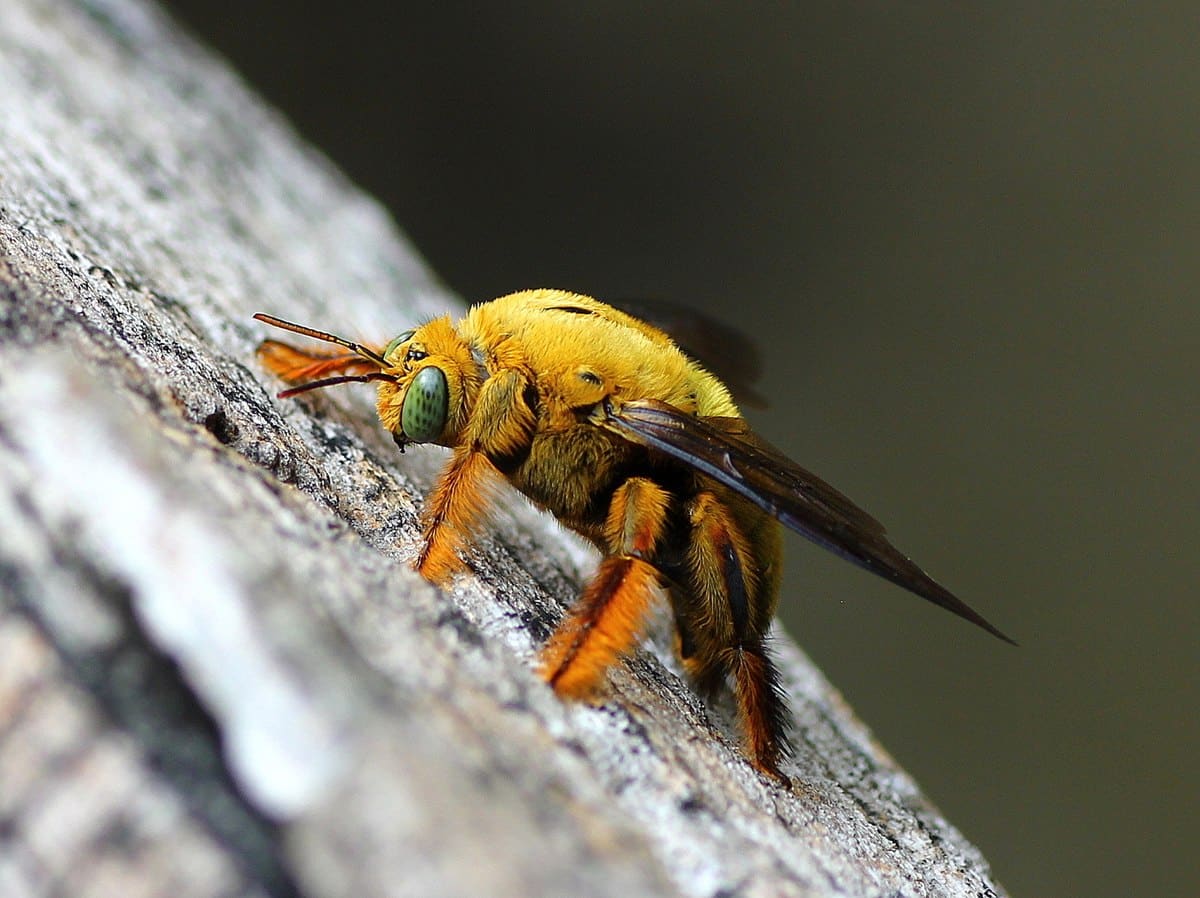
The Carpenter Bee. Credit: Wikimedia Commons/Toni Wöhrl
The next bee on our list is the carpenter bee. It’s often easy to confuse the carpenter bee with the bumble bee since both of these pollinators share similarities in size and coloring. However, if you want to identify which is which, it’s helpful to remember that carpenter bees have a shiny, hairless abdomen, while bumble bees have a fuzzy abdomen!
The carpenter bees earned their name for their ability to bore holes in wood. They use this skill to create nests for themselves. Like all the other bees we’ve talked about so far, carpenter bees are excellent pollinators too!
The world of bees is a diverse and each type of bee contributes to the balance and health of our ecosystems in its own way. Next time you see a bee buzzing by, take a moment to marvel at its beauty and importance. Bees truly are extraordinary insects that deserve our admiration.
Glossary
Ecosystems: A functioning system where living beings interact with each other and their physical environment
Habitats: The environment of an organism where it lives, grows, and survives
Pollinators: Anything that helps in pollinating a flower
Swarna Ramakrishnan has been fascinated by the natural world ever since she was a young girl! She graduated from Azim Premji University, India with a Bachelor’s in Biology and a minor in applied mathematics. During her research, she trekked through the beautiful forests of the Western Ghats in India to answer questions about stomata and climate change. Currently, she is pursuing her Master’s in Biophysics from Ulm University, Germany. Swarna writes for Smore magazine to spread stories of nature in hopes of inspiring the next generation of scientists!