Asian elephants are known for living in flexible social groups. But a 12-year study in Sri Lanka found that their wider social communities became smaller and more isolated as the population changed. The research followed 443 wild female elephants and found that relationships shifted even among animals that remained.
A Long Look at Elephant Society
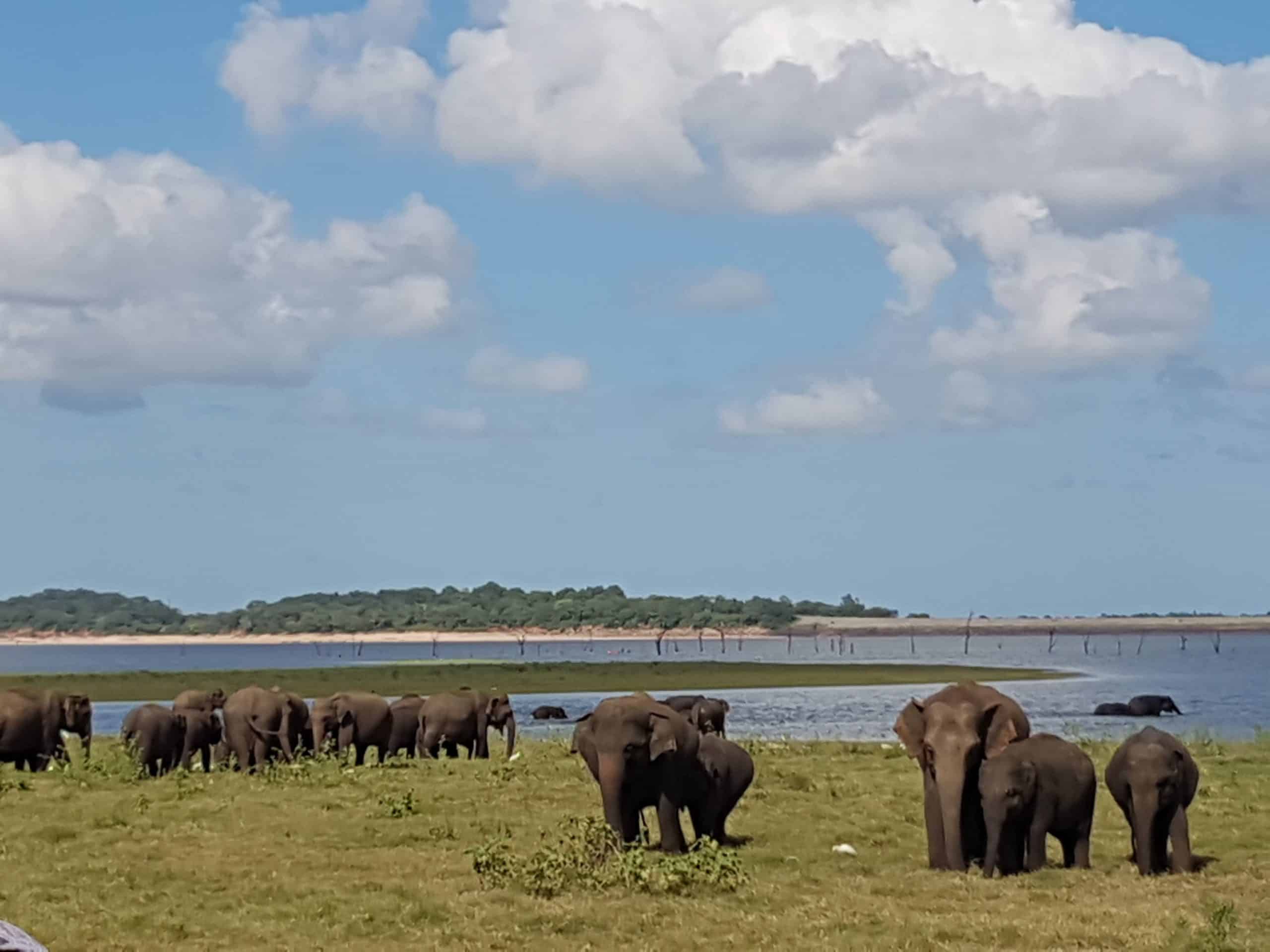
The study took place in Udawalawe National Park, Sri Lanka, from 2007 through 2018. Researchers tracked which female elephants were seen together and how those associations changed over time. They used the observations to map the elephants’ social networks.
A social network is a map of relationships. In this study, a stronger connection meant two elephants were seen together more often. The researchers then looked for communities: groups of elephants with many connections to one another.
Female Asian elephants do not always stay in one fixed herd. They may split into smaller groups and meet again later. Scientists call this a fission-fusion society. Think of it like classmates who spend time in different groups but still belong to a wider school community.
The Connections Began to Change
The researchers found that the elephant population experienced gradual turnover. Some individuals disappeared from the study area, while fewer newcomers joined. After these changes built up, the social network shifted.
The communities became smaller and more isolated from one another. Importantly, the change was not only caused by losing elephants. The relationships among elephants that remained also changed.
That detail matters. It suggests that a community can change in a deeper way than simply becoming smaller. Some connections between groups may weaken or disappear, leaving fewer paths for animals to interact.
Why Might Elephants Be Disappearing?
The study documents the changes in the social network. It does not prove one single cause for the population decline.
The researchers and the University of California San Diego describe several possible pressures. These include deaths, elephants moving away, fewer newcomers, human-elephant conflict, habitat changes, and reduced food in parts of the landscape.
Invasive plants can also change the grasslands that elephants use. When good feeding areas become harder to find, elephants may face more competition. But the researchers caution that more work is needed to understand how these pressures fit together.
Why This Discovery Matters
Elephants depend on more than food and water. Their relationships can help them find resources, share information, and raise young.
If social communities become isolated, important connections may be lost. The researchers warn that a less connected network could be less able to cope with future disturbances. The study does not show exactly what will happen to calves or survival, but it gives conservationists another sign to watch.
What Scientists Still Don’t Know
The research followed one population in one Sri Lankan national park. Scientists still need to learn whether the same pattern is happening in other elephant populations.
They also need to find out whether the social network can recover if elephant numbers rise again. And they need to understand which pressures matter most: habitat change, food, human conflict, movement, or a mix of factors.
The finding offers a useful lesson for conservation. Protecting elephants means protecting their habitats and the connections that help their communities hold together.
Learn More About the Research
🐘 Test Your Elephant Knowledge!
Have you been paying attention? Answer these four questions to see what you learned.