A Green Sea Turtle, Credit; Wikimedia/RobertoCostaPinto
Turtles are fascinating creatures, but have you ever wondered can turtles breathe underwater? Although they live in water, turtles cannot breathe underwater like fish. In this article, we will discover how turtles breathe and the secrets of their ability to stay underwater for long hours.
Turtles Inhale Air, Not Water
Turtles, just like all other reptiles, breathe air. They have lungs instead of gills, similar to other animals like humans. While turtles live in the water, they cannot continuously swim and breathe underwater like fish can. Turtles must come up to the surface every so often to breathe fresh air.
Masters of the Air and the Breathing Technique
A loggerhead turtle, Credit; Wikimedia/Brian Gratwicke
In order for turtles to breathe, they need oxygen. Some types can stay underwater for a while without oxygen. Loggerhead turtles hold the record for holding their breath for the most extended time. In fact, it has been reported that water turtles can spend up to 10 hours below water without needing to come up for air.
Altered Capabilities for Underwater Living
Turtles have special skills to save oxygen and stay underwater longer. One of these abilities is slowing down their metabolism when they are underwater. Slowing their metabolism helps turtles use less oxygen and enables them to remain submerged for extended periods.
Some turtles have a cool way to breathe underwater. Instead of using their mouths, they take oxygen through their rear end, called a cloaca. The turtles move water in and out of their cloaca. Blood vessels there absorb oxygen from the water. This cloacal breathing is impressive. It helps specific types of turtles stay underwater for a long time without needing to come up for air. Cloacal breathing is a unique way for certain turtle types to survive underwater.
Breathing Techniques for the Different Environments
A turtle basking, Credit: Wikimedia/Parth.2211
Sea turtles have lungs that are under their shell on their back. To breathe, sea turtles use muscles attached to their shoulders and hips. These muscles help push air in and out of their lungs. Sometimes, you can see sea turtles moving their shoulders when they are out of the water. This shoulder movement helps them breathe by pushing air into their lungs.
On the other hand, freshwater turtles frequently “bask” in the sun. They lie on rocks or logs before entering the water to regulate their body temperature. Basking helps the turtles breathe better. It maintains their metabolism and keeps their shells free from infections. A new study showed that turtles also bask in the night.
“They were coming up at night and sitting on logs exhibiting very much the same behavior they do during the day; when we looked into it, it wasn’t something that turtles reportedly did,” Donald McKnight, a postdoctoral researcher at La Trobe University and a co-author of the study, said in a news release.
Baby Turtles Can Breathe Too
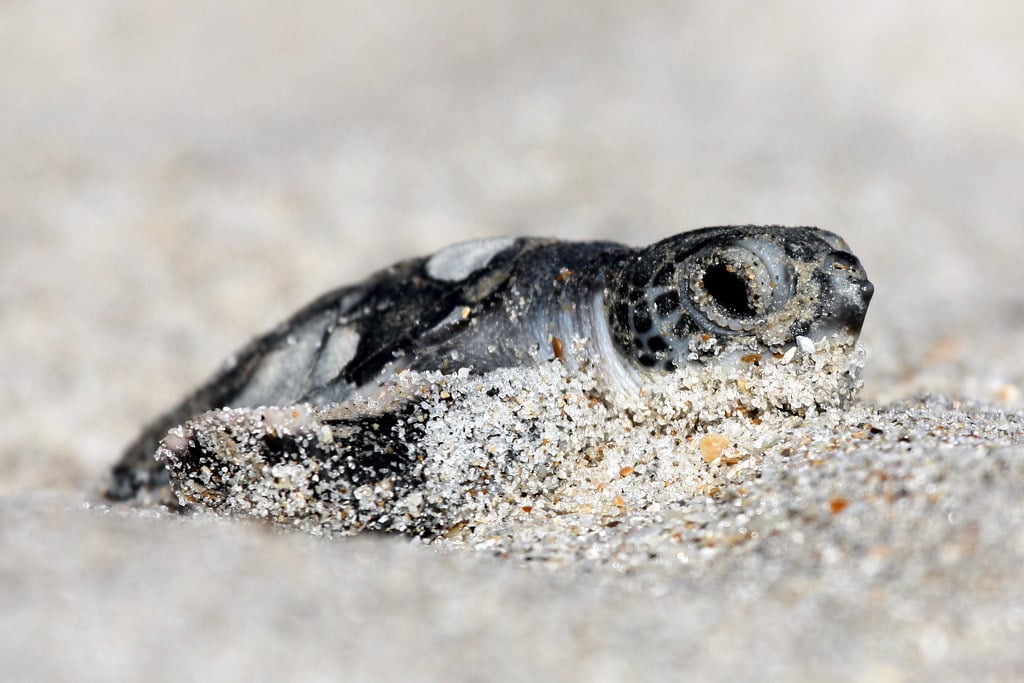
Hatchling green sea turtle, Credit: Wikimedia/U.S. Fish and Wildlife Service Southeast Region
Hatchling turtles can breathe even in their nests, which is not a simple thing to do. They have unique traits. For instance, they have a temporary egg tooth called a “caruncle” to break their shells and breathe simultaneously! Baby turtles can still breathe in their eggs because they have a unique way of getting oxygen.
After hatching, the baby turtles begin breathing air with lungs like adult turtles. However, their ability to breathe inside the egg first is a remarkable adaptation for their aquatic life.
In the end, how turtles breathe underwater is a testament to nature. Though they use air, they have also developed beautiful adaptations that help them to survive in these deep waters for a long time. So, the next time you spot a turtle swimming elegantly in the water, recollect that the secret behind their amazing underwater breathing is their extraordinary physiology.