Table of Contents
About the Peregrine Falcons

The animal kingdom is speckled with creatures that have incredible abilities to not just survive in the harsh, competitive world, but also thrive. Just look at the peregrine falcon! With their presence in nearly every continent except Antarctica, it’s hard to miss out on one of the world’s most fascinating and adaptable hunters – the peregrine falcon. Lets take a look at this magnificient bird of prey and learn about its eating habits.

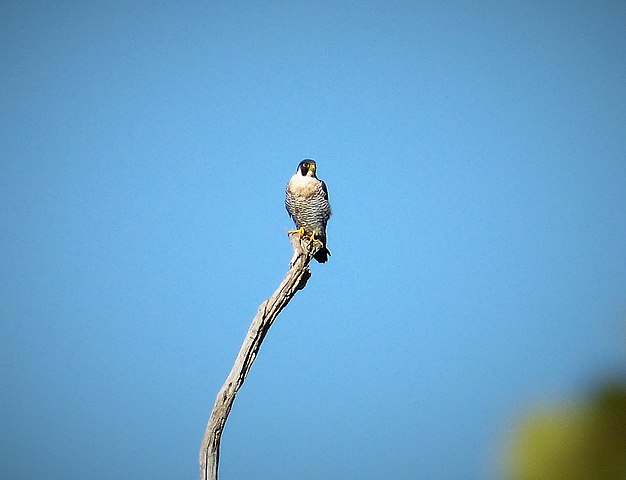
The peregrine falcon, or Falco peregrinus, is the fastest predator on the face of the earth. Peregrines usually sit perched on top of high places, like trees or even tall buildings, in search of their next target. When they get a lock on it, they tend to catch their prey mid-air as they fly with reaching talons . Raking up nearly 200 miles per hour, these birds usually hunt in one of two ways: with a high speed chase or a sharp, deep dive. One way or the other, the peregrines find a way to get to their favorite meal. But, what exactly do peregrine falcons eat
What do peregrine falcons eat?
A lot of factors influence what a predator feeds on, including its habitat , the geographic region, and the season during its hunt. It is intriguing just how well these birds of prey do in their habitats.
Peregrines can be found on nearly every continent except Antarctica, from the cold tundra to the arid deserts. Although they tend to prefer wide open spaces, these falcons build their nests anywhere they see fit. Some even find comfort in setting up close to skyscrapers in big cities. Naturally, these birds experience a colorful diet!

While their food sources vary greatly, there are quite a few meals that we know make it onto their plate frequently. Peregrines are partial to smaller birds like pigeons and doves, or even the occasional parrot. They also tend to prey on waterfowl, shorebirds, and songbirds.
Although it’s rare, peregrine falcons also hunt down mammals. Bats make up a significant portion of their diets, but they also go after ground dwelling animals like rats and shrews. They may even use their agility and prowess to feed on insects, or small reptiles if they have to.
The seasons and the regions that these birds inhabit can also switch up their diet. Some subspecies of peregrine falcon tend to winter along the Gulf of Mexico or the Atlantic coast. In these regions, the birds prey on gulls or other shorebirds. Similarly, in the summer, some peregrines maintain breeding grounds in Alaska or other northern regions in North America. Accordingly, their diet changes. Here they prefer birds like the common snipe or tiny mammals like lemmings.
No matter where they come from or what they prey on, watching a peregrine falcon hunt is a wondrous sight to see! Be careful not to blink or you’ll miss it!
Glossary
Adaptation: They ways in which an organism adjusts to new surroundings or to new changes in their surroundings
Habitat: The environment of an organism where it lives, grows, and survives
Talons: Claws that belongs specially to birds of prey
References
BioKIDS – Kids’ Inquiry of Diverse Species, Falco peregrinus, peregrine falcon: INFORMATION. (n.d.). Retrieved May 12, 2023, from http://www.biokids.umich.edu/critters/Falco_peregrinus/
Peregrine Falcon. (2014, March 1). Animals. https://kids.nationalgeographic.com/animals/birds/facts/peregrine-falcon
Peregrine Falcon | National Geographic. (2010, November 11). Animals. https://www.nationalgeographic.com/animals/birds/facts/peregrine-falcon
What Do Peregrine Falcons Eat? (Full Diet Guide). (n.d.). Birdfact. Retrieved May 13, 2023, from https://birdfact.com/articles/what-do-peregrine-falcons-eat
Contributors
-
Swarna Ramakrishnan: AuthorView all posts
Swarna Ramakrishnan has been fascinated by the natural world ever since she was a young girl! She graduated from Azim Premji University, India with a Bachelor’s in Biology and a minor in applied mathematics. During her research, she trekked through the beautiful forests of the Western Ghats in India to answer questions about stomata and climate change. Currently, she is pursuing her Master’s in Biophysics from Ulm University, Germany. Swarna writes for Smore magazine to spread stories of nature in hopes of inspiring the next generation of scientists!
Copyright @smorescience. All rights reserved. Do not copy, cite, publish, or distribute this content without permission.
SUBSCRIBE TO OUR NEWSLETTER
.......... ..........Subscribe to our mailing list to get updates to your email inbox.
Monthly Newsletter