You’re my honeybunch, sugar plum, pumpy-umpy-umpkin.You’re my sweetie pie—the Cuppycake Song by Buddy Castle blew up on social media and is used in reels showing something cute. Bhy do you need this song now? Brace yourself, because you’re going to meet 10 of the cutest animals in the world, and your head will run this song on repeat.
The adorable faces, big, soulful, and somewhat puppy eyes, and delicate facial features can make us swoon over these animals. In fact, scientists believe that when we see a set of body characteristics and facial features commonly seen in human babies, it triggers a nurturing response in us.
1. Fennec fox (Vulpes zerda)
The smallest fox in the world, weighing just 2-3 pounds, looks to have come straight out of a Disney movie. They have large 4-6 inch ears, which don’t just give them impeccable hearing, but also act like a radiator that dissipates heat and keeps them cool in the blazing desert heat of North Africa and the Sahara Desert. Their cream-colored, fluffy, and velvety fur insulates them from harsh, cold nights and reflects the Sun’s rays during the day, keeping them cool.
Fennec foxes are nocturnal and live in burrows buried deep in the sand during the day. They are omnivorous, usually preying on insects, rodents, and small reptiles, and forage for roots and fruits. These cuddly and playful foxes get most of their hydration from their food sources, barely needing to drink.
The big ears of the fennec fox make them too cute to resist
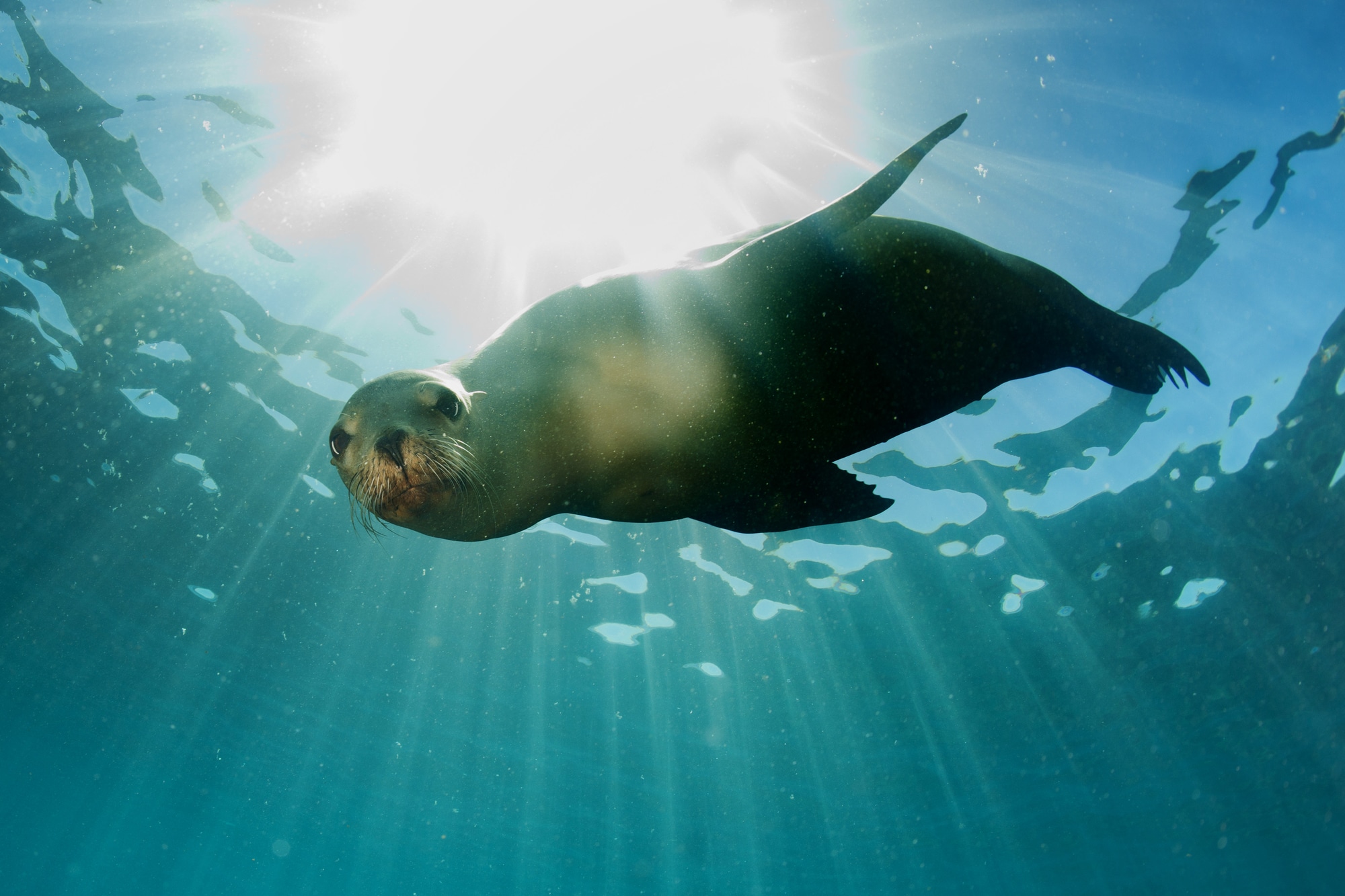
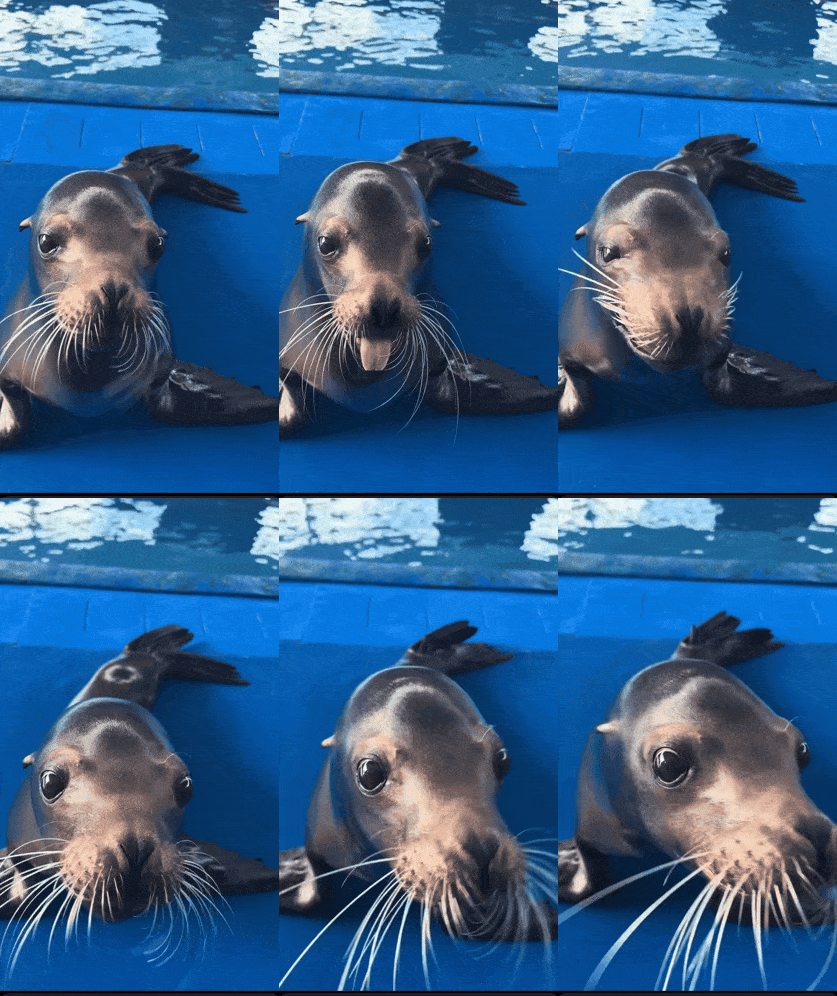
2. Sea lion (Otariidae)
Sea lions can go toe-to-toe with Fortnite players when it comes to performing emotes. Be it belly claps or bouncing on their bellies, these “earred seals” are one of the silliest animals on the planet. Sea lions are incredibly sociable and can be trained. In fact, the Marine Mammal Program by the U.S. Navy trains sea lions to locate and recover equipment (literal Navy seals!). They have flippers like seals, but unlike seals, can walk and even run on land.
They move like a missile underwater, and can slow their heart rate by 80%. Add to that their ability to store oxygen in their muscles for much longer, and their massive spleen, which delivers large amounts of oxygenated blood. Besides, their nostrils are normally shut tight, and they need to be forcefully opened to breathe. They feed on various fish, octopi, and squids, consuming food that is around 7% of their body weight. They are often blamed for disrupting the salmon population, but they prey more on other predators of young salmon than they do on salmon themselves.
Sea lions are friendly, and you can swim with them under expert supervision
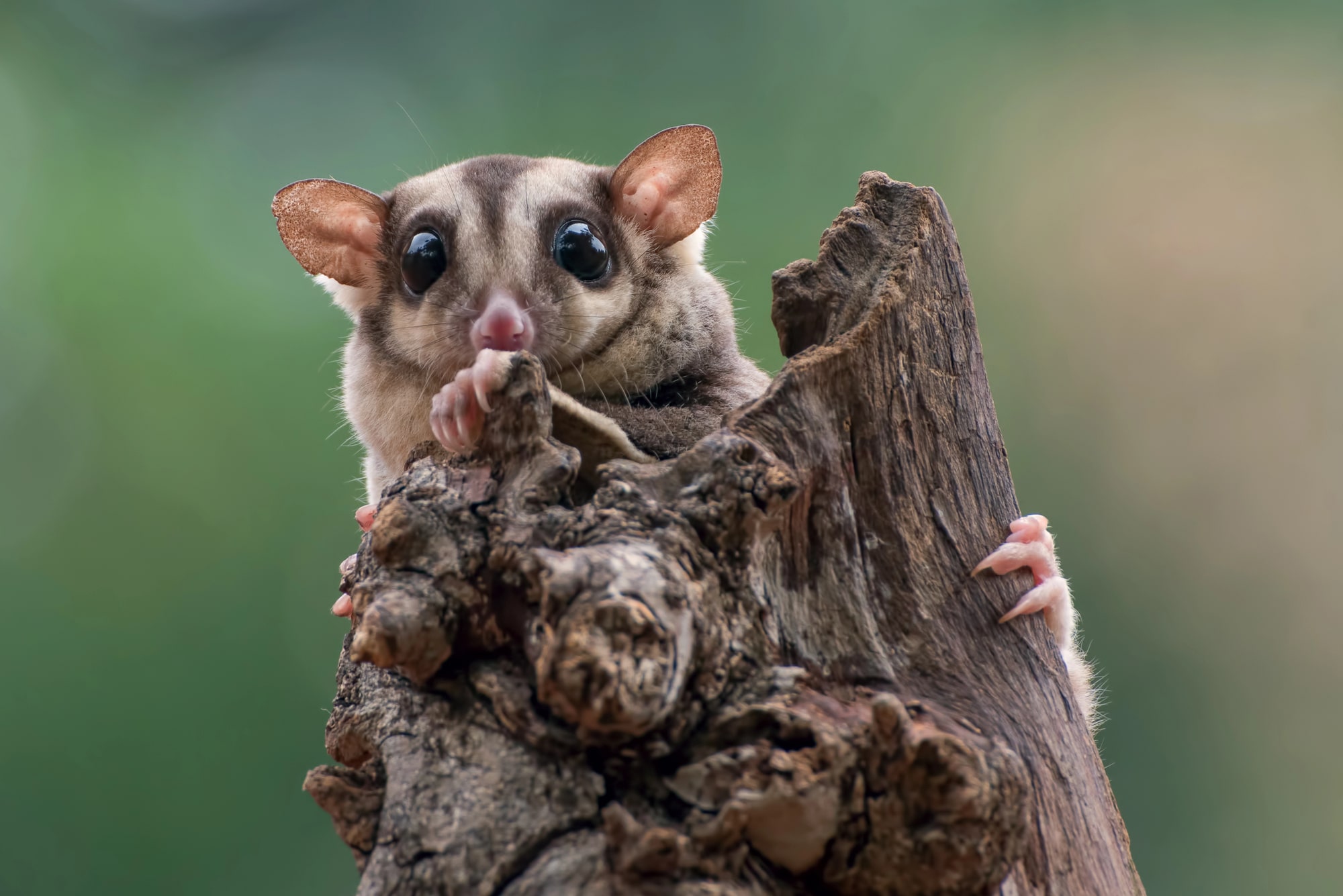
3. Sugar glider (Petaurus breviceps)
Sugar gliders can be one of the best pocket buddies. They are marsupials, like kangaroos, and grow for the first two months in their mother’s pouch on the abdomen. Their bodies are five to six inches long, and their tails add another six inches. They weigh four to five and a half ounces (80-160g).
Sugar gliders have a furry and elastic membrane running from their wrists to their ankles, known as a patagium. With the help of the patagium, sugar gliders glide from tree to tree, sometimes around 150 feet apart. Their hind feet have a large, opposable big toe to clutch on branches. They prefer living high in tree canopies, avoiding the dangers they might face on the ground below.
Sugar gliders are extremely social, often living in colonies of 30, and have their own forms of communication. Sugar gliders feed on tree exudates like sugary sap or nectar. Since they are omnivorous, they also feed on insects and small reptiles.
Sugar gliders are possums that fly
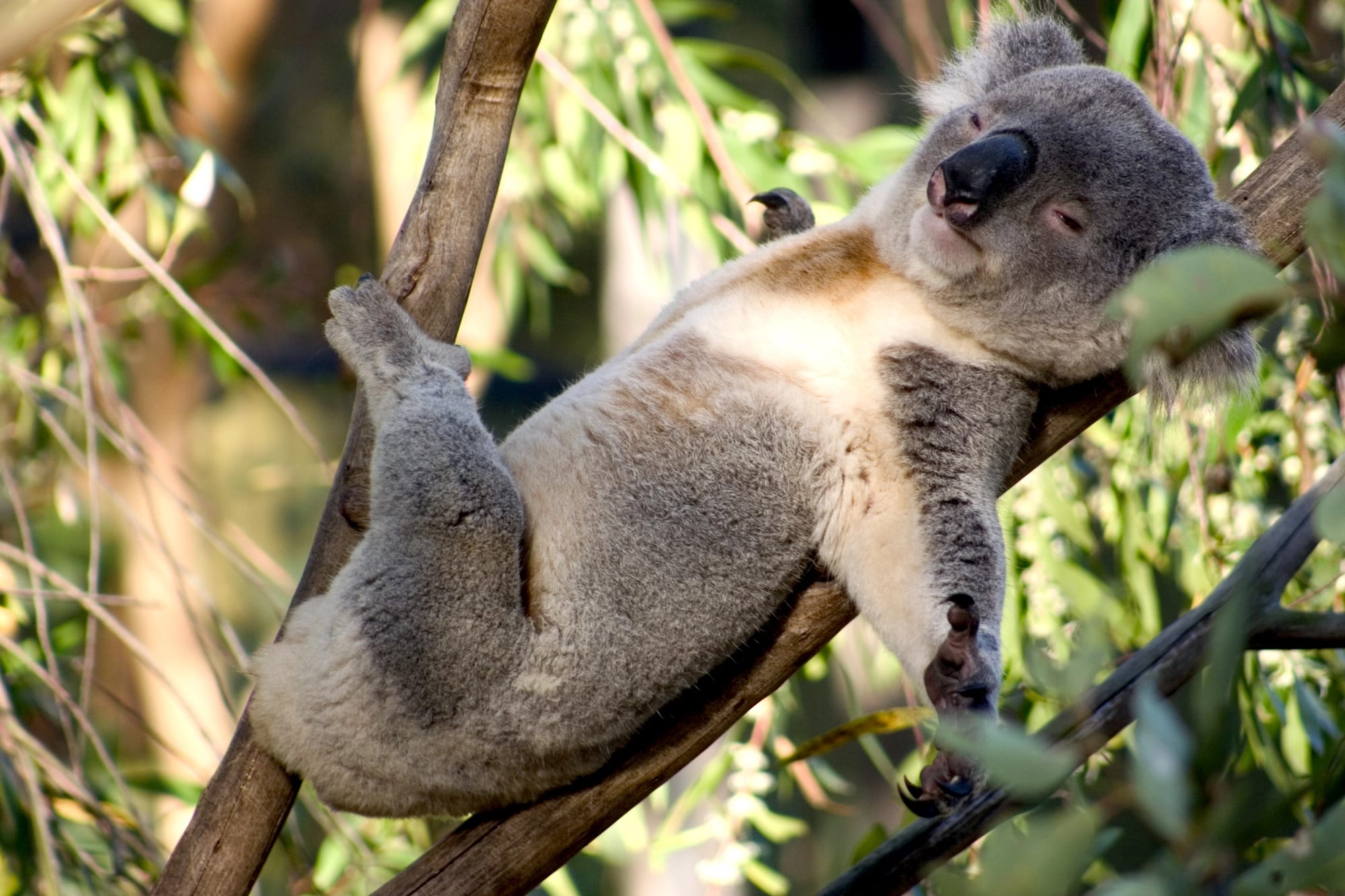
4. Koala (Phascolarctos cinereus)
If you wished that your teddy bear could talk, you would probably get a koala. However, they are not bears, and are also marsupials like sugar gliders. They are super chill, a lot like the Pokémon Snorlax. Large eyes, soft grey fur, and a black nose that you feel like giving a boop to all the time add to the cuteness of koalas.
Their diet consists of eucalyptus leaves, which barely provide any energy, and so a koala sleeps for around 18-22 hours a day. Eucalyptus is toxic to most other animals, but koalas have adapted to this diet. They spend almost the whole of their lives in trees, eating leaves, and sleeping the day off.
Koalas sleep for 18-22 hours; when they don’t, they eat
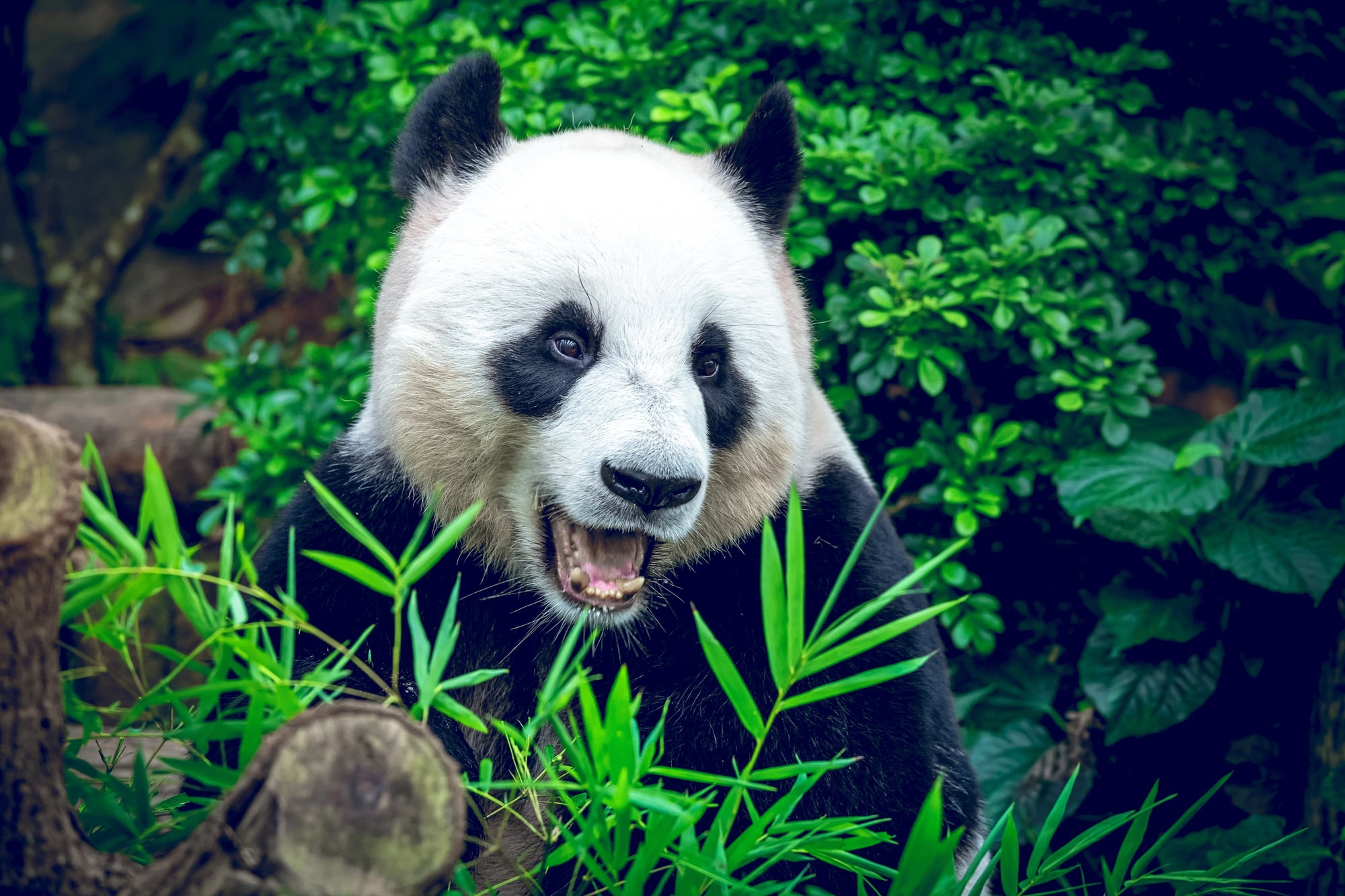
5. Giant Panda (Ailuropoda melanoleuca)
An animal so clumsy that it makes you wonder if its survival instincts are in negative, the giant panda is known for its antics. They have cuddly bodies with white, woolly fur and black patches on their eyes, ears, shoulders, legs, and tail. Although a species of bear, with a digestive system suited to a carnivorous diet, they have evolved to feed on bamboo. It is available all year-round in central China, where they live, and the tough, fibrous plant is not appetizing to other animals, allowing them to eat without competition.
Giant pandas eat over 35 kg, feeding for around 16 hours per day, and pass through the short, carnivorous gut in under 12 hours, meaning they frequently poop– up to 40 times a day. Their gut extracts nutrients like calcium and iron, although they don’t get a lot of calories out of it. Cellulytic bacteria (bacteria that digest cellulose, the fiber found in paper) digest some of the fibrous part, but most of it is passed out.
In a fairly recent discovery, scientists also found that giant pandas absorb a genetic material called microRNA (miRNA) from bamboo, which affects their behavior and biological rhythms.
Giant pandas are famous in pop culture, most notably Po from the movie, Kung Fu Panda
6. Red Panda (Ailurus fulgens)
Red pandas are cute for their red bushy tails and a baby-like face. They have reddish-brown fur with occasional white streaks and black fur covering the underbelly. They are not related to giant pandas and were discovered 50 years before the giant panda.
Red pandas are nocturnal. They mainly feed on bamboo leaves and shoots, and occasionally they savor acorns, berries, and even insects. Like the giant panda, they are classified as carnivorous, but thrive on greens. They also have an extra finger-like structure to help them grasp bamboo while eating.
They are curious and playful. When they feel threatened, they stand on their hind legs and appear big and formidable. Little do they know that we find them even more cute when they do so.
Red panda was discovered half a century before the giant panda
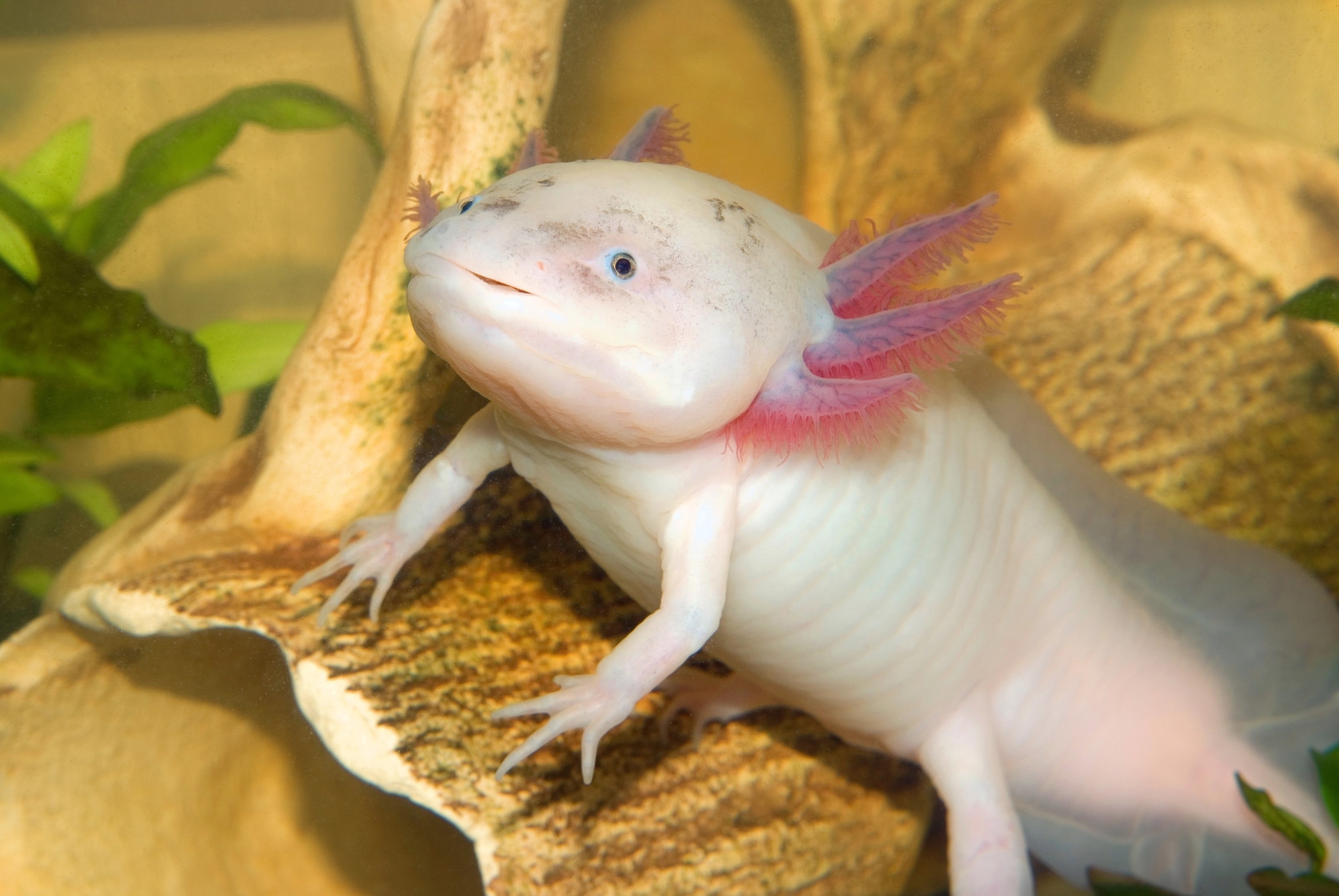
7. Axolotl (Ambystoma mexicanum)
Most of the animals here are furry mammals, but this amphibian is irresistibly cute. Axolotl is a type of salamander that spends its whole life underwater, despite having four legs that it uses to walk or sometimes float.
These incredibly cute amphibians can regenerate lost limbs and are carnivorous, sometimes preying on fellow salamanders. They have three feathery gills and a baby-like face with a mouth shaped like a smile.
Axolotls are famous as ‘pets’ in Minecraft, but in the wild, they are Critically Endangered, according to the IUCN Red List of Threatened Species.
Axolotls are not just cute; they can also regenerate limbs
8. Hognose snake (Heterodon sp.)
Surprised to see a snake? Soon you won’t be, because the hognose snake has a cute, upturned snout that they use to burrow. They are super dramatic and are known to play dead around predators—rolling onto their backs, opening their mouths, and even writhing a bit to mimic being in pain before going motionless.
When they feel threatened, they flatten their necks, raise their heads, and occasionally strike, but rarely bite. In fact, captive-bred hognose snakes are calm around humans. Scientists debate whether hognose snakes are venomous, as their venom is harmless to humans and often causes only slight swelling around the bite wound.
Hognose snakes are very dramatic, and some even keep them as pets
9. Otters (Lutrinae)
Otters hold hands while sleeping, so that they don’t drift away— isn’t that cute already? They have dense, soft fur, small noses, and rounded faces. However, don’t be swayed by their looks just yet, because they are apex predators and ruthlessly defend their territories, mates, and pups. From 1875 to 2021, there have been 59 recorded otter attacks, three of them in captivity.
They are playful and social animals that have strong family bonds. Otters are quite intelligent, too, as they have been seen using rocks to break hard shells to extract the sweet meat of shellfish.
Otters hold hands when sleeping, Credit: Wikimedia/Joe Robertson
10. Leopard gecko (Eublepharis macularius)
Leopard geckos have a curved mouth that looks like a smile, and their large, expressive eyes with movable eyelids make them look more human when they blink. They come in a variety of colors and have a chubby tail that stores fat. They are docile and friendly, often curious, and have a knack for exploring their surroundings.
They are insectivores and are crepuscular (active at dawn and dusk). They are native to India, Pakistan, and Afghanistan, but are now famous worldwide as excellent, beginner-friendly reptiles to keep as pets.
However, proper care must be taken, with proper setup in place. Adapt to them before you adopt them.
Leopard geckos are known for their chubby fat-storing tails, adding to their cuteness
I am pursuing my bachelor's in microbiology from Scottish Church College, Kolkata and the lab at my college is as close as my home is to me. My interest lies in molecular biology and cell signalling, and I want to be a professor when I grow up. I believe that what we see around has a fantastic science story in it. In my free time, I love to watch soccer. Writing for Smore Science gives me the chance to explore my take on explaining the science around me in ways that everyone can grasp.