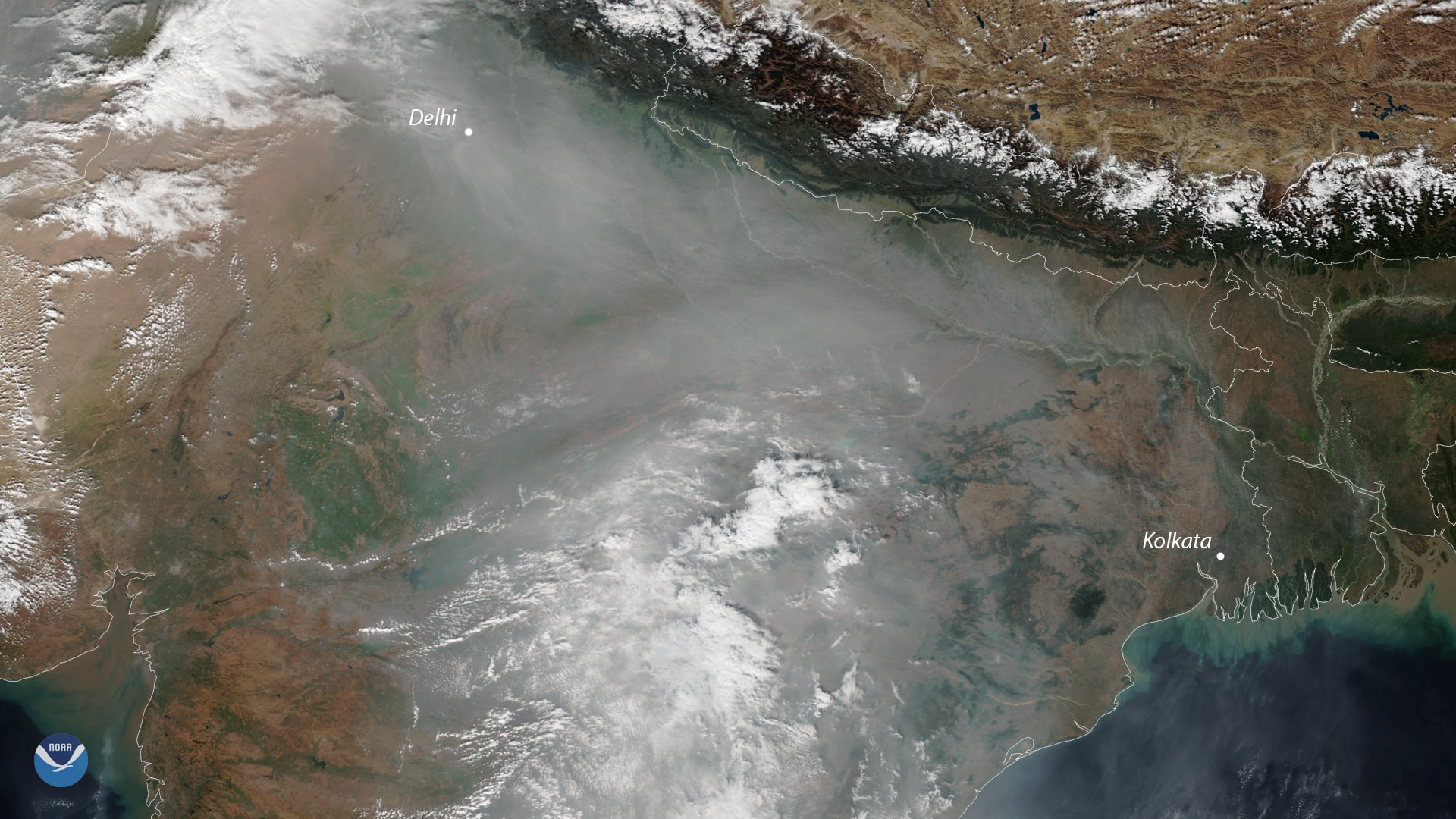
The morning after fireworks lit up the sky for Diwali, a thick haze hung over India Gate in New Delhi. By 9 a.m. on Nov. 9, India’s pollution board put Delhi’s Air Quality Index (AQI) at 370, in its “very poor” range. In several parts of the city, readings topped 400, which the board classifies as “severe.”
Delhi had been breathing polluted air for days. On Nov. 6, two days before the main celebration, officials ordered schools in and around the city to offer online classes. The fireworks added smoke to air that was already hard to breathe.
What is Diwali?
Diwali, also called Deepavali, is a Hindu festival of lights celebrated in India and around the world. It takes place over several days, and customs vary from place to place. For many families, it means lighting small clay lamps called diyas, decorating their homes, sharing sweets, and visiting friends and relatives. The lights can stand for hope and the triumph of knowledge over ignorance. Firecrackers are one way some people celebrate.
Why smog is a health concern
Smog is a mix of pollutants that can make the air look hazy. One concern in Delhi is PM2.5, the name for particles so small that some can reach deep into the lungs. A particle at the upper end of that size range is about 30 times narrower than a human hair.
Breathing air with high levels of these particles can make people cough or wheeze and can make asthma worse. Children and people who already have heart or lung disease are among those most at risk. Over time, breathing polluted air can also slow lung growth in children and raise the risk of heart problems.
What made the smog so bad?
Smoke from fireworks is one part of Delhi’s fall pollution problem. Cars and trucks release exhaust, construction adds dust, and fires on farms can send smoke into the city. When winds are light and the air near the ground mixes slowly with the air above it, pollution can build up where people breathe.
A team led by the Indian Institute of Technology (IIT) Delhi sampled the air around Diwali in 2019. The researchers saw a sharp rise in metal particles during the fireworks. The fireworks signal fell sharply within about 12 hours. In the days that followed, the team found stronger signs of smoke from burning plant material, such as stalks left in fields after harvest.
That study tracked a 2019 Diwali. The air quality readings from Nov. 9, 2026, show how polluted the air was that morning. How much of that pollution came from each source is still an open question. They would need samples from this year’s event and would have to check how the mix changed from the night of Diwali into the days that followed.
Copyright @smorescience. All rights reserved. Do not copy, cite, publish, or distribute this content without permission.
SUBSCRIBE TO OUR NEWSLETTER
.......... ..........Subscribe to our mailing list to get updates to your email inbox.
Monthly Newsletter