How Many Times Can You Recycle Plastic?

Plastic is everywhere, but once we’re done with it, where does it go? Let’s explore the recycling of this everyday material

Table of Contents

What is Plastic?

Bags, chip packets, even sunglasses and surgical implants. What these all have in common is that they’re made of plastics! Plastic is a material that’s incredibly useful. It can be made into almost anything at all. It’s hard to imagine how something so new became so common—the first plastics were discovered by Leo Baekeland just about one hundred years ago. He even named it after himself, calling his newly discovered compound Bakelite! (Baekeland, 1910)

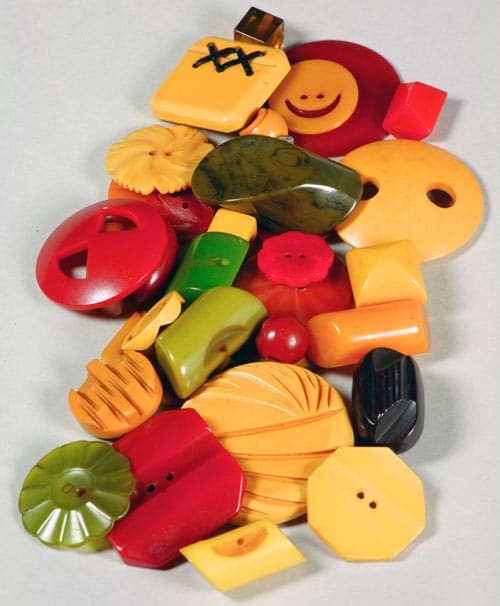
Bakelite_Buttons
Buttons made of Bakelite, which is hard and shiny, Credit: Wikimedia/Gregory Tobias

Imagine a mountain of red Legos. They can be arranged in any form; a long chain, a giant tower, a house! The possibilities are infinite. This is the same principle that plastics use. One molecule, known as a monomer , is like a single Lego. The molecules can be arranged in any form, and used any number of times, to form a polymer . These polymers can be molded into various shapes while maintaining their durability. With just one set of ingredients, you can make a variety of shapes and forms.


While plastic’s incredible durability is useful for us, it’s not so good for the environment. Many plastics take hundreds of years to decompose, leading to pollution in oceans, soil, and air. Researchers are trying to develop biodegradable plastics. Another solution is recycling. By turning waste useful again, we can save plastic from landfills and oceans.


Unfortunately, recycling also has its limitations. Plastics cannot be recycled forever; but just how many times can they be recycled?

How many times can plastic be recycled?

The short answer? It depends! The type of plastic, the recycling process, and the quality of the recycled material are what determine this.


Two types of plastics cannot be recycled at all. Styrofoam is very low density. This means it can be difficult to accumulate enough Styrofoam to recycle it effectively. However, certain specialized plants may do it for you. PVC is another common plastic used in things like plumbing pipes and packaging. The complexity of the PVC monomer makes it challenging to recycle. Most other plastics can be recycled. Milk jugs, beverage bottles, and other hard plastics typically have a more stable molecular structure that can be recycled upwards of five times, and even ten times (Oblak et al., 2015)!


Plastics can be recycled mechanically or chemically (Ragaert et al., 2017). Mechanical recycling involves manually crushing, breaking down, or melting plastics in order to reform them into something new. Chemical recycling uses reactions to break down the polymer into monomers. Chemical recycling is newer and more specific, and tends to be a little more efficient.

No matter how good a plastic is, each recycling cycle degrades the quality of the plastic slightly.


We’re getting better and better at using plastics responsibly, but we need to reduce and reuse before recycling. Recycling is incredible, and has profoundly changed the ways we use plastics, but recycling alone cannot solve the plastic pollution problem.

Flesch Kincaid Grade Level: 54


Flesch Kincaid Reading Ease: 8.2

Glossary

Monomer: A single molecule unit of a longer structure


Polymer: A long chain of monomers linked together

Baekeland, L. H. (1910). Bakelite, a condensation product of phenols and formaldehyde, and its uses. Journal of the Franklin Institute, 169(1), 55–60. https://doi.org/10.1016/S0016-0032(10)90300-1


Oblak, P., Gonzalez-Gutierrez, J., Zupančič, B., Aulova, A., & Emri, I. (2015). Processability and mechanical properties of extensively recycled high density polyethylene. Polymer Degradation and Stability, 114, 133–145. https://doi.org/10.1016/j.polymdegradstab.2015.01.012


Ragaert, K., Delva, L., & Van Geem, K. (2017). Mechanical and chemical recycling of solid plastic waste. Waste Management, 69, 24–58. https://doi.org/10.1016/j.wasman.2017.07.044
Contributors

  • Yamini

    Yamini's (he/they) interests lie in environmental education, science communication and trying to build a better world. When not languishing in front of his laptop, they can be found outside, poking at any insect, bird or plant. They love making science accessible, especially to those who aren't encouraged to pursue it. Yamini hopes that the young women who read Smore love learning from their articles and get just a little bit more excited about science!

    View all posts

Copyright @smorescience. All rights reserved. Do not copy, cite, publish, or distribute this content without permission.


Join 20,000+ parents and educators
To get the FREE science newsletter in your inbox!