There are numerous wonders in the animal kingdom, but few are as captivating as the flamingo’s unique pink hue. Flamingos, with their vibrant bodies that mirror the tones of a sunset, are an extraordinary spectacle. Their color is not a random event; it is the result of a fascinating process that speaks volumes about the complexity and beauty of nature. Let’s embark on a journey to discover why flamingos are pink, delving into a world that combines the amazing facets of biology, ecology , and the marvels of the animal kingdom.
What makes flamingos special: A brief overview
Flamingos are unique birds, characterized by their unusual pink color, long, lean legs, and a gracefully curved neck. These unique features equip them to thrive in their natural habitats, allowing them to wade into deeper water bodies in search of food. Flamingos have an intriguing eating habit; they feed with their bills upside down! This is because their mouths are designed in a way that they can sieve water, trapping small organisms, their primary food source.
Flamingos also exhibit interesting social behavior. They live in large groups, called colonies, where thousands of these birds can be found together. Such gatherings serve multiple purposes: from protection against predators to making mating easier. All these factors contribute to the uniqueness of flamingos, but nothing makes them as special as their stunning pink color.
Greater Flamingo, Credit: Wikimedia/ Charles J. Sharp
The science behind the pink: Astaxanthin
So, what imparts the flamingos their unforgettable pink hue? The answer lies in a pigment known as ‘ astaxanthin .’ Astaxanthin is a type of carotenoid , a natural compound that brings color to many organisms in nature. Carotenoids are the pigments that turn leaves orange in the fall, give tomatoes their redness, and yes, make carrots orange!
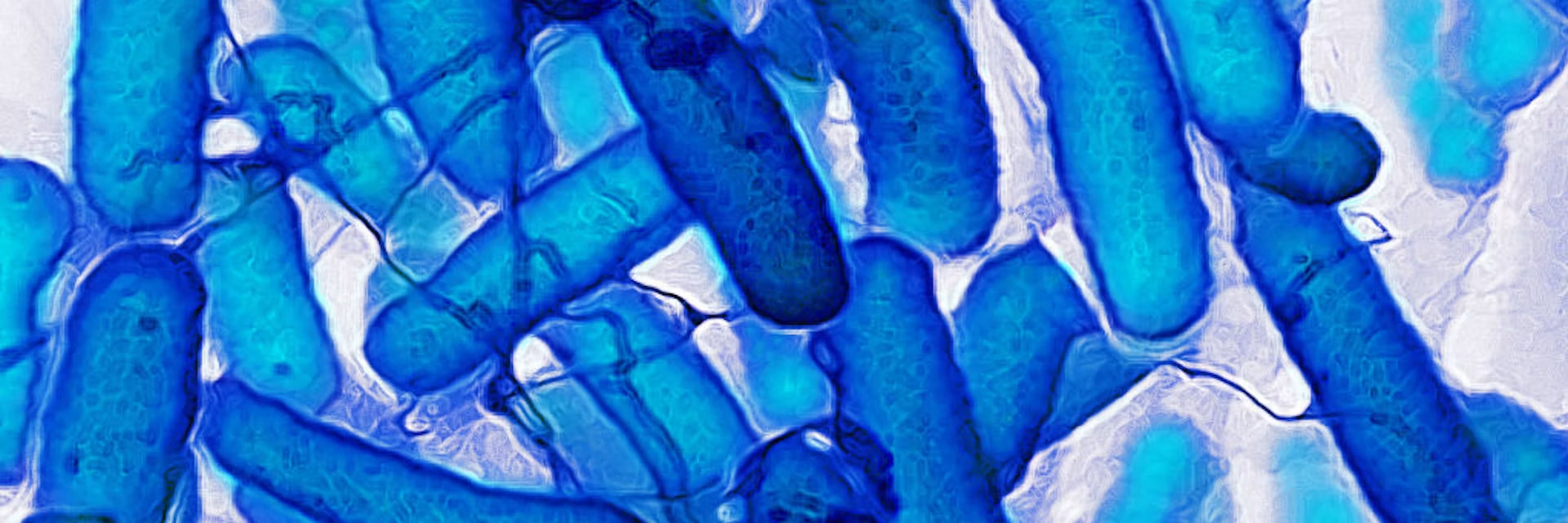
However, flamingos are not born pink. Quite surprisingly, they are born with grey or white feathers. The transformation from this neutral color to their characteristic pink happens due to their diet. The diet of flamingos is rich in tiny creatures like brine shrimp and a type of algae known as blue-green algae. These organisms contain a high amount of astaxanthin. When a flamingo eats these creatures, the astaxanthin in the food gets absorbed into the flamingo’s body and deposited into the feathers, causing them to turn pink.
The process of color change: From hatchling to adult
But this transformation from a grey or white hatchling to a pink adult is not an overnight process. It’s gradual and happens over time. As flamingos grow and continue their diet rich in astaxanthin, they start to transform. The change begins subtly; a light pink flush starts appearing on their otherwise grey feathers. Over two to three years, with a consistent astaxanthin-rich diet, the flamingos turn fully pink.
However, the color is not merely decorative; it has a significant biological purpose too. Among flamingos, the intensity of pink is often seen as an indicator of good health. Flamingos with more vivid coloring are generally healthier and have a better chance of finding a mate. Therefore, a flamingo’s pink color is a sign of its well-being and attractiveness to potential partners.
Flamingo Chicks, Credit: Wikimedia/Martin Pettitt
Flamingos and their environment: A colorful relationship
Flamingos’ pink hue is not just a result of their diet or a marker of their health; it also plays a vital role in their survival strategy. The pink of flamingos works as an effective camouflage , blending with the surroundings of their typical habitats, which are often rich in colorful algae and organisms. This makes it difficult for potential predators to single out and attack them.
Moreover, their color is closely linked to their habitat. A change in the flamingos’ natural environment, leading to a variation in their food sources, can lead to a change in their color. For instance, flamingos that don’t have access to astaxanthin-rich food may not develop the strong pink color.
To sum up, the flamingo’s pink coloration is a fantastic example of nature’s networks. It’s a brilliant demonstration of how an animal’s diet, habitat, survival tactics, and even mating strategies are intertwined. So, the next time you spot a flamingo and marvel at its vibrant color, remember the incredible story that lies beneath. Remember that this extraordinary pink hue isn’t merely a visual delight, but a show of the flamingo’s remarkable survival and adaptation in the wild.
Glossary
Astaxanthin: A type of carotenoid (natural pigment) found in certain algae and seafood that gives flamingos their pink color.
Carotenoid: A class of mainly yellow, orange, or red fat-soluble pigments, including carotene, which give color to plant parts such as ripe tomatoes and autumn leaves.
Camouflage: The use of any combination of materials, coloration, or illumination for concealment to make animals or objects hard to see.
Ecology: The science of studying hoe different species and animals relate to other animals and environment