How physics, technology and the human brain helped a 20-year-old make motorsport history
Imagine driving a car at more than 300 kilometers per hour (186 mph), braking hard before a corner, turning through a narrow section of track and accelerating again — all while competing against some of the best drivers in the world.
Now imagine doing this at just 20 years old.
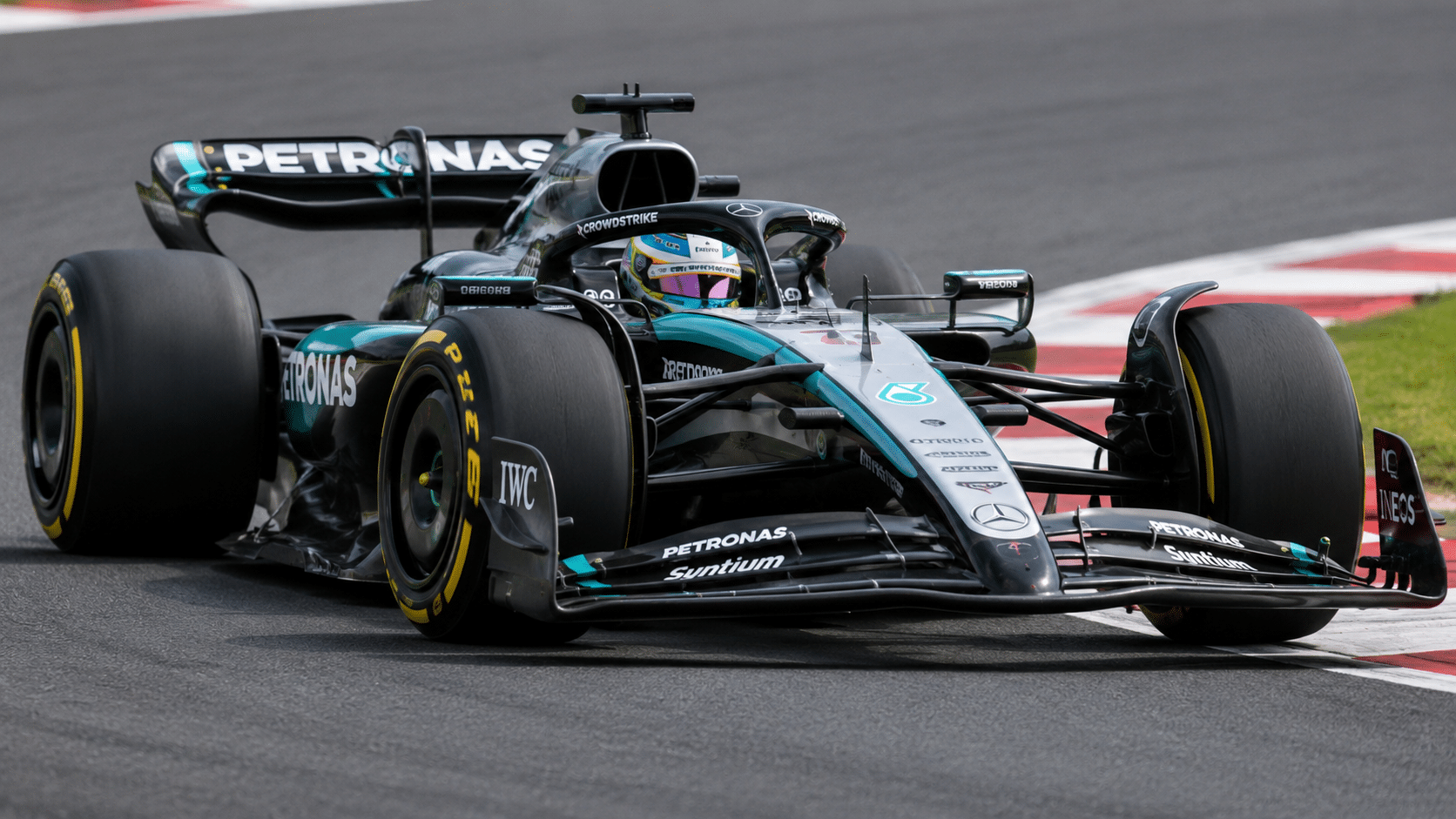
That is exactly what Italian racing driver Kimi Antonelli has achieved. On November 1, 2026, Antonelli made Formula 1 history by becoming the youngest World Drivers’ Champion ever. Driving for Mercedes, he secured the championship with a third-place finish at the Mexico City Grand Prix.
But his achievement is about more than driving fast. Formula 1 is one of the most fascinating examples of science, engineering and human performance working together. Behind every successful lap are complicated principles of physics, aerodynamics, mathematics and neuroscience.
So, what does it take to control a Formula 1 car at incredible speeds?
1. The Physics of Speed: More Than Just Pressing the Accelerator
A Formula 1 car can reach speeds exceeding 300 km/h. At these speeds, even a small mistake can have serious consequences.
One of the most important principles involved is Newton’s laws of motion.
Newton’s second law states that force equals mass multiplied by acceleration:
Force = Mass × Acceleration
An F1 car needs enormous force to accelerate quickly. Its powerful hybrid power unit, lightweight construction and advanced engineering help it achieve remarkable acceleration.
However, going fast in a straight line is only part of the challenge. Drivers must also slow down rapidly before entering corners.
This is where braking physics becomes important. The brakes convert the car’s kinetic energy — the energy it possesses because of its motion — into heat through friction.
At high speeds, the amount of kinetic energy is enormous. In fact, kinetic energy increases with the square of speed. This means doubling a car’s speed gives it four times the kinetic energy.
That is one reason why controlling speed is so important in Formula 1.
2. Aerodynamics: How an F1 Car Sticks to the Track
Have you ever wondered why Formula 1 cars have such unusual shapes, with large wings at the front and rear?
The answer is aerodynamics — the science of how air moves around objects.
Unlike an ordinary road car, an F1 car is designed to generate something called downforce.
Downforce is an aerodynamic force that pushes the car toward the track. It is produced by carefully shaped wings, the floor of the car and other aerodynamic surfaces.
The greater the downforce, the more grip the tires can generate when cornering.
Think about holding your hand outside a moving car window. If you tilt your hand, you can feel the air pushing it in different directions. F1 engineers use similar principles to control airflow around the car.
But there is a trade-off.
More downforce generally creates more aerodynamic drag, which slows the car down on straight sections. Engineers must find the right balance between cornering speed and straight-line performance.
This is one of the reasons Formula 1 teams employ hundreds of engineers and use sophisticated computer simulations and wind tunnels.
3. G-Forces: What Happens to the Human Body Inside an F1 Car?
An F1 driver experiences forces that are far greater than what most people experience in everyday life.
During heavy braking and fast cornering, drivers can experience forces of approximately 4 to 6 times Earth’s gravity, depending on the circuit and driving conditions.
These forces are known as G-forces.
For example, when a driver experiences 5G, their body experiences an effective acceleration five times that of normal gravity.
Imagine weighing 60 kilograms. Under a 5G acceleration, the effective force on your body would be similar to the weight experienced by a 300-kilogram mass under normal gravity.
This puts enormous strain on the neck, shoulders and core muscles.
That is why F1 drivers follow demanding fitness programs. They strengthen their neck muscles to support their heads inside the helmet, build endurance and train their bodies to withstand repeated physical stress.
Even though the steering wheel is small and the car looks easy to control, driving an F1 car is an extremely demanding physical activity.
4. The Human Brain: Making Decisions in Fractions of a Second
Driving an F1 car is not just about physical strength. The driver’s brain is constantly processing information.
A driver must monitor the track, check mirrors, judge distances, anticipate other cars, manage tire conditions and communicate with the team.
All of this happens while traveling at incredible speeds.
Reaction time is particularly important.
At 300 km/h, a car travels approximately 83 meters every second. If a driver takes just half a second to react to an unexpected situation, the car will travel more than 41 meters before the driver responds.
That is almost the length of an Olympic swimming pool!
Drivers therefore train their visual awareness, hand-eye coordination, concentration and decision-making abilities.
They also practice reacting to changing lights, visual signals and simulated racing situations.
Antonelli’s ability to compete at the highest level at such a young age demonstrates how years of training and racing experience can develop these skills.
5. Tire Science: Why Temperature Can Decide a Race
One of the most interesting aspects of Formula 1 is that tires are not simply round pieces of rubber.
They are highly engineered components designed to work within specific temperature ranges.
Tire temperature affects the rubber’s ability to generate grip. If the tires are too cold, they may not provide enough grip. If they become too hot, their performance can deteriorate.
This is why drivers sometimes struggle during the opening laps of a race. They need to bring their tires into the correct operating temperature range.
Tire wear is also influenced by driving style, track surface, cornering forces and braking.
F1 teams constantly monitor tire performance and use mathematical models to predict how long a set of tires can last.
Choosing the right moment to change tires can make the difference between winning and losing a race.
6. How Did Kimi Antonelli Become a World Champion So Young?
Born in Bologna, Italy, in 2006, Antonelli began developing his racing skills through karting.
He joined the Mercedes Junior Programme in 2019, when he was just 12 years old.
His progress through the junior racing categories was remarkable. He won major championships in Formula 4 and Formula Regional before moving directly into Formula 2 in 2024.
In 2025, he made his Formula 1 debut with Mercedes, becoming one of the youngest drivers ever to compete in the sport.
His first season brought valuable experience, including three podium finishes. In 2026, he took another major step forward, winning races and consistently challenging the best drivers in the championship.
His third-place finish in Mexico City on November 1 secured his first world championship and made him the youngest champion in Formula 1 history, breaking Sebastian Vettel’s previous record.
His achievement highlights the importance of starting early, practicing consistently, learning from mistakes and combining natural ability with scientific training and advanced technology.
The Science of Becoming a Champion
Kimi Antonelli’s success shows that Formula 1 is much more than a competition between fast cars and talented drivers.
It is a real-world science laboratory where physics, mathematics, engineering, computer science and human biology come together.
Every corner tests the laws of motion. Every wing demonstrates aerodynamics. Every braking zone involves energy conversion. And every race challenges the human brain and body.
The next time you watch a Formula 1 race, look beyond the speed and excitement. Think about the science happening every second.
Because behind every great driver is an extraordinary combination of human skill and scientific innovation.
🏁 Test Your F1 Science Knowledge!
How much have you learned about the science behind Formula 1? Answer these five questions and see how well you do!