If you’ve ever spoken to your grandparents, or even your parents about the weather you might have noticed them saying things like “It didn’t used to be this hot in the summer”, or “Why isn’t it raining this year?”. They aren’t wrong. Climate change is altering rainfall patterns around the world.
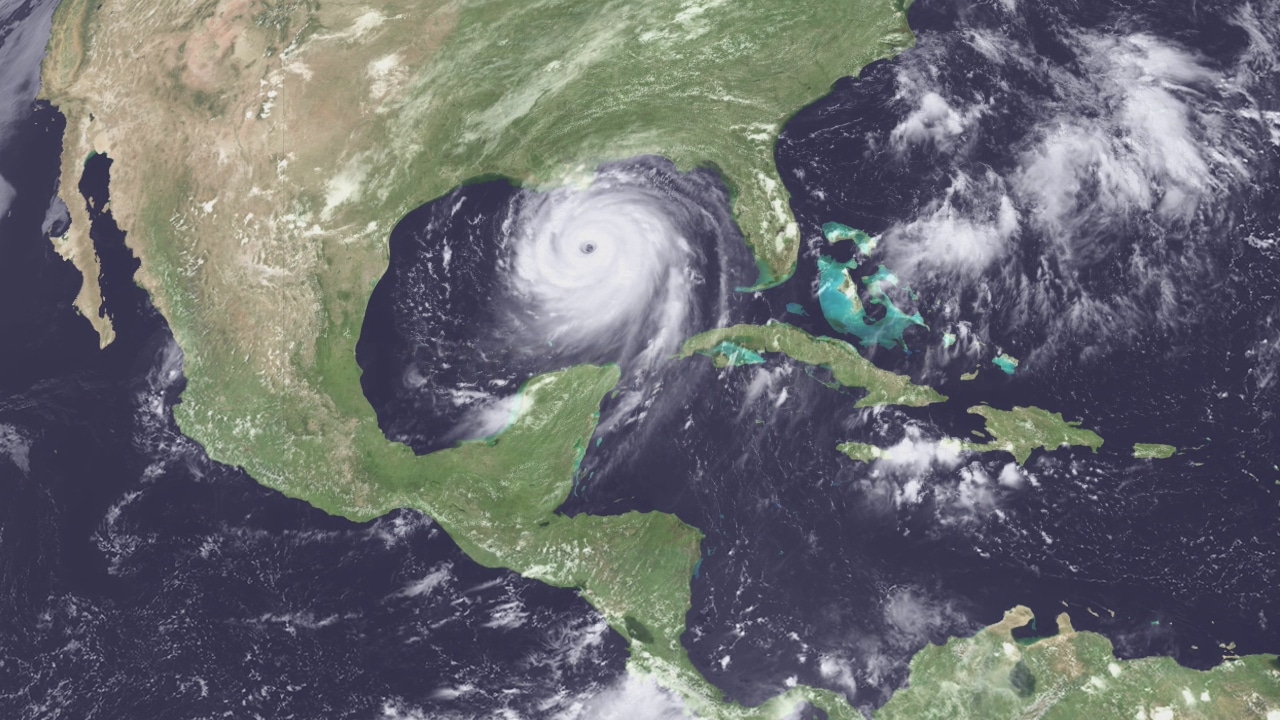
Scientists have noted a number of ways in which rainfall patterns have changed over the last few decades. Extreme weather events such as tropical storms, cyclones and flash floods have become more common. Some of these events are due to excessive rainfall.
They are also documenting shifts in rainfall distribution. This means that the amount of rainfall might not necessarily change, but where its falling changes significantly. Wet areas are getting wetter, and dry areas are getting drier.
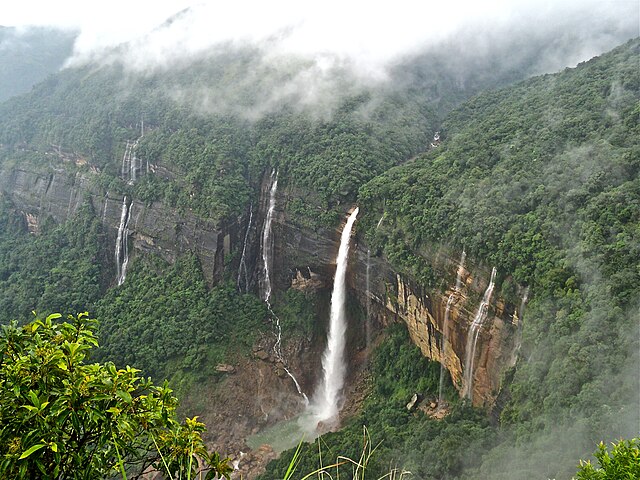
Some regions of the world also experience a monsoon season. Rather than the four seasons experienced in most regions of the United States, there is a dry season and a rainy reason. Scientists are finding that there are delays in onset of the rainy season, leading to a shorter monsoon season. This upsets the cycle of the monsoon. It also means that the rainfall that was supposed to fall over longer periods ends up concentrated in a month or two. This makes rainy seasons super soaked.
Cherrapunji, the second wettest place in the world. It experiences an annual monsoon, Credit; Wikimedia/Kunal Dalui
In contrast, dry seasons and dry regions are tending to become even drier. The changing of wind patterns, such as the Hadley circulation, are affecting rainfall. Hot temperatures increase evaporation, making soils drier. This increases the risk of drought. Eventually, there isn’t any water left in the soil, making the droughts drier and drier, and last longer and longer.
Newer research is suggesting that most of the changes in rainfall can be traced back to a change in rainfall variability. There are more and more fluctuations in the amount, timing, and distribution of rainfall over a specific period and region. One study looked at rainfall variability across the world and over time. Since the 1900s, rainfall variability has increased. The change is even greater after 1950, meaning that changes are getting bigger as climate change worsens. Globally, rainfall variability increases by 1.2% every decade. This means that wet seasons will get wetter, and dry seasons drier with every decade.
The changes in variability are also worse in certain regions. Eastern Northern America, particularly in states such as Kentucky, Ohio, and Iowa. Europe and Australia are also likely to be the most affected.
How is climate change affecting rainfall?
Since the Industrial Revolution, the Earth has warmed about an average of 1.5℃). That change might seem small – in one day alone, you might experience temperature variations of 4-5 ℃. For worldwide climatic patterns, this change isn’t small at all.
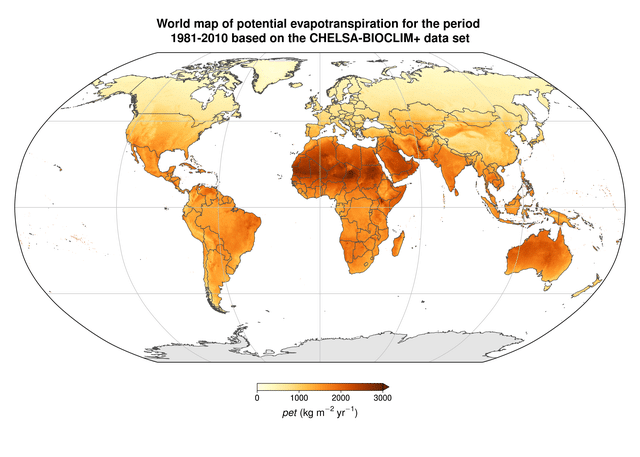
Temperature is one of the primary drivers of rainfall. The hotter an area is, the more water evaporates from water bodies and trees. This increases the amount of water in the atmosphere. Warmer air can also hold more water vapor, furthering this cycle. With two factors increasing the amount of moisture available, rainfall events can become more intense. Climate change also affects wind patterns, which could make storms even stronger.
Rates of evaporation around the world. Darker regions experience more evaporation, Credit: Wikimedia/ Greenmind1980
Lots of regions of the world also have local climatic processes which drive rainfall. The Indo-Pacific monsoon is regulated by two currents: the El Nino and La Nina. The North Atlantic Oscillation affects rainfall around North America and Europe. These larger processes depend on ocean currents. Ocean warming can change currents, often having negative effects on climatic processes.
How does changing rainfall affect us?
First and foremost, changing rainfall is likely to impact water resources and access to water resources. Cities, villages and towns depend on rain-fed lakes, reservoirs and streams for water in homes and drinking water. Other regions might use groundwater, which depends on rainfall for recharge. Droughts can make water resources scarcer. If these places fall in “super-soaked” regions, they may experience flooding or landslides.
Changing rainfall is also likely to have a huge impact on agriculture. In many regions of the world, where irrigation isn’t commonplace, farmers depend on rainfall to water their crops. They often coordinate what crops they plant based on the rainfall they expect. If the rains don’t come when farmers expect, or there isn’t enough rain, yields will decrease. Even in regions where irrigation is common, rivers can flood or groundwater can be depleted. Disruptions in food production due to changing rainfall patterns can lead to higher food prices. It can also make food supply irregular and scarcer.
Many places around the world still rely on rainfall for growing crops, Credit: depositphotos.com/NewAfrica
Flooding might also affect human health. Mosquitoes depend on puddles and pools to breed. This might increase the spread of diseases such as malaria, dengue and Zika. Some bacterial diseases, such as cholera and typhoid, also spread more in wet conditions.
All of these impacts also don’t take place in isolation. If they all occur together, the overall impacts might be even greater.
Rainfall patterns are becoming more unpredictable and variable across the world and over time. More rainfall variability means that wet seasons will become wetter, and dry seasons will become drier.
FAQ
What will happen to an ecosystem that is experiencing a prolonged drought?
There is likely to be stressed vegetation, loss of plant and animal species, increased risk of wildfires, and disruption of food chains. Water-dependent habitats, such as wetlands, may dry up.
When does the monsoon season start?
In the Northern Hemisphere, the monsoon typically starts in June and lasts until September. In the Southern Hemisphere, the monsoon usually starts in November and lasts until March.