It’s a sunny summer afternoon and you’re sitting in your backyard, enjoying a slice of watermelon or a peanut butter sandwich. As you lift the treat to your mouth, ready to take a big juicy bite, you notice an unwelcome guest hovering nearby. A wasp zooms in erratically, clearly interested in crashing your private picnic. “Shoo!” you yell, waving your hand. But the stubborn wasp persists, refusing to take the hint.
We’ve all been there – angrily swatting at wasps trying to steal a bit of our food. In those moments of irritation, it’s easy to see these buzzing party crashers as nothing but a nuisance. But wasps have a critical role to play in nature, believe it or not. Their dietary choices may seem rude and annoying to us, but they evolved that way for a reason.
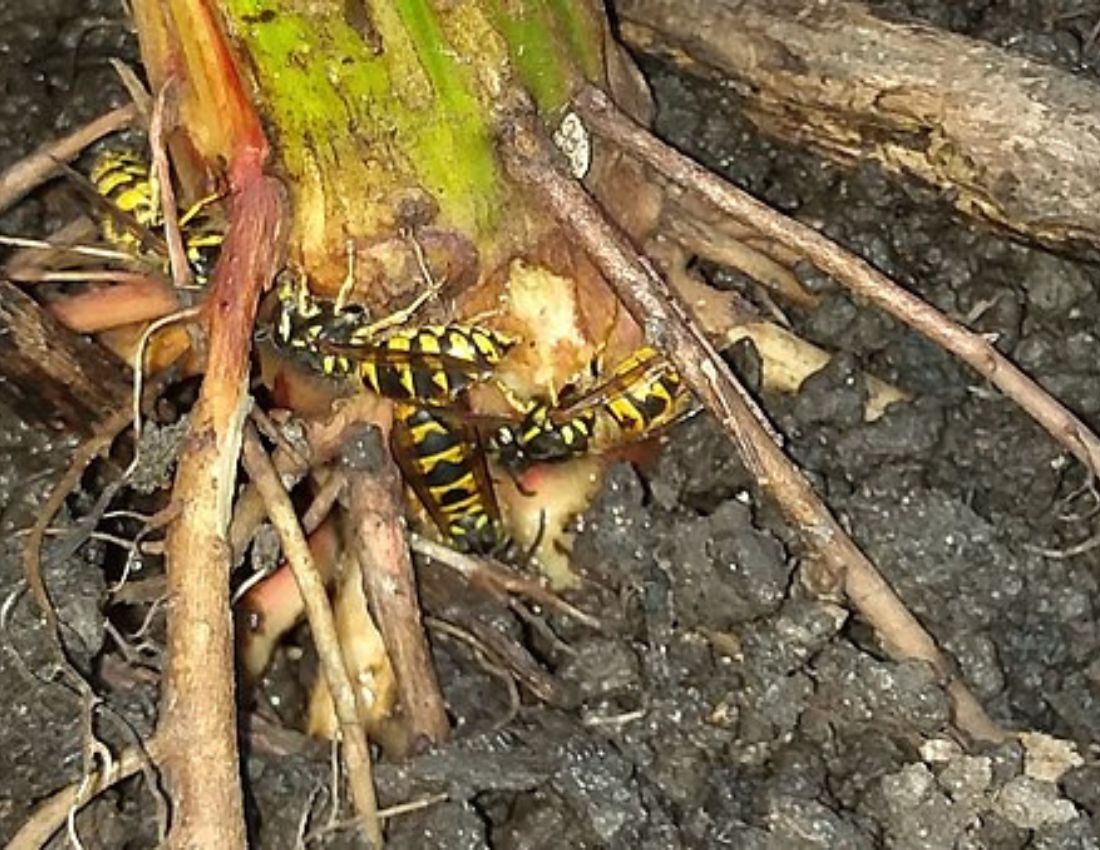
Unlike honeybees that peacefully collect nectar from flowers, wasps have a taste for meat, not sweets. They are relentless hunters, feasting on caterpillars, spiders and all sorts of crawling critters most of us find repulsive. While bees sip daintily on blossoms like gentle vegans, wasps ruthlessly chase down prey, stinging their victims and dragging them back to feed their larvae . It’s almost like they are tiny flying lions!
A sweet tooth: Wasps and sugary foods
As persistent as wasps seem when crashing our picnics, don’t be too quick to shoo them away without offering a sweet treat! Wasps just have an insatiable craving for sugary things. Once they catch a whiff of your soda or a ripe peach, they zoom over, longing for a taste.
We may curse these uninvited guests, but their love of sweets serves an important bodily need – quick energy! Unlike us, wasps can’t just grab a sugary snack from the cupboard when they need an energy kick. They rely on flower nectar and ripe, fallen fruit to fuel their high-octane lifestyle buzzing about the garden. Without these sweets giving them an immediate sugar rush for their fast-beating wings, wasps would quickly become exhausted and vulnerable.
So maybe we shouldn’t be too greedy and hog all the sweet picnic food for ourselves. When a wasp friend stops by hoping for a bite, we can spare a tiny morsel in exchange for their essential pollination services! A little nectar access seems a fair bargain. We reap what they sow, after all!
Common Indian scoliid wasp at work, Credit: Wikimedia/Siddharth Pandey
The young ones: Feeding the next generation
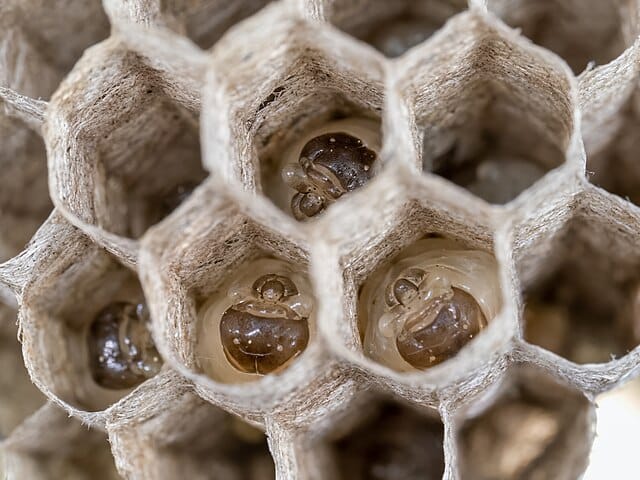
The most endearing thing about wasps is the care they show for their precious young. We might view a wasp nest clustered under the eaves with disgust, but within those weathered grey pods, miracles are happening! Adult wasps work tirelessly to nourish their vulnerable larvae, hunting prey to share. They chew caterpillars and cicadas into a protein-rich mush to satisfy their babies’ voracious appetites.
In return, the grateful larvae produce a sweet, sugary secretion eagerly slurped up by the adults. This mutual exchange of favors ensures the survival of both generations. When we see wasps gobbling up sugary picnic fare, they may be stockpiling energy not just for themselves, but to keep their babies well-fed! It’s a remarkable system of familial teamwork and care.
Polistes Larvae, Credit: Wikimedia/Ermell
So if a wasp gets a little too close for comfort at our cookouts, we shouldn’t judge them too harshly. They are just being good parents and providing for their young, not so unlike us!
The diet of wasps is not limited to just insects and nectar. They are known to feed on a variety of foods depending on their environment. This can include fruits, honeydew produced by aphids, and even human food. This dietary adaptability is one of the reasons why wasps are successful in diverse habitats.
Wasps as pollinators: A lesser-known fact
We often only credit busy honeybees with keeping flowers blooming through pollination. But believe it or not, those pesky wasps play a supporting role in carrying precious pollen from bloom to bloom as well!
As wasps dart from plant to plant sipping sweet nectar to fuel their high-energy lifestyle, powdery yellow pollen grains stick to their slender bodies and transfer to the next flower they alight upon. While not the heavy lifters that hairy bees are when it comes to ensuring robust pollination, every pollen grain helps nature’s reproductive cause!
So the next time you spy a wasp nuzzling inside a blossom before soaring to the next, remember it is helping ensure that flower can produce ample fruits and seeds, spreading the gift of life in its own small way. Wasps: not just party crashers – but tiny flying helpers for Mother Nature herself! We owe them thanks for this inadvertent duty they perform.
Implications of wasp diet on pest control
The voracious appetite wasps have for garden pests isn’t merely an odd quirk of their biology to annoy us. We can actually harness that appetite for an incredibly helpful purpose – natural pest control!
Since wasps are essentially tiny insect-devouring mercenaries, we can employ them to patrol crops and gardens for us, picking off caterpillars and other bothersome bugs. By providing habitat for wasps near vulnerable plants, they get free room and board in exchange for security services! No need to douse vegetation in toxic chemicals – let wasps handle pest patrol safely with their trusty stinger weapons.
A wasp’s dietary choices have given them an incredibly helpful niche in the ecosystem , keeping fellow insect populations in check. With ecologically harmful pesticides contaminating landscapes, we need the natural assistance wasps can provide now more than ever! A healthy wasp presence means clean, chemical-free gardens for us all to enjoy.
Glossary
Ecosystem: A biological community of interacting organisms and their physical environment.
Larvae: The immature form of an insect that undergoes metamorphosis.
Nectar: A sweet liquid produced by plants, which attracts pollinators like bees and wasps.
Pollination: The transfer of pollen from a male part of a plant to a female part of a plant, enabling fertilization and the production of seeds.