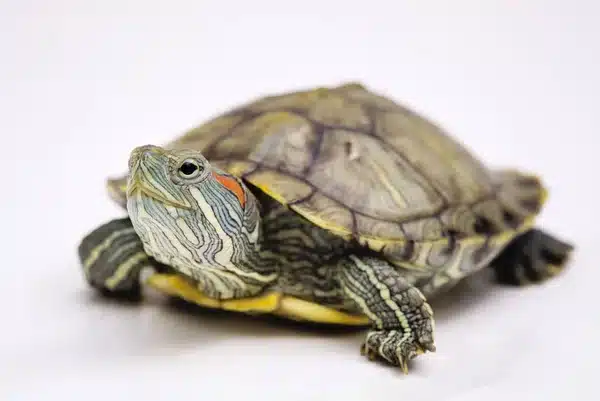
Pond sliders like the red-eared slider have become popular pets around the world because they are small, relatively inexpensive, and easy to take care of. These distinctive terrapins have a single small red stripe where one would expect their ears to be and can slide rapidly off logs and rocks into the ponds around which they live. But what do red-eared slider turtles eat and what should they be fed?
Sliders in the wild
Red-eared slider turtles are omnivores in the wild, meaning they eat both plant and animal matter. Their diet typically consists of aquatic plants, algae, small fish, insects, crustaceans, and other small aquatic organisms. As they get older, they become more herbivorous.
Feeding pet sliders
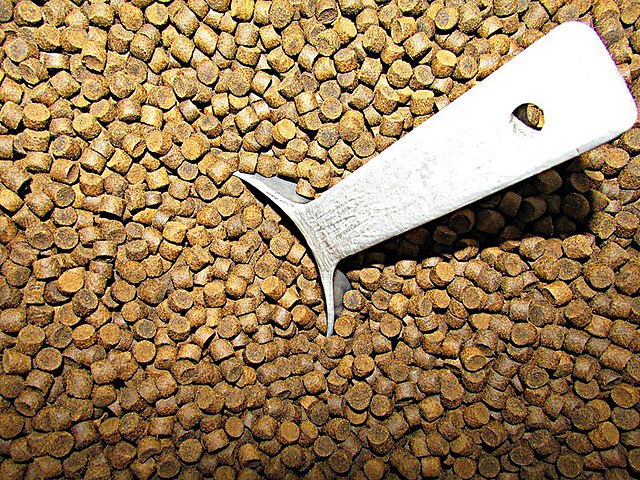
Food pellets for fish and turtles, Credit: Wikimedia/USFWS Mountain-Prairie
Improper diets can cause pet red-eared sliders to develop health issues such as foreign body ingestion, protein deficiency, renal failure, and pyramidal shell growth. Juvenile turtles mostly eat animal protein but become more omnivorous as they get older, eating both vegetable and animal matter.
For the carnivorous portion of their diet, pet sliders can be fed commercial pellets formulated for fish and turtles as well as small vertebrates (like tadpoles) and invertebrates (including wax worms, mealworms, crickets, and moths).
They can also be offered small live fish like guppies, goldfish, or minnows, which are a good source of calcium and provide the pet turtles with stimulation and exercise. Pets should only be fed store-bought fish and not wild-caught ones, which can give them parasites.
The plant-based part of their diet can include dark leafy greens like clover, endive, parsley, and kale, avoiding lettuce which has little nutritional value. Lighter vegetables will float on the surface of the tank so the turtle can eat them all day, but leftovers should be removed periodically.
Veterinarians recommend feeding pet turtles a variety of food to provide nutritional balance (and so they don’t get bored!).
High-calcium food items
Feeding turtles high-calcium foods can help prevent metabolic bone diseases which could weaken their limbs and shells. These can include freshwater fish like shiners and minnows, as well as crayfish and other crustaceans which are rich in calcium if their shells and exoskeletons are intact. Commercial pellets are often supplemented with calcium too.
Vitamin and mineral supplements
Some veterinarians suggest adding supplements into turtle diets, like balanced, commercially available multivitamins once a week along with additional sources of calcium like cuttlebone or calcium block twice a week. Calcium is particularly important because it prevents the shell from becoming soft.
Taking care of your turtle – and the environment
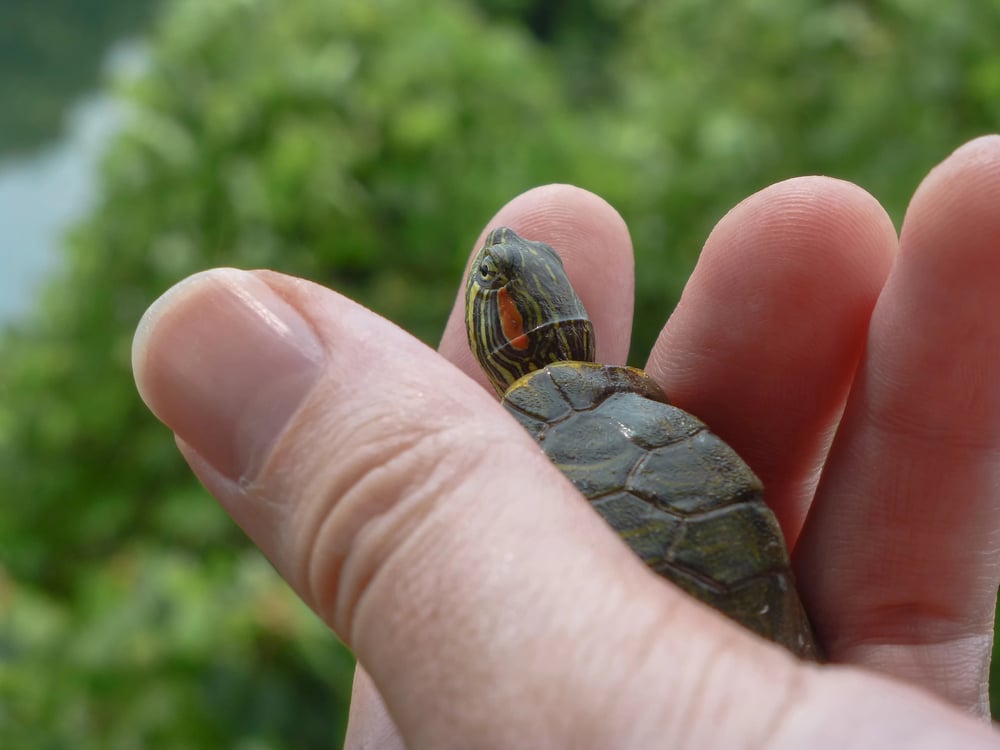
A baby red-eared slider turtle held by a human, Credit: depositphotos.com/funkuokando
Unfortunately, many people bite off more than they can chew when they get red-eared sliders as pets. They are ranked among the top 100 most invasive species globally because they are released into the wild by unaware owners, often because they’ve grown too big!
While one or two might not significantly impact the ecosystem, the scale at which they have been released has led them to take over waterbodies all over the world, often at the cost of native turtle species.