When the FDA approved Rebyota and Vowst, fecal transplant, or trivially called “poop pills”, was already at the peak of research interest. Fecal transplant, or fecal microbiota transplant (FMT), is a procedure in which feces collected from a healthy donor are introduced into a patient’s colon. Physicians recommend this therapy for recurrent Clostridium difficile (C. diff) infections.
Why do C. diff infections occur?
There are thousands of bacteria in a healthy digestive tract that either aid digestion or are harmless. Some even produce enzymes required for the synthesis of certain vitamins, such as B12 and K. In the colon, anaerobic bacteria (organisms that grow in the absence of oxygen) break down dietary fiber into short-chain fatty acids that nourish colon cells.
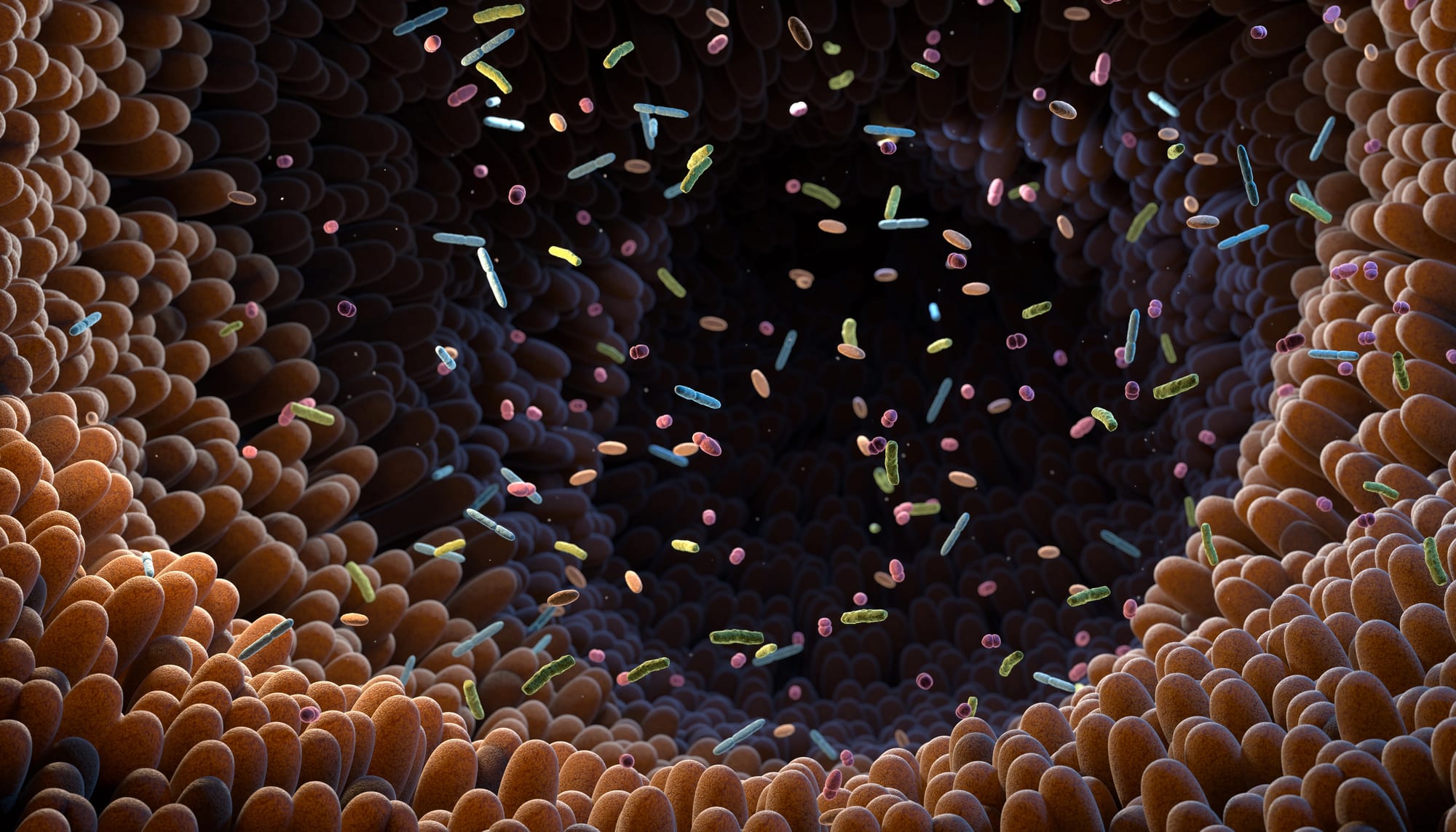
In cases of GI tract infection, antibiotics may be administered to kill the pathogen. However, antibiotics don’t kill only the bad ones; many beneficial bacteria are also killed in the process. The scales tip, and the delicate balance in the gut microbiome is sabotaged, a condition known as dysbiosis.
When the body is weakened by dysbiosis, Clostridium difficile(C. diff), an opportunistic pathogen, colonizes the gut and produces toxins upon reaching the colon. The toxins destroy the gut lining and cause watery diarrhea, enlarge the colon (toxic megacolon), and perforate the bowel. Serious infection can lead to death. Geriatric patients with chronic illness face the greatest risk.

Who can get a fecal transplant?
The FDA has approved fecal transplant for:
- Recurrent infections: Individuals who have had two or more, or at least three episodes of severe C. diff infection, as the infection returns after treatment with antibiotics like vancomycin.
- Refractory infections: Infections that do not respond to antibiotic treatment, such as vancomycin, and persist despite treatment, with no improvement.
- Fulminant infections: Severe C. diff infections that can be fatal in approximately 2 in 3 persons occur in about 3-5% of cases. FMT is suggested as an alternative and/or adjunct to colectomy.
Apart from these diseases, research on the scope of FMT is also being conducted for the following:
- A clinical trial at Massachusetts General Hospital is studying a 7-day protocol of oral FMT to treat auto-brewery syndrome (ABS), in which the body ferments carbohydrates into intoxicating levels of alcohol due to dysbiosis.
Apart from C. diff infections, research on the scope of FMT in treating irritable bowel syndrome (IBS), inflammatory bowel disease (IBD), obesity, and even autism and neurodegenerative diseases like Alzheimer’s is going on.
How does fecal transplant help?
Fecal transplant can correct dysbiosis and restore a healthy, balanced gut ecosystem. Thousands of ‘good bacteria’— mostly Firmicutes and Bacteroidetes —in a healthy stool sample repopulate the colon. By fixing dysbiosis, FMT causes a butterfly effect:
- First, bile acid balance is restored, which makes it difficult for C. diff to thrive.
- The body regains control over the immune system, 70-80% of which is located in the gut, and is actively trained through gut microbiota. An increase in IgA production and enhanced innate immunity helps detect pathogens.
As the gut microbiome is further restored, the microbial-gut-brain (MGB) axis improves, and so do mental state, mood, and cognition. The MGB axis links mood and stress to the gut microbiota, which secretes neurotransmitters that influence mental health. FMT has shown promise in improving the quality of life in patients with depression in clinical settings.

How is a fecal transplant done?
There are several methods for delivering fecal transplants to the colon:
- Colonoscopy: FMT is usually performed through colonoscopy, in which a flexible tube with a tiny camera at its tip (a colonoscope) is inserted into the colon through the rectum. As it is withdrawn, a solution with donor stool is deposited into the colon.
- Upper Endoscopy: Sometimes, a similar tube called an endoscope is inserted through the mouth or nose that travels through the small intestine to reach the colon. Although this method does not require bowel prep, it has a lower success rate.

- Enema: The first FDA-approved microbiota therapy, RBL or Rebyota™ (fecal microbiota, live-jslm), is delivered through enema in a single dose. In an enema, a tube is inserted into the rectum, and then the fecal transplant is delivered into the colon.
The procedure is mild and doesn’t need bowel prep with laxatives or anesthesia. The procedure is performed within 1 to 3 days after completing antibiotic therapy for C. diff. A healthcare provider might administer medicine to slow the bowels to let the transplant stay long enough to take hold.
- “Poop pills”: Oral capsules deliver more-refined, freeze-dried, live fecal microbiota inside the colon. The most recent FDA-approved FMT, SER-109 or VOWST™ (fecal microbiota spores, live-bprk), is a “poop pill” that contains spores of select bacterial species, including Firmicutes.
Oral capsules can be taken by prescription within 2 to 4 days after completing the recommended course of antibiotics. The prep involves fasting for eight hours and using laxatives to flush out the bowels completely. You will have to take your dose for the next three mornings on an empty stomach.
Where do fecal transplants come from?
Volunteer fecal donors donate stool for screening and processing for fecal transplant. There are two main ways by which stool for FMT is collected:
- Stool banks collect stools from donors after a rigorous screening process. Various non-profit organizations, such as GoodNature and OpenBiome (which no longer collects stool but raises awareness about FMT), have dedicated stool donation programmes.
- Direct donation from chosen members from their family or social circle by the recipient, or the recipient’s previously collected stools are transplanted back into them to stabilize the gut microbiome.
Who can (or cannot) donate stool to stool banks?
Fecal donor volunteers are screened for various gastrointestinal diseases through blood tests and stool tests. They may also collect oral medical history and urinalysis data to evaluate whether they are fit for stool donation. If any of the following are revealed, they are ruled out:
- Presence of invasive or antibiotic-resistant bacteria
- Viral infections ranging from short-term stomach flu virus to chronic infections like HIV, viral hepatitis, and COVID-19
- Intestinal parasites
- Treatment with antibiotics in the last 3 to 6 months
- Autoimmune diseases like type 1 diabetes.
- Controlled substance use
- Family history of cancer
- Inherited metabolic disorders
Stool banks are extremely picky, and only about 3% of the applicants become qualified stool donors. Stool donors receive $25 to $75 per donation on-site, and in some cases up to $500 per “high-quality” sample.
The detailed selection procedure for donors is available here.
How is poop processed for FMT?
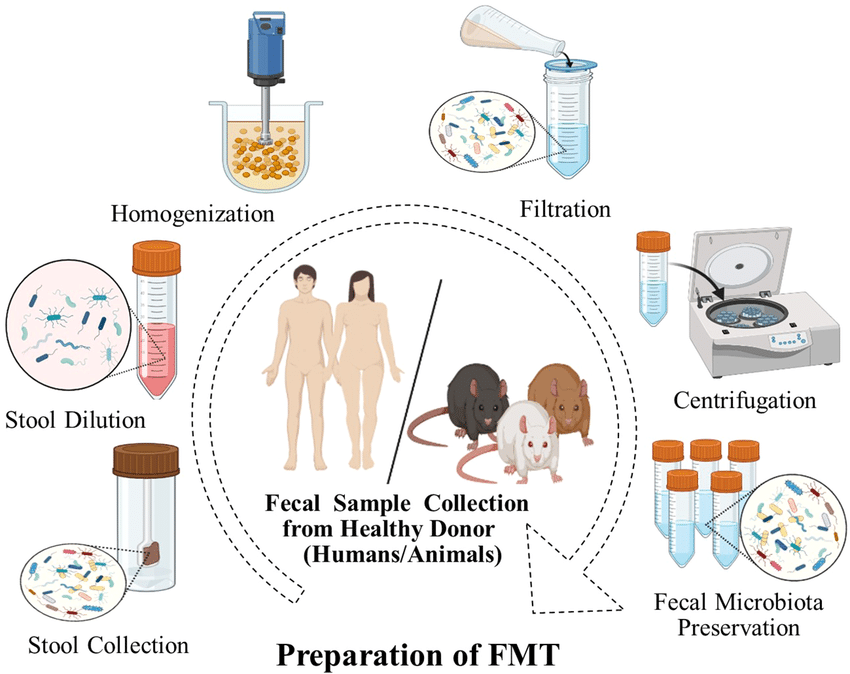
- Once a sample of poop is screened, it is blended with saline to create a slurry.
- Large pieces are removed using a sieve or gauze to prepare the liquid suspension.
- Samples are stored with a cryoprotectant (a chemical that protects biological tissues from damage in frigid conditions) at -112°F (-80°C) in special freezers to keep the microbiota alive.
- For oral capsules, FMT poop is placed inside capsules with a double encapsulation (acid-resistant coating) to ensure the dose is released in the intestines.
What are some of the risks/side effects of FMT?
Short-term effects
- Abdominal cramps and discomfort
- Bloating and gas
- Nausea and vomiting
- Diarrhea
- Constipation
- Fever and chills in some cases
These symptoms are not a cause for concern and go away within 24 to 48 hours.
Serious complications
- Rarely, a fecal transplant can transmit bacteria such as E. coli and viruses. This is why the FDA has approved only two fecal microbiota transplant therapies, which have been tested to be safe and have passed clinical trials.
- Sometimes, a patient receiving FMT through upper endoscopy might inhale some of the material, which can cause aspiration pneumonia.
TikTok trends like #GutTok and #GutHealth have turned heads. As more and more medical information fills up the feed, we are eventually getting to know our bodies better. However, there is no miracle or wonder therapy, no cure-for-all medication. If any influencer claims any therapy as such, it might be misinformation, more often than information. Fecal microbiota transfer, or FMT, has a lot of hype around it. We need to filter out the facts from the fads and ensure that FMT (and other therapies) reach the people who need them most.
Frequently Asked Questions (FAQ):
Q: Is fecal transplant FDA-approved?
A: Yes, certain manufactured fecal transplants, such as Vowst (oral capsule) and Rebyota (enema), are FDA-approved. These are made after rigorous screening and using good manufacturing practices (GMP), ensuring that the safety standards are maintained.
Q: Are there any over-the-counter FMT pills?
A: No, fecal transplant therapies are strictly regulated and are to be administered under a physician’s supervision.
Q: Can I do a DIY fecal transplant at home?
A: No, absolutely not. Fecal transplant is far from a miracle cure and does more harm than good if not properly screened. On a Netflix show, Hack Your Health: The Secrets of Your Gut, a participant with irritable bowel syndrome (IBS) prepared do-it-yourself FMT with her brother’s stool. After taking the homemade fecal transplant, she started experiencing acne breakouts.
Q: Do we have fecal transplants for weight loss?
A: Currently, there is no FDA-approved fecal transplant therapy for weight loss. However, scientists are studying whether fecal microbiota transplant can help against obesity.
Q: Can fecal transplants cure Crohn’s disease?
A: Although no approved fecal transplant is available for Crohn’s disease, some studies report that around 50% of Crohn’s disease patients entered remission when kept on FMT. Crohn’s disease causes dysbiosis, which can eventually lead to C. diff infections.
Q: Can fecal transplants treat depression?
A: Fecal microbiota transplants hold promise in treating depression in pre-clinical (animal) trials, and some small-scale human trials. Improving gut microbiota might elevate mood, as most evidence suggests a connection between gut microbiota and the brain, also known as the microbiota-gut-brain axis.
Q: What is the success rate of fecal microbiota transplant?
A: Fecal microbiota transplant has a high success rate, curing 8 to 9 cases of C. diff infection out of 10.
References:
https://my.clevelandclinic.org/health/treatments/25202-fecal-transplant
https://www.hopkinsmedicine.org/health/treatment-tests-and-therapies/fecal-transplant
https://www.frontiersin.org/journals/immunology/articles/10.3389/fimmu.2024.1439176/full#B4
https://www.mayoclinic.org/diseases-conditions/c-difficile/symptoms-causes/syc-20351691
Copyright @smorescience. All rights reserved. Do not copy, cite, publish, or distribute this content without permission.
SUBSCRIBE TO OUR NEWSLETTER
.......... ..........Subscribe to our mailing list to get updates to your email inbox.
Monthly Newsletter