Images of a large bird zooming across the sky, wings spread in careless abandon, is a particularly thrilling sight. The hawk is a mighty bird of prey with sharp talons and hooked beaks, which help them catch prey. The different types of hawks that fill the sky with a mesmerizing sight deserve a thorough discussion. Like a hawk, let’s dive right in! These are the top 10 types of hawks.
1. Cooper hawk
One of the most skillful fliers in the sky, the cooper hawk tends to be smaller than other common hawks, like the red-tailed. But small as they are, the copper hawk can still march through cluttered tree canopies in search of other birds. You’re most likely to see one lurking above a forest edge or field, so keep your eyes peeled!
Cooper hawk, Credit:deposit photos/steve_byland
The cooper hawk can be identified by several characteristics, such as its head, which has a black cap, or its tail, which has three black bands. Fascinatingly, the young ones have a yellow eye color, but as they grow older, the adult ones develop an eye color that is a shade between orange and red.
The red-tailed hawk is said to be one of the largest birds in the United States. Its distinguishing feature is its red tail. No surprises there. However, the young ones are known to have a brown tail. They can be found soaring across open fields or perched atop a telephone pole, minutely looking for any sign of a rabbit or vole. Detective much, Mr Hawk? One of its most significant features is its thrilling, raspy scream. The red-tailed hawk’s shrill scream has become a highly popular sound in movie scenes that showcase wild settings. The red-tailed hawk has very broad, rounded wings and a short, wide tail. But beware, if you see large females from a distance, you might be fooled into thinking it is an eagle.
3. Sharp-Shinned Hawk
The sharp-shinned hawk gets its name from the presence of a sharp ridge on the front edge of their legs. This feature likely contributes to their ability to catch and hold onto prey effectively. This hawk is known to possess many distinctive features, such as long legs, short wings, and very long tails, which are used for navigating their deep-wood homes in search of songbirds and mice.
Cool fact: The sharp-shinned hawk population, sadly, experienced a decrease during the era of dichloro-diphenyl-trichloroethane (DDT) pesticide use (from the mid-1940s to 1972) but saw a resurgence following the ban on DDT.
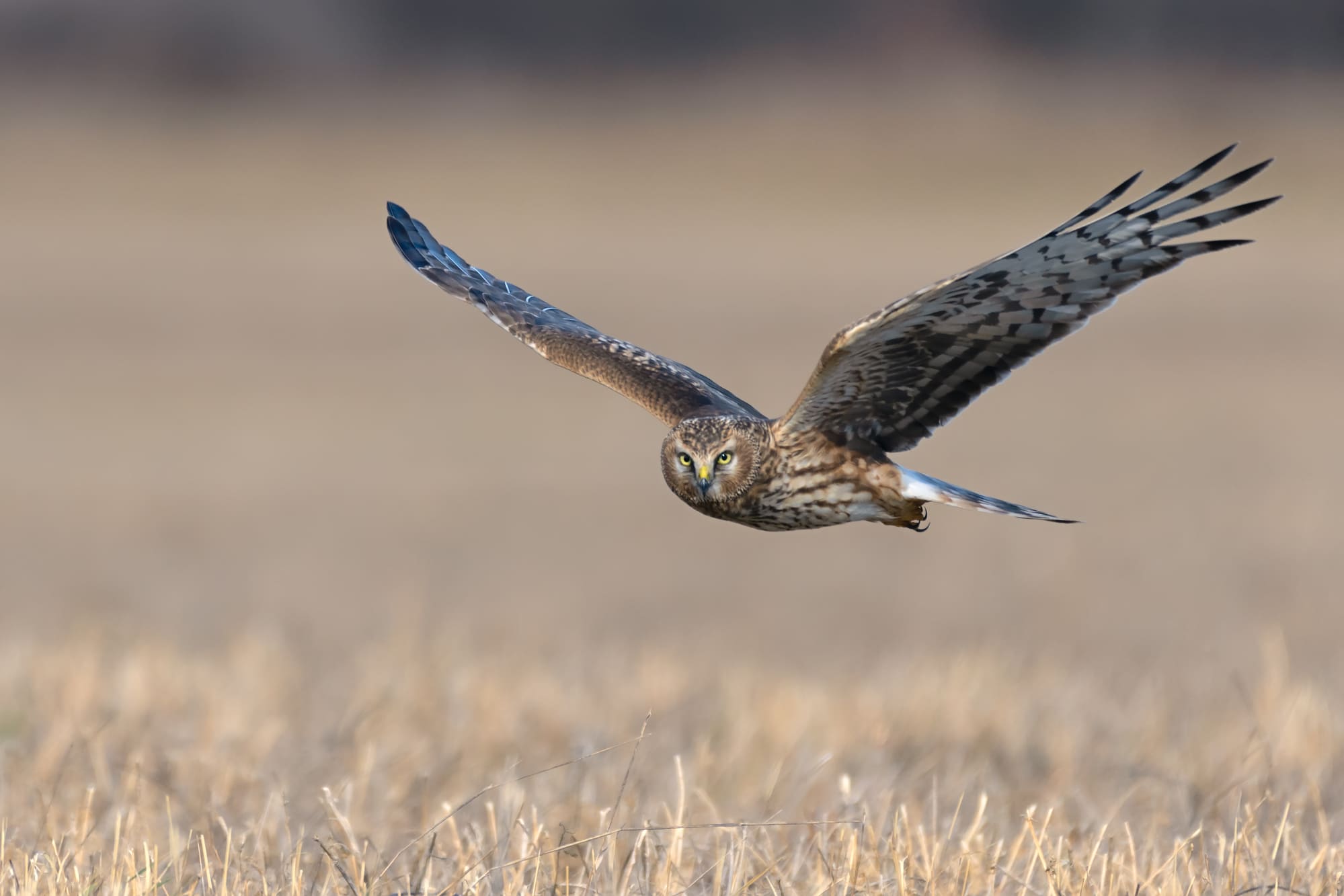
Northern harriers are another fascinating type of hawk that skims close to the ground during their hunting flights, gracefully dashing across fields and marshes as they keep their eyes peeled and ears sharp to look for small prey. They often feed on the ground and rest on low perches like posts or trees. Even miles away, the northern harrier stands out with its distinctive features: a sleek, slender hawk with a lengthy tail. Upon closer inspection(if you ever get the chance to look right into the eyes of a northern harrier), you might notice that its facial features resemble those of an owl.
5. Red-shouldered Hawk
The red-shouldered hawk is named for its regal reddish upper wing coverts or shoulders. Despite blending well into its woodland habitat, the hawk’s distinctive loud whistle cannot be missed. Although, it is easy to confuse the hawk’s distinctive sound with the mimicry of a blue jay. Red-shouldered hawks are commonly found along river valleys and moist lowland woods.
Sometimes, American crows may take a defensive stance to gather and mob these predatory birds, encircling and pestering them. However, peculiarly enough, these two species might also collaborate to repel owls that pose a danger to red-shouldered hawk nestlings. The true definition of frenemies, indeed!
The Ferruginous hawk is one of the only species known to have feathered legs all the way to its toes. This gray-headed hawk gets its common name from its rust-colored back and legs. These magnificent birds can be found enjoying a nice soar across the skies over prairies, deserts, and other expansive open landscapes, where they primarily hunt rodents and other small mammals. During winter, ferruginous hawks frequently gather around prairie dog colonies, patiently waiting for an opportunity to capture their next meal.
7. Rufous Crab Hawk
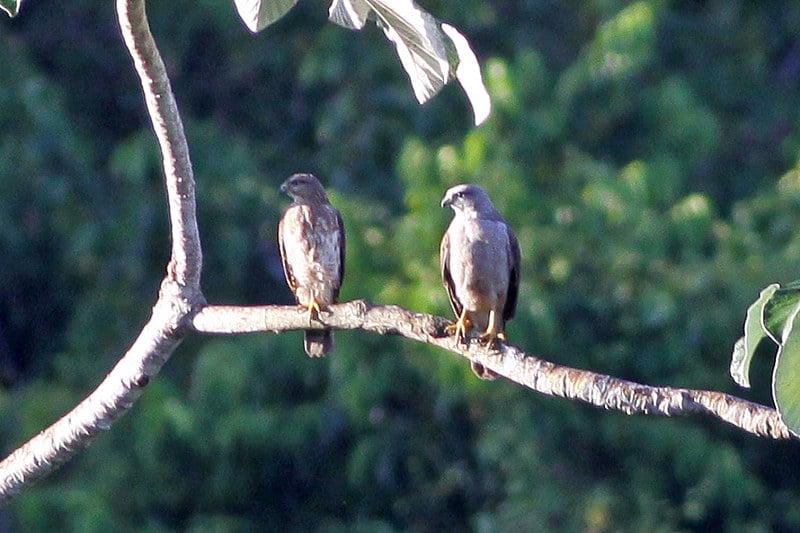
The rufous crab hawk dwells around lowland swamps, river edges, wet savannas, and mangroves. This hawk is known to reside within coastal mangrove habitats stretching from Venezuela to southern Brazil. Some fossil records from Jamaica even suggest that its historical range extended to the Caribbean basin, too. To catch prey, the rufous crab hawk swoops in swiftly to catch crabs at burrow openings or scouts for them by flying over mudflats.
Rufous crab hawk, Credit: flickr.com/Nick Athanas
Unfortunately, mangrove degradation and deforestation have led to a steep decline in their population. In fact, the International Union for Conservation of Nature(IUCN) has listed the rufous crab hawks as near threatened.
The Harri’s hawk boasts a striking combination of dark brown and copper hues, yellow legs, and distinct white tail markings. This species is known for its social nature, which is rare among birds of prey. These magnificent beings often engage in cooperative hunting strategies and collective nest protection efforts by keeping a sharp lookout for predators. An interesting behavior observed in the Harris hawk is ‘back-standing’. It is a phenomenon where hawks perch atop one another to gain better viewpoints for spotting prey and threats.
African harrier hawks are known for their unique hunting techniques. Apart from hunting from perches or in flight, they also show the ability to cross branches by running or jumping between them to look for prey. Moreover, the long legs of the African harrier hawks have the ability to flex both forward and backward. This flexibility allows the bird to access prey within nests, holes, and crevices that would otherwise be inaccessible. Their unconventional method of searching for prey is also quite noteworthy as they are capable of hanging upside down from trees, facilitated by their double-jointed knees. Bats and African harrier hawks sure can be best buddies!
10. Ridgway's hawk
Ridgway’s hawk is characterized by its gray plumage and legs with marks of rust and white bars. This hawk has a diverse diet, which includes rodents, birds, insects, and amphibians. However, its primary food source consists of reptiles, especially lizards and snakes. Interestingly, it exhibits an intriguing nesting behavior, in which it constructs its nest directly on top of the nest of the palmchat, the national bird of the Dominican Republic. This unique arrangement is a two-story, two-species bird building. Unfortunately, this hawk is one of the most critically endangered raptors globally, facing threats from deforestation, hunting, and botfly larvae, which feed on the Ridgway’s hawk’s offspring.
Ridgway’s hawk, Credit: flickr.com/Ron Knight
Be it their aerial prowess, keen hunting skills, or stunning plumage, hawks hold a special place in the hearts of bird enthusiasts worldwide. If you wish to delve further into the fascinating world of hawks, keep your eyes sharp, and your ears peeled, for the sight of a hawk is one to behold!
Copyright @smorescience. All rights reserved. Do not copy, cite, publish, or distribute this content without permission.
Join 20,000+ parents and educators
To get the FREE science newsletter in your inbox!
SUBSCRIBE TO OUR NEWSLETTER
.......... ..........
Subscribe to our mailing list to get updates to your email inbox.