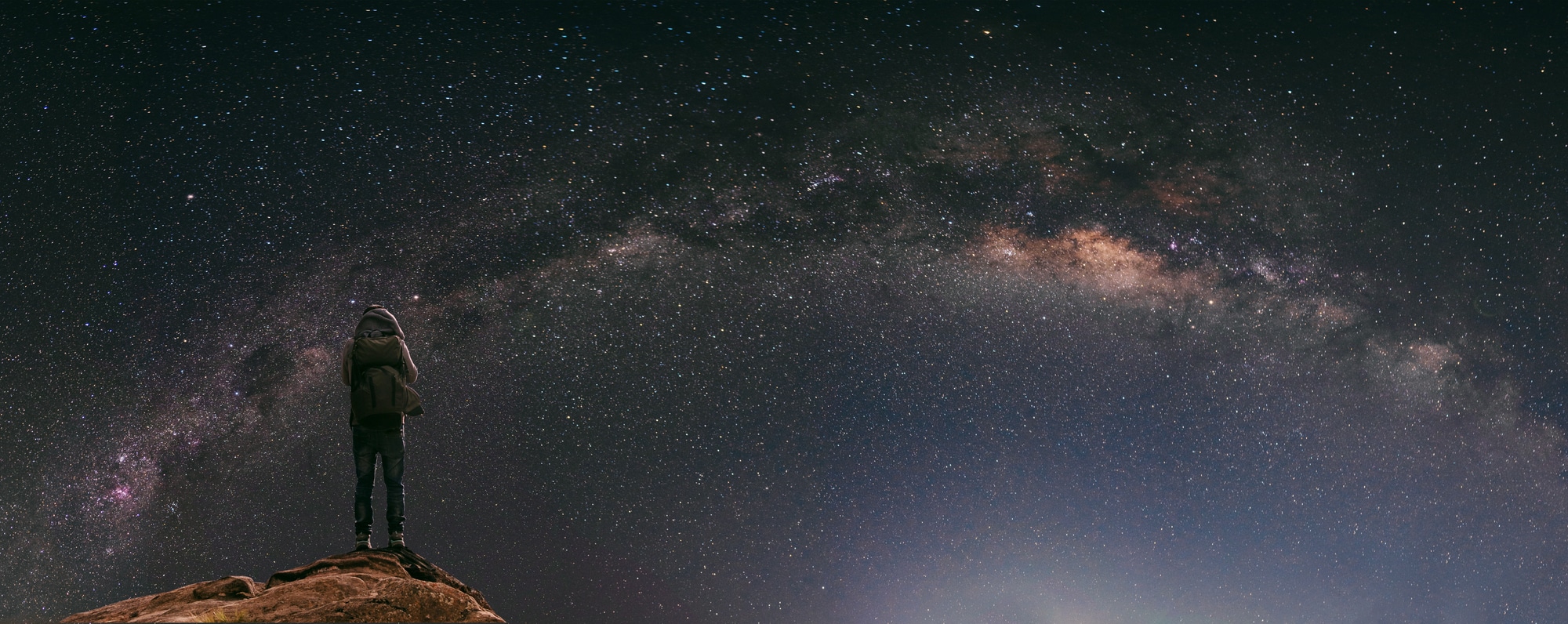
With discoveries like DNA and gravity, and inventions like telescopes and microscopes, science has helped us understand much about the Universe. Yet, some questions still remain unanswered. From the Universe’s secrets to the enigma that is your brain, here are ten of the world’s most intriguing science mysteries.
1. Dark matter
Dark matter, which forms about 27% of the Universe, is invisible because it doesn’t emit, absorb, or reflect light. However, we know it exists due to its gravitational effects. Observations show that galaxies rotate at speeds that can’t be explained by visible matter alone. The presence of dark matter helps account for this phenomenon, though its true identity remains a mystery. Scientists have proposed various candidates, such as weakly interacting massive particles (WIMPs) and axions, but none have been confirmed. Unlocking the secrets of dark matter could transform our understanding of the Universe’s structure.
Milky Way from near Mount Everest. Only 15% of our galaxy is visible to us, Credit: depositphotos.com/jankovoy
2. Dark energy
While dark matter holds galaxies together, dark energy is thought to be responsible for the Universe’s accelerated expansion. Dark energy was discovered in the late 1990s when astronomers were surprised to observe that the Universe is expanding at an accelerating rate instead of slowing down or inflating at a constant rate. The increase in the speed of the Universe’s expansion would require energy; thus, the concept of dark energy was born. Unseen and unmeasured, yet making up an astounding 68% of the Universe; what exactly is dark energy, and from where does it originate? Scientists have no idea.
A graph showing the three components of the Universe: normal matter (5%), dark matter (27%), and dark energy (68%). We only understand 5% of our Universe. The rest is still a mystery. (Credits: NASA’s Goddard Space Flight Centre)
3. The origin of life
The origin of life on Earth remains one of science’s greatest mysteries. Scientists believe life began over 3.5 billion years ago, but exactly how is still debated. Some suggest life started in deep-sea hydrothermal vents, where heat and minerals might have sparked the first living cells. Others think it could have been synthesized in an early Earth’s atmosphere before being rained down into the oceans. There’s even a theory that life’s building blocks, or life itself, were brought to Earth from outer space, making it alien to our planet. Despite different ideas, all point to a fascinating puzzle: how did simple molecules evolve into complex, living organisms? Solving this mystery could help us understand life on Earth better, and reveal if life exists elsewhere in the Universe.
DNA strand, Credit: depositphotos.com/KseniyaOmega
4. The great silence (fermi's paradox)
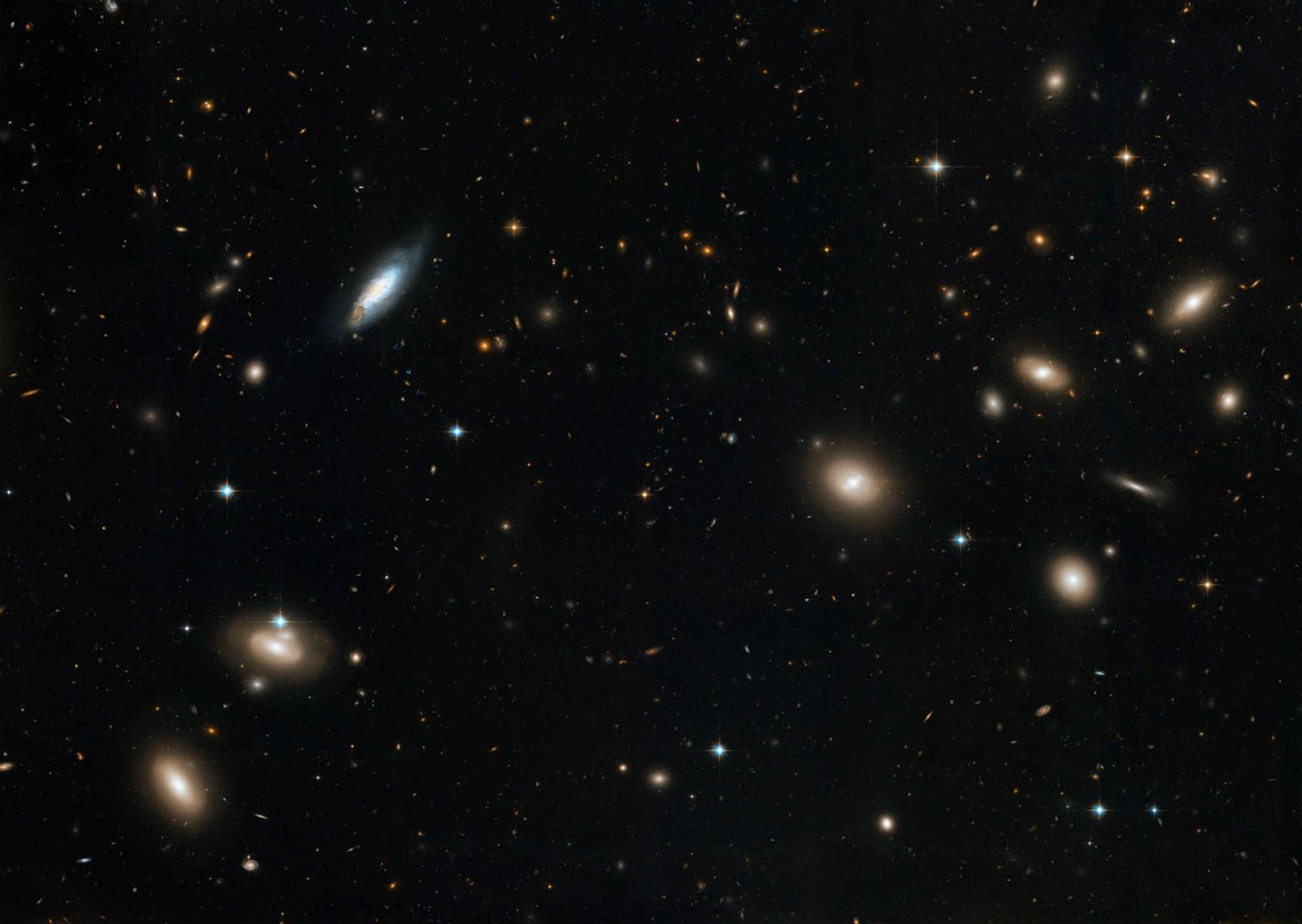
The Fermi Paradox poses a fundamental question: if the Universe is filled with billions of stars and potentially habitable planets, where is everyone? Given the Universe’s age, we should have encountered evidence of extraterrestrial civilizations by now. Yet, we’ve found no signs of alien life or communication. This mystery leads to fascinating possibilities. Are advanced civilizations avoiding us? Have they self-destructed? Or are we truly alone? Exploring Fermi’s Paradox challenges our understanding of life in the Universe.
Image captured by NASA’s Hubble Space Telescope showing different galaxies across several million light years. How many of these galaxies are home to aliens? How many of those aliens are staring right back at us? (Credits: NASA, ESA, and the Hubble Heritage Team)
5. The missing carbon sink
Each year, 35 billion tons of carbon dioxide (CO2) are released into the atmosphere. Surprisingly, only about half of this CO2 stays in the air, while the rest is absorbed by oceans, plants, and the soil. But scientists still need to find exactly where 25-30% of our carbon emissions are stored. This unaccounted-for CO2 is called the “missing carbon sink.” Some researchers believe that unknown ocean processes, new forests growing in deforested areas, or even deserts could be storing this carbon. Finding the missing sink, or more likely, sinks, is crucial for predicting and managing climate change effectively.
Image showing the Tarim Basin, where scientists recently discovered that as water moved through irrigated fields, it dissolved carbon and shifted it deep underground, forming a carbon sink beneath the desert., Credit: Wikipedia/NASA
6. The origin of earth's water
Water covers 71% of the Earth’s surface and is crucial for life. But where did it come from? Scientists aren’t sure. Some theories suggest that comets and asteroids delivered water during the solar system’s early years. Others propose that water was already present in the minerals that formed the Earth and was released through volcanic activity. Understanding where Earth’s water originated is crucial for comprehending how life emerged on our planet, and may help us better detect it in other parts of the Universe.
Image showing an ancient asteroid called Bennu. Samples collected by NASA show traces of carbon and water on its surface. It is possible that asteroids like Bennu brought water to our planet from space. (Credit: NASA/Goddard/University of Arizona)
7. The immune system's remarkable memory
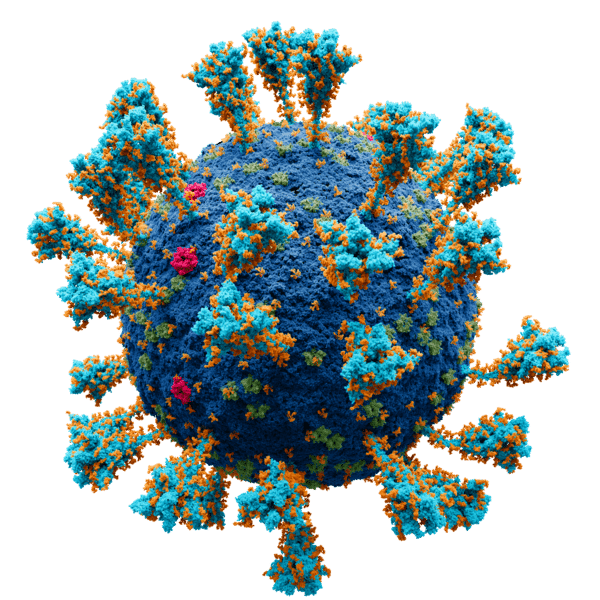
The immune system can “remember” past infections, which helps protect us from getting sick again. When a pathogen, like a virus or bacteria, enters our body, special white blood cells fight it off. Some of these cells become long-lasting “memory” cells. They can recognize the pathogen if it returns, and help lead to a faster and more robust response. However, the mechanisms underlying this immunological memory still need to be fully understood. How do immune cells retain information about previous infections, and what triggers their reactivation? Deciphering these mysteries is vital for developing and improving vaccines and therapies that enhance our immune response against diseases, including emerging viral threats.
A scientifically accurate model of the Coronavirus. Understanding how our immune system’s memory works and using it to create better vaccines could help prevent future pandemics and save millions of lives, Credit: Wikipedia/Alexey Solodovnikov
8. Quantum entanglement
Quantum entanglement is a phenomenon where two or more particles become connected so that if you know the state of one, you instantly know the state of the other, even if they are far apart. This seems to go against Einstein’s theory of relativity, which states that nothing can travel faster than light. However, entanglement doesn’t involve sending information in a classic manner. Instead, the particles share a special connection, showing patterns that regular physics can’t explain. Scientists are studying entanglement because it could help create super-fast quantum computers and secure communication systems, leading to significant technological advances, data security, and problem-solving.
Image illustrating quantum entanglement. Scientists who are studying entanglement now have the instruments to measure time in attoseconds. This is a billionth of a billionth of a second! Credit: depositphotos.com/ezthaiphoto
9. The origin and fate of the universe
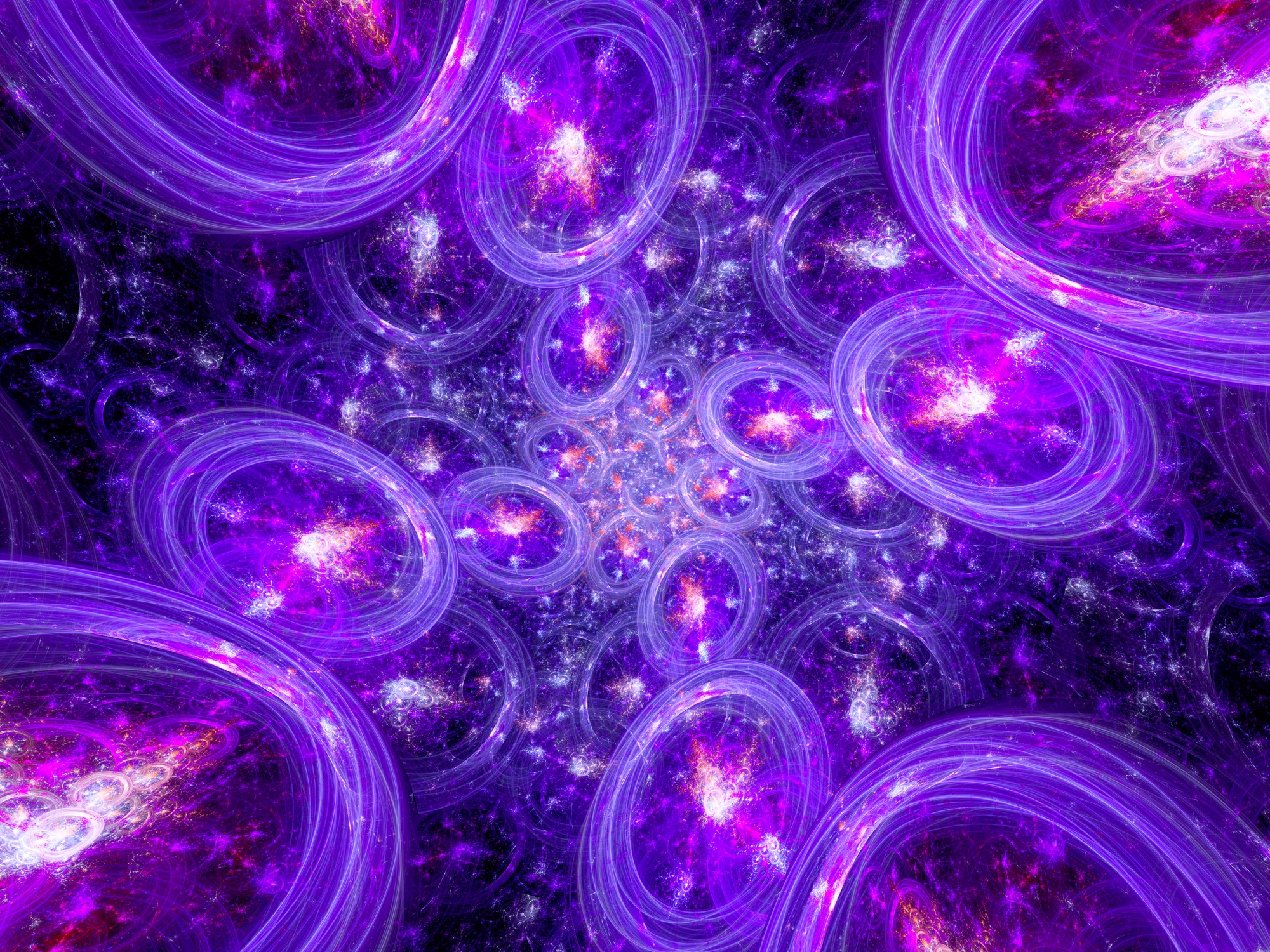
Most scientists believe that the Universe began 13.8 billion years ago with the Big Bang, a massive explosion that created all matter, space, and time. Since then, galaxies, stars, and planets have formed, expanding outwards. But what came before the Big Bang? What caused it? Scientists still need to get all the answers. Another mystery is the Universe’s fate. Will it keep expanding forever, eventually becoming a graveyard of stars, or will it collapse back into a “Big Crunch,” possibly leading to a new Big Bang? Unraveling these mysteries could change our understanding of space, time, and everything in between.
An illustration showing what a multiverse may look like. While a multiverse may seem like a plot for a sci-fi movie, according to some quantum and cosmological theories, there may be many more Universes out there, with their own stars, galaxies, and laws of physics, Credit; depositphotos.com/sakkmesterke
10. Consciousness
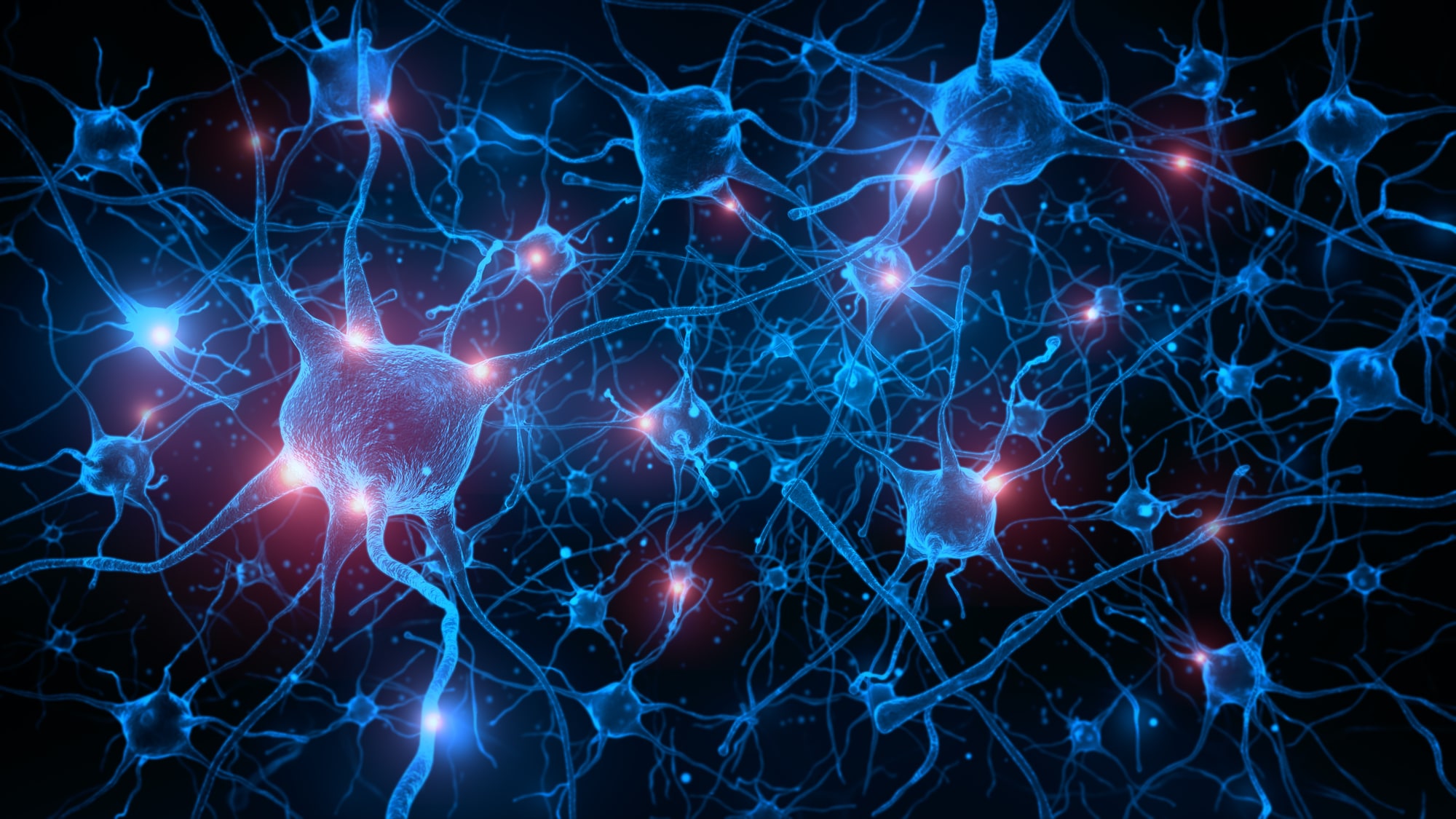
Consciousness is one of the biggest mysteries in science and philosophy. It refers to our awareness of thoughts, feelings, and surroundings. Despite advancements in neuroscience, researchers still need to fully understand how consciousness arises from the brain. What are the exact chemical reactions that give rise to thoughts, emotions, free will, and self-awareness? And how do we have subjective experiences—like the taste of chocolate or the color red—when our brains are made of neurons and chemicals? Neurotransmitters like serotonin and dopamine play significant roles in mood and cognition, but the complexity of brain chemistry makes it challenging to pinpoint how these interactions lead to consciousness. Exploring this mystery could revolutionize our understanding of chemistry and the human mind and unlock secrets about human experience and what it means to be alive.
Illustration showing neuron cells. One of the oldest mysteries of humanity, the nature and definition of consciousness has led to a millennia of debate among philosophers, scientists, and theologians, Credit:depositphotos.com/ onimate.hotmail.com
Despite significant advances, science still faces many unresolved mysteries. But instead of being disappointed, the excitement of discovering something new motivates scientists worldwide to explore further. Each discovery brings us closer to uncovering the Universe’s secrets, and maybe one day, you could help solve one of these mysteries, too.