Numerous animals have unfairly suffered from negative stereotypes perpetuated by human culture. These misunderstood creatures deserve to have their reputations reconsidered. Here are our top 10 misunderstood animals, as we aim to debunk myths and promote understanding.
10- Owls
Owl, Credit; Wikimedia/Mdf
Where they live: Owls are found globally, except in Antarctica. They inhabit various environments, including forests, deserts, and tundra regions.
Scientific Facts: Despite the myths around these birds, owls have remarkable characteristics and are critical to our environment as apex predators. Furthermore, owls possess extraordinary adaptations for nocturnal life, including incredible hearing and silent flight. Owls are renowned for their exceptional hearing, which is essential for hunting prey under the cover of darkness. Owl’s hearing is undoubtedly more sensitive than other birds, particularly at frequencies of 5 kHz and above. Their asymmetrically placed ears allow for precise sound localization, enabling them to pinpoint the exact location of their prey without visual cues. This auditory adaptation is an important factor in their success as nocturnal predators.
Ecological role: As apex predators, owls keep the population of rodents in check by hunting them. According to the Wildlife Conservation Society, a family of five owls can hunt 3000 rodents in one breeding season, serving as a natural pest controller.
Misunderstood Characteristics: Piranhas are rumored to be ferocious predators that can strip flesh from bones in minutes. This idea is exaggerated since most piranhas are scavengers or feed on plant material. The infamous feeding frenzies are rare and usually occur under extreme conditions of food scarcity. The piranha’s mouth does contain sharp, triangular teeth that tear small chunks of flesh from carcasses. These teeth are one of the biggest reasons they developed a bad reputation. Researchers show that piranha bites are usually more accidental than predatory. The idea of a swarm of piranhas skeletonizing a large animal or a human in minutes is more fiction than fact.
Scientific Facts: There are over 60 species of piranhas, varying greatly in size, diet, and behavior. Scientific studies have shown that piranhas have a complex social structure and can exhibit cautious behavior. Their biting force, relative to body size, is one of the strongest in the animal kingdom. One study described that outsized jaw muscles allow a piranha to exert bite force similar to that of an animal 30 times its body weight. Much of the piranha’s diet involves nipping parts of the tails of other fish.
Ecological role: Piranhas keep the ecological balance by consuming carrion and by keeping the prey population in check. Their excreta help in cycling nutrients like nitrogen and phosphorus.
Misunderstood Characteristics: Vultures are misunderstood animals because they are perceived as harbingers of death. However, vultures are essential for the ecosystem as nature’s cleanup crew. Their consumption of carcasses prevents the spread of disease. Their bald heads, often seen as grotesque, actually help keep them clean while feeding. Vultures, which exclusively eat dead animal carcasses, effectively remove pathogens and toxins in the environment because they rapidly consume carrion before it decays. Furthermore, their stomachs contain a potent acid that destroys many harmful substances in dead animals.
Scientific Facts: They have a keen sense of smell and sight to locate food. Conservation efforts are essential for vultures, as many species face threats from poisoning and habitat loss. In fact, according to the International Union for Conservation of Nature (IUCN), nine of the 23 vulture species are critically endangered, and their numbers are dangerously low.
Ecological role: Vultures do the dirty work of cleaning up dead and decaying carcasses. Their strong stomach acid allows them to digest various toxins and pathogens that have piled inside the dead carcass. If eaten by any other animal, they might fall sick from the likes of anthrax, botulinum toxin, etc. In a way, vultures prevent various diseases from spreading in the wild.
7- Hyenas
Hyena, Credit; Wikimedia/
Charles J. Sharp
Where they live: Hyenas are primarily found in Africa, with the striped and brown species also inhabiting parts of Asia.
Misunderstood Characteristics: Hyenas are often vilified and thought to be cowardly scavengers. In various local myths, hyenas have long been described as evil and unethical. The movie The Lion King has played a significant role in casting hyenas in a villainous role. However, they are efficient predators with complex social structures. Their laughter-like calls are not an expression of amusement but a form of communication within their clans.
Scientific Facts: Hyenas are remarkable among carnivores for their matriarchal societies, where females are more significant and dominate males. They have powerful jaws capable of crushing bones to access the marrow. Genetic and behavioral research has shown that hyenas are more closely related to cats than dogs. The bad reputation of hyenas and a lack of knowledge have been a hindrance to adopting measures aimed at their conservation. Therefore, while the spotted hyena is safe in nature reserves, population decline has been observed outside these protected areas.
Ecological role: Like vultures, hyenas also feed on carcasses, keeping diseases at bay and their surroundings clean. Hyenas eat the bones, which helps in cycling calcium into the environment.
6- Rats
Rat, Credit; Wikimedia/Augustin Lignier
Where they live: Rats are found worldwide, except for Antarctica. They thrive in diverse environments but are most commonly associated with human settlements.
Misunderstood Characteristics: Rats are often seen as pests that spread diseases and destruction. Musophobia is defined as the fear of rats. It is widespread in humans because of rats’ ability to carry diseases or their long and wormlike tails. However, whatever the reason, rats don’t deserve their bad reputation. They are highly intelligent and social animals capable of empathy and complex problem-solving.
Scientific Facts: Studies on rats have shown that they possess a remarkable level of intelligence, memory, and learning ability, which contributes to their adaptability to different environments. Their social structures are complex, with rats capable of learning from each other and adapting their behavior based on past experiences. Scientists have found these animals can perceive distress in other rats, associate it with their prior affective experience, and modify their behavior by combining perception and association. Rats are invaluable to scientific research, contributing to medical breakthroughs and understanding of human diseases.
Ecological role: Rats play a huge role in sustaining predators in a given area, balancing out the food chain. On the flip side, their population can burst out of control if there are not enough predators to keep the numbers in check.
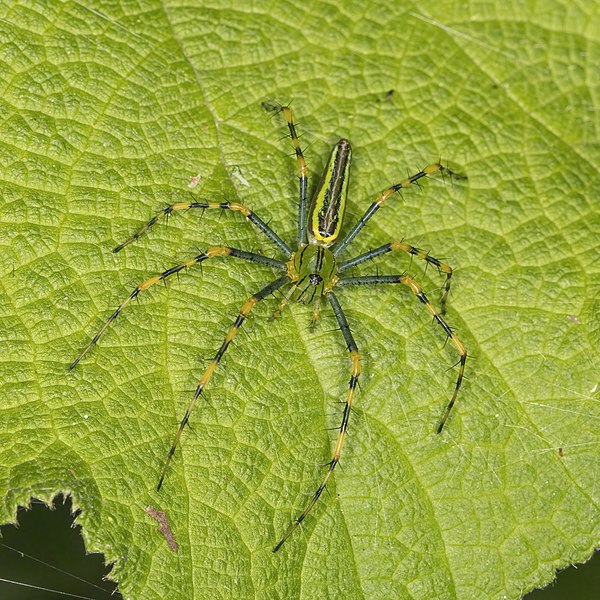
Misunderstood Characteristics: Spiders are perhaps one of the most feared animals due to misconceptions and arachnophobia. Arachnophobia, the fear of spiders, is common in humans, perhaps inspired by the arachnids’ unusual appearance and number of legs. In fact, very few spiders have venom that can harm humans, dogs, or cats. Their presence is beneficial as they control insect populations, including cockroaches, earwigs, mosquitoes, flies, and clothes moths. Their web-spinning abilities are often overlooked as a marvel of natural engineering.
Scientific Facts: Spider silk is stronger than steel of the same thickness and has potential applications in materials science. Spiders exhibit various behaviors, from intricate mating dances to the ability to “sail” across water. Research into spider venom has potential medical applications, including as painkillers and anti-malarial agents. Spider venoms contain various proteins with several health benefits, including antimicrobial, neuroprotective, analgesic, and anti-cancer properties.
Ecological role: Apart from hunting and feeding on insects, spiders have a tendency to kill all insects in a given area. This not only keeps the prey population in check but also serves as a natural option for pest control in agricultural ecosystems.
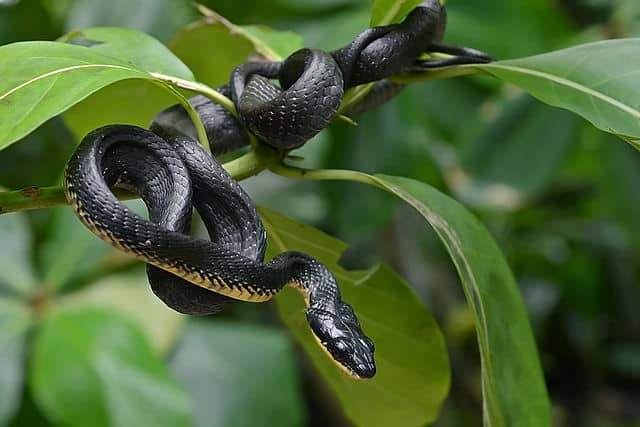
Misunderstood Characteristics: Snakes are often misunderstood due to myths and their portrayal as dangerous in media. About 600 species are venomous, and approximately 200 (only 7% of the total) can kill or significantly wound a human. Venom takes time and energy to make, so they do not want to use it, and humans are not their prey.
Scientific Facts: Snake venom is a subject of intense study, with research uncovering its potential in treating conditions such as hypertension and clotting disorders. Snakes have evolved various hunting methods, including constricting and venom injection, demonstrating the diversity of evolutionary adaptations in reptiles.
Ecological role: Snakes play essential roles in ecosystems as predators and prey, helping control rodent populations.
3- Bats
Bat, Credit: Wikimedia/Paramanu Sarkar
Where they live: Bats are found worldwide, mainly in tropical regions.
Misunderstood Characteristics: Bats are often described as carrying diseases including rabies, or associated with darkness and fear. The worldwide misconception that all bats feed on blood explains why humans fear these animals. However, only three species feed on blood, and the rest feed on insects or fruit. They are vital for ecosystems, providing pollination, seed dispersal, and insect control services. Most bats pose no threat to humans and prefer to avoid contact.
Scientific Facts: Bats are the only mammals capable of sustained flight, and their sophisticated echolocation abilities allow them to navigate and hunt in complete darkness. Research into bat immune systems and their ability to carry viruses without getting sick has implications for understanding disease resistance. Bats demonstrate several unique features among mammals, such as a long lifespan relative to body size, a low rate of tumorigenesis, and an exceptional ability to host viruses without presenting clinical disease.
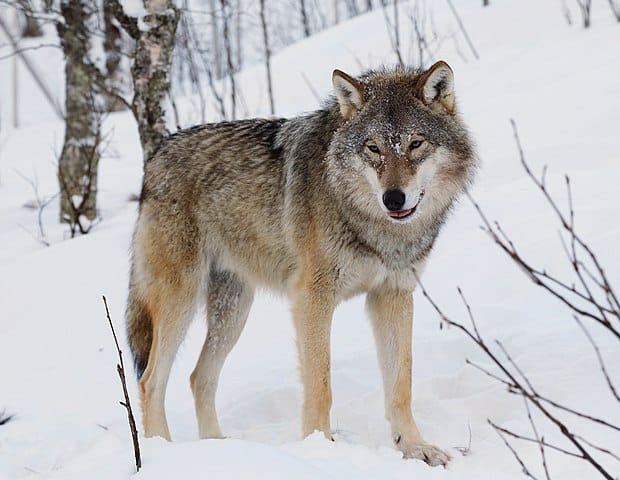
Misunderstood Characteristics: Wolves have been historically portrayed as villains in folklore and stories, leading to widespread fear and extermination efforts. However, they are generally shy and elusive, with attacks on humans very rare. Wolves play an essential role in maintaining the health of their ecosystems by controlling prey populations.
Scientific Facts:Wolves are highly social animals, living in packs with complex social structures. Studies on wolf behavior and genetics have provided insights into the evolution of domestic dogs. The reintroduction of wolves into ecosystems, such as Yellowstone National Park, has shown their important role in ecological balance, demonstrating the trophic cascade effect.
Ecological role: Wolves are “keystone” species; that is, they shape the ecosystem they live in. Usually, wolves prey on elk, deer, and moose but also control populations of smaller mammals by preying on them.
1- Sharks
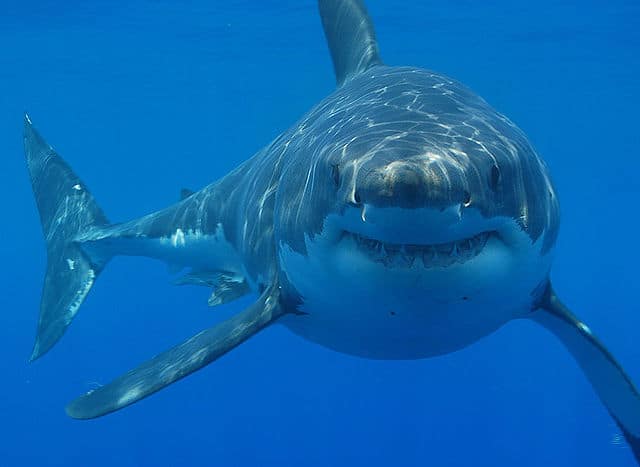
Shark, Credit; Wikimedia/ Hermanus Backpackers
Where they live: Sharks inhabit all the world’s oceans, from shallow reefs to the deep sea, with some species also found in freshwater.
Ecological role: As apex predators, sharks keep the food chain stable by consuming various fish and animals that are present in the lower levels of the food chain.
Copyright @smorescience. All rights reserved. Do not copy, cite, publish, or distribute this content without permission.
Join 20,000+ parents and educators
To get the FREE science newsletter in your inbox!
SUBSCRIBE TO OUR NEWSLETTER
.......... ..........
Subscribe to our mailing list to get updates to your email inbox.