1. Tigers in the wild typically live 10-15 years, while those in captivity can live up to 20-25 years.
2. There are two recognized worldwide subspecies of tigers: the continental tiger (Panthera tigris tigris) and the Sunda island tiger (Panthera tigris sondaica).
3. Tigers are the largest living cat species, weighing up to 660 pounds (300 kg) and measuring up to 11 feet (3.3 meters) in length, including the tail.
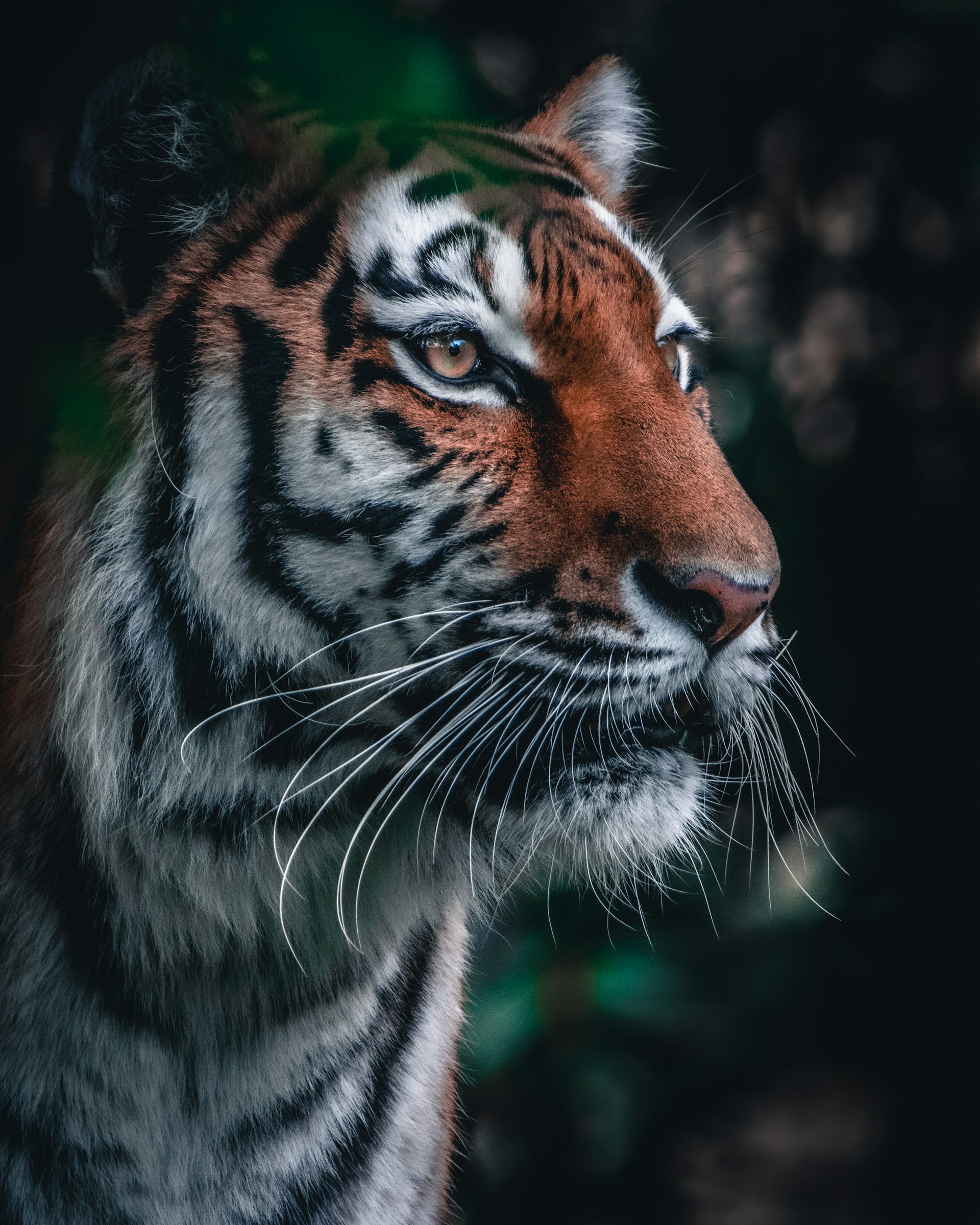
4. Each tiger has a unique pattern of stripes, similar to human fingerprints. These stripes have evolved to help tigers attract mates or disguise them.
5. A tiger’s orange color is camouflage, as its primary prey (including boars and deer) are red-green colorblind and see orange as green. So, an orange tiger will blend in seamlessly with its habitat.
Credit: Kartik Iyer/Unsplash
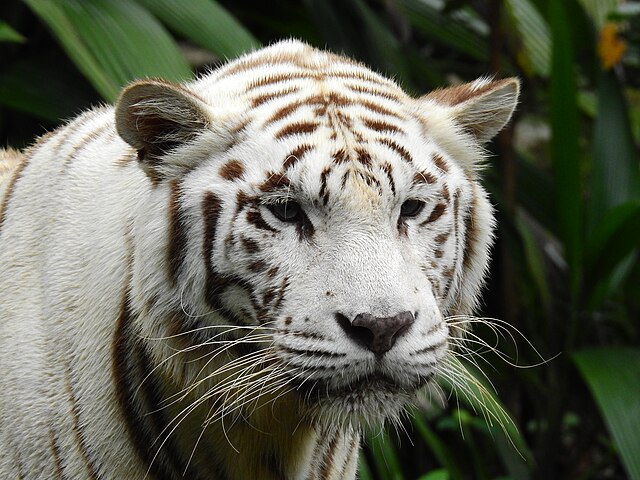
6. White tigers are not a separate subspecies but are caused by a rare genetic mutation.
White Tiger, Credit: Wikimedia/Rohitjahnavi
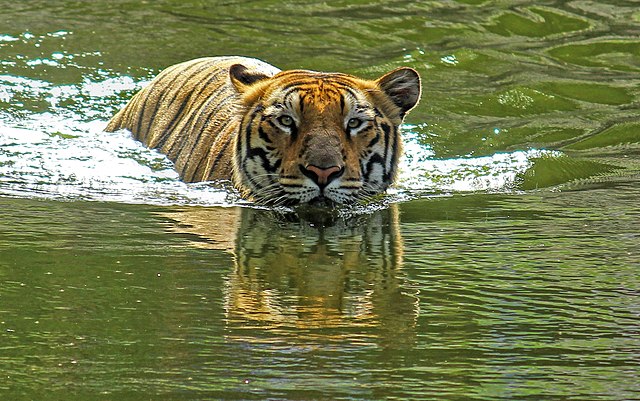
7. Unlike many cats, tigers are excellent swimmers and enjoy bathing in water to decrease their body temperature.
Royal bengal tiger swim, Credit; Wikimedia/Karthik Easvur
8. Tigers are solitary and nocturnal hunters. They are carnivores, eating only meat and capable of consuming up to 80 pounds (36 kg) of meat in one sitting.
9. While generally solitary, tigers have been known to form groups called ‘streaks’ or ‘ambushes’.
10. The felines can sprint at speeds over 35 mph (56 km/h), but only for short distances. Their roars can be heard as far as 1.9 miles (3 km).
11. Tiger eyes have large lenses and pupils that increase the amount of light in the eye. Their eyes are six times more sensitive to light than human eyes, possessing excellent night vision.
12. Female tigers typically give birth to 2-3 cubs per litter but can have up to 7. However, only about half of tiger cubs survive to adulthood.
13. Baby tigers are called cubs, born blind, and only open their eyes after 1-2 weeks.
brown and black tiger lying on the ground, Credit: Waldemar/Unsplash
14. Like most cats, tigers have retractable claws for hunting and climbing. They retract their claws to ensure that they remain sharp when needed.
15. Tigers are endangered, with only about 3900 left in the wild as of 2019. Due to human activity, these felines have lost 93% of their historic range.
Close up of brown and black tiger, Credit: Donnie Ray Crisp/Unsplash
Copyright @smorescience. All rights reserved. Do not copy, cite, publish, or distribute this content without permission.
Join 20,000+ parents and educators
To get the FREE science newsletter in your inbox!
SUBSCRIBE TO OUR NEWSLETTER
.......... ..........
Subscribe to our mailing list to get updates to your email inbox.