Discover the fascinating science of baking behind your favorite cookies and cakes! Have you ever wondered why forgetting an ingredient can drastically change your baked goods? In this article, we’ll explore the chemistry and physics that make baking possible, focusing on the science of baking s’more cookies.
Let’s break down some common ingredients and chemical processes that you use to make cookies. Since this is Smore Science, our recipe is s’more cookies. If you have the ingredients, bake along with us as we learn the science behind delicious cookies.You can also download the recipe card below.
Baking is more than just mixing ingredients; it’s a delicious experiment in kitchen science. Each component plays a crucial role in creating the perfect texture, flavor, and structure of your treats. From the moment you preheat your oven, you’re setting the stage for amazing chemical and physical transformations.
Baking consists of multiple changes, including physical and chemical changes.
A physical change is when an ingredient changes its state of matter. States of matter include solid, liquid, and gas. An example of a physical change in baking is when you melt butter, changing it from a solid to a liquid.
A chemical change is when chemical molecules are rearranged and become something new. This happens when we put our cookie dough in the oven, and it becomes baked cookies.
Our first step for baking these cookies is to heat the oven to 350°F, or 175°C. By the time we are done making our cookie dough, the oven will be ready to chemically change that dough into fresh cookies.
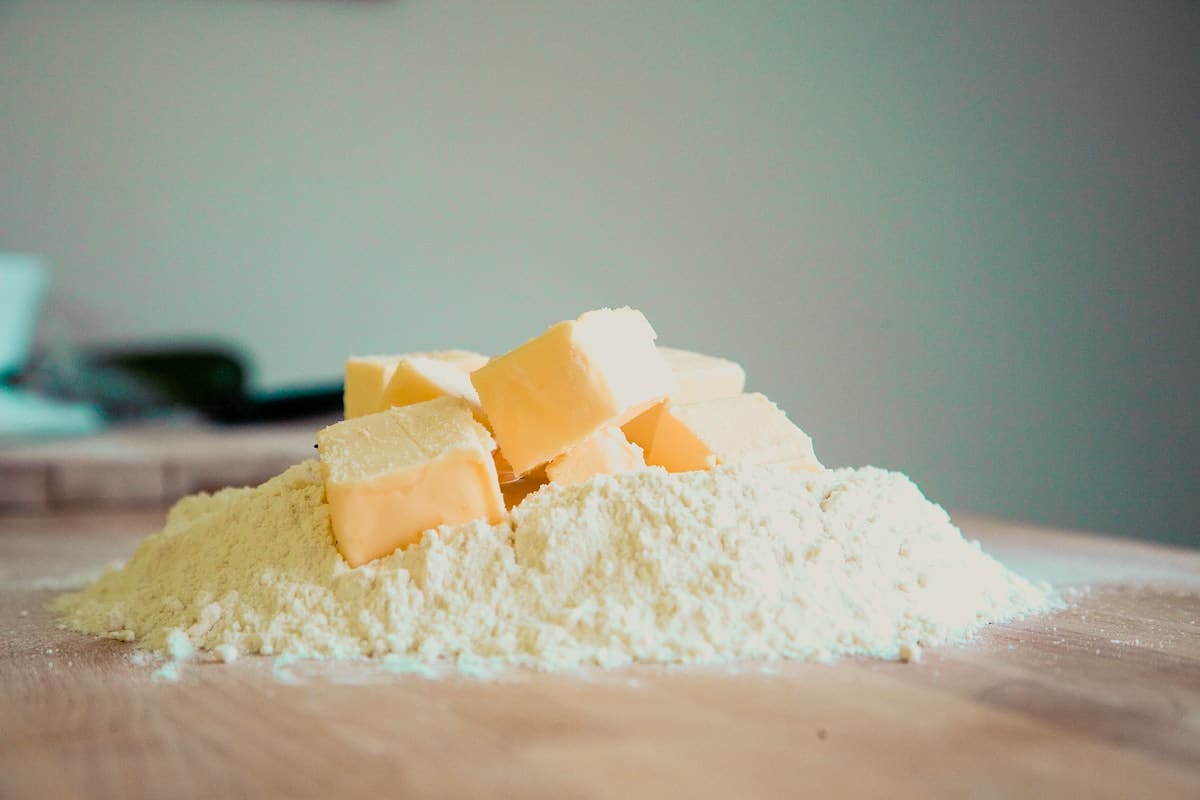
"Baking ingredients" by Markus Spiske is marked with CC0 1.0
Let’s start things off with butter! Butter is a very common ingredient in baked goods. Depending on how it is used, it can completely change your cookies. If you completely melt the butter, your cookies will have less structure. They might spread out and become thinner. But if your butter is more solid, the cookies will be firm and grow a bit taller. For this recipe, place one stick of butter in a bowl in the microwave and watch it carefully for 10-30 seconds. Once the butter is soft and partially melted, add it to your mixing bowl.
Next, add ½ cup sugar and ½ cup light brown sugar to the mixing bowl. Sugar can be added to a wet ingredient like butter, because it can dissolve in the butter. This means that the sugar changes from a solid crystal to a liquid form in the butter. What does sugar do in the cookies? Most importantly, sugar adds the sweetness that we love. But sugar can also help your cookies to retain moisture by making bonds with water.
Once the sugar is mixed into the butter, it’s time to get another small bowl. In that bowl, whisk one egg and 1 tsp vanilla together. Add these to the larger mixing bowl and mix the contents together well. Eggs are a source of protein in your diet. Protein helps our cells to make all the structures and tools they need to keep us healthy. Protein also provides structure in baked goods like cookies. Eggs help to hold all the ingredients together so they can be baked into delicious cookies.
Substitution tip: Some people eat dairy free or vegan, so eggs and butter will not be included in their diet. Fortunately, there are egg and butter substitutions that can be used in baking!
Next, mix all the dry ingredients together in a separate mixing bowl. This includes 1 cup of flour, ⅓ cup of cocoa powder, ½ tsp of baking soda, and ¼ tsp of salt. Mixing the dry ingredients separately from the wet ingredients helps them to form the most homogeneous mixture possible. This means that all the ingredients are spread out randomly.
Flour and cocoa powder form the base of the cookies. Flour is another source of protein that helps to make cookies structured. There are many kinds of flour, and most of them contain a special protein called gluten.
Substitution tip: Some people are unable to process gluten or even have an autoimmune response to it. An autoimmune response is dangerous, because it can cause your body to damage itself. People with serious reactions to gluten may need to use different types of flour like almond or coconut flour.
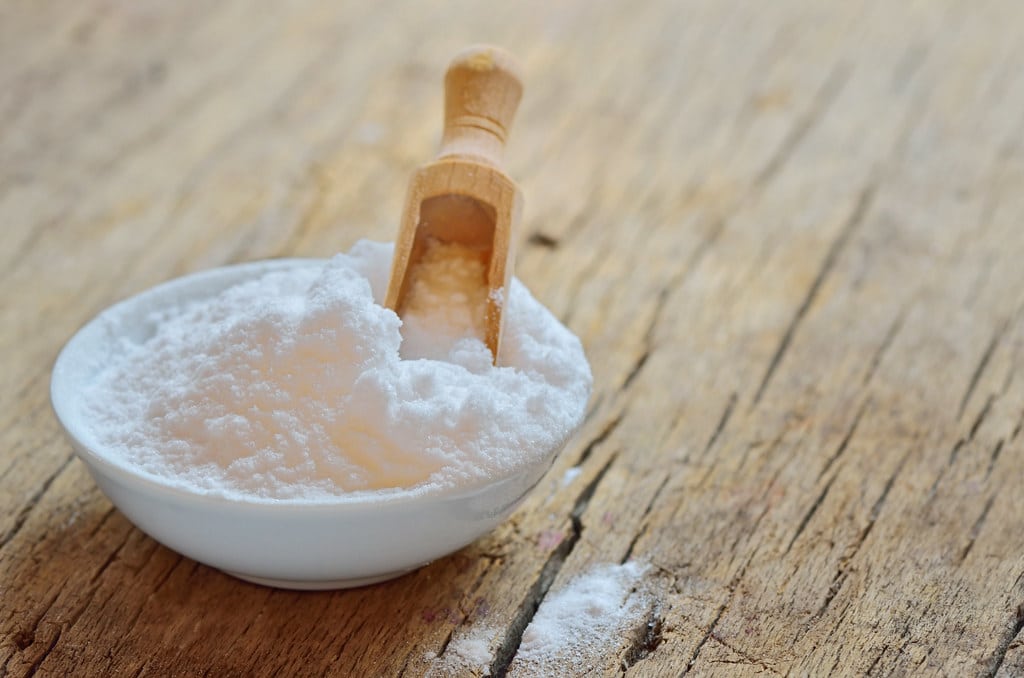
"baking soda shoot in studio" by aqua.mech is licensed under CC BY 2.0
Baking soda is a very important ingredient. If baking soda is a powder, why is it called soda? Baking soda is actually a salt called sodium bicarbonate. When it is heated in an oven, sodium bicarbonate breaks down and releases carbon dioxide, just like the carbon dioxide bubbles in the soda that you drink. This carbon dioxide helps baked goods to rise instead of falling flat.
"Chocolate Shavings" by Smitten with Kittens is licensed under CC BY-NC 2.0.
After all the dry ingredients are mixed, they can be added to the wet ingredients. As everything is mixed together, a tasty cookie dough will form. The final ingredients in these s’more cookies are ½ cup of chocolate chips and ¼ cup of mini marshmallows. Mix these in and form cookie dough balls. Place the cookie dough on a baking sheet lined with parchment paper, and bake the cookies for 12-14 minutes.
This is when the magic happens! Heat from the oven will change cookie dough ingredients into freshly baked s’more cookies. How does this work? Physics tells us that heat causes the cookies to expand. This is because gasses within the cookies such as carbon dioxide increase as temperature increases. Then, the structural elements like egg and flour proteins form the shape of the cookies. After 12-14 minutes, you’ll have a delicious batch of s’more cookies.
Chemistry and physics are all around us. They’re even in our cookies! Every ingredient used in baking is important for a specific reason, and they all work together to give us yummy baked goods.
Smore Cookie Recipe
Glossary
Physical Change – change in state of matter between solid, liquid, and gas
Chemical Change – change in chemical structure to form something new
Dissolve – when a solid mixes into a liquid
Protein – compounds that provide structure to our cells
Homogeneous Mixture – a mixture that is randomly distributed
Autoimmune Response – when the body causes damage to itself in response to a stimulus like gluten
Tess Taggart Bub has a bachelor’s degree in biochemistry and a minor in data science from Houghton College. During her undergraduate studies, she conducted research in the areas of climate science, ecology, and muscle biology. She is currently a PhD candidate at the University of Tennessee Health Science Center studying host cellular response to viral infection. She is a strong believer that science can change the world, especially when it’s shared. In her free time, she loves communicating science, playing guitar and piano, and running. Writing for smore gives Tess the opportunity to help inspire a new generation of women in STEM.