In the 1890s, a seemingly unstoppable disease began spreading through banana farms. By the 1950s, the world’s favourite banana was all but gone. Luckily, a new type of banana emerged. But now, 70 years later, another banana apocalypse is happening; this time, a simple replacement won’t be enough.
Why does the banana apocalypse keep happening?
To understand what makes the banana so vulnerable, we need to understand the origin of the seedless banana. A “wild” banana has seeds inside it like any other fruit. But these seeds are difficult to remove, making these bananas, unlike the ones we buy from stores, difficult to eat. But, luckily for us, a genetic anomaly, which occurred ten thousand years ago in a forest in Southeast Asia, produced a banana plant with seedless fruits. Without seeds, this new plant wouldn’t have lasted long in the wild, but the farmers of the time had a solution: vegetative production. They knew that a new plant could be grown from a fragment of an existing plant. By essentially cloning this plant, they created a field of this new fruit that would, over centuries, become the fourth-largest crop in the world.
But what makes these bananas special is also their downfall. Reproduction through seeds provides future generations with genetic variations, helping them become immune to different diseases over time. But all bananas are clones. They are genetically identical, meaning that what is deadly to one banana plant is fatal to all. And that is exactly what is happening right now. Tropical Race 4 (TR4) is a strain of fungus that infects the roots of the Cavendish banana plant. It slowly grows upwards into the plants, blocking its ability to transport water and nutrients from the soil, forcing it to starve, wilt and eventually die.
Once this disease, known as the Panama disease, begins to spread, it is almost impossible to stop. Not only is it resistant to current treatments, but its spores can lay dormant in the soil for years before attacking again, making any field it infects barren. TR4 can also spread from one field to another through tires, the bottom of shoes, replantation, water irrigation and machinery.

How can we save the bananas once and for all?
Scientists across the globe are racing against time to save the Cavendish banana before it is too late. At UMaryland, scientists are attempting to genetically engineer Bacillus amyloliquefaciens, a type of bacteria found in the soil of banana plants, to produce an antifungal protein that could help protect the plant against infection. Meanwhile, James Dale, a biotechnologist at the Queensland University of Technology, has already demonstrated that it is possible to edit the genes of the banana plant using Crispr to make it resistant to TR4.
Some scientists believe cross-breeding the Cavendish with a TR4-resistant banana could produce resistant Cavendish-like bananas. A different group has discovered that exposing the Cavendish plant to TR1, the strain that killed the Gros Michel plants, can give it temporary immunity against TR4. These scientists are now attempting to find a way to make this immunity permanent without exposing it to a live fungal disease. But even with such promising solutions, the underlying problem remains. Scientists may find a solution to the Panama disease but cannot predict what other diseases could become deadly to the plant and what solutions they would require.
And it’s not just infections that farmers and scientists need to worry about. Due to the high demand for the internationally beloved fruit, farmers across 150 countries are forced to produce more Cavendish bananas and sell them at the lowest possible rate throughout the year. In fact, over the past decade in the UK, while the average price of apples has increased by 40%, the cost of bananas has remained almost the same. This demand and cut-throat competition have forced the industry to dedicate large fields to a single banana crop. Not only has this led to massive deforestation, but it has also negatively impacted the biodiversity of these lands. Monoculture, or the production of a single crop in a field, has stripped nutrients from the soil of these farms, making them more prone to disease and pests. In response, farmers must use more and more chemicals and fertilizers, which adds to a cost they can barely afford. If we now add the price of the research and production required to save the Cavendish from diseases like the TR4, we can see that the banana industry is not sustainable at all.
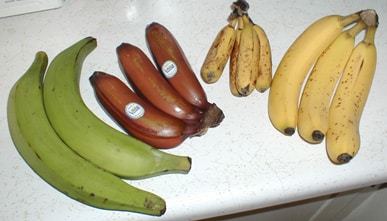
The only way to save the banana industry from collapsing is by ending our dependence on the Cavendish and forcing the banana industry to diversify. But how? People like you and me can help by buying different types of bananas instead of just the Cavendish. The Indonesian Pisang Raja, for example, is famous for its honey custard taste, while the Red Banana, has an extraordinary pink flesh and a raspberry-like taste. These and many other alternatives can add flavor to the otherwise monotonous experience of eating a banana. With this being said, maybe the area you live in doesn’t have much of a variety of bananas. But that’s okay. By eating different fruits in your market, you can still help decrease the demand for the Cavendish and end our dependence on a single fruit. It may take a while, but the efforts of enough people like you and me may save our beloved banana once and for all.
References
https://asm.org/articles/2021/june/clone-wars-how-fusarium-fungi-control-the-banana-i
https://www.bonappetit.com/story/banana-fungus-monoculture-extinction
https://launch.umd.edu/project/7639
https://www.livescience.com/banana-fungus-latin-america.html
https://www.ippc.int/en/news/devastating-banana-disease-reported-in-peru/
https://www.wired.com/story/fungus-could-wipe-out-banana-forever/
https://groundedgrub.com/articles/bananas
https://islandpress.org/blog/seedless-bananas-and-monocultures-perfectly-bad-combination
https://www.bayer.com/en/agriculture/article/history-modern-banana
Copyright @smorescience. All rights reserved. Do not copy, cite, publish, or distribute this content without permission.
SUBSCRIBE TO OUR NEWSLETTER
.......... ..........Subscribe to our mailing list to get updates to your email inbox.
Monthly Newsletter