In a somber milestone, Slovenia and Venezuela have become the first countries to lose their last-standing glaciers due to climate change, with experts warning they won’t be the last.
Recent reports highlighted Venezuela’s loss of La Corona glacier, also known as the Humboldt glacier. But researchers indicate Slovenia likely lost its glaciers over three decades ago.
There is no universally accepted point at which a glacier is declared dead, but the United States Geological Survey uses the 0.1 square kilometer size as a guideline.
Evidence suggests that Slovenia’s glaciers, Skuta and Triglav, had already diminished below the recognized minimum size for a glacier, 0.1 square kilometers, decades ago. Skuta has been under this threshold since 1969, and Triglav followed in 1986.
Beyond size, the lack of movement and crevasses in Slovenia’s remaining ice patches confirms their loss of glacial status. The remnants of the Skuta and Triglav glaciers have also not exhibited movement or crevasses, crucial features of true glaciers, for many years. Once moving masses of ice, these two glaciers now cover areas comparable to a couple of volleyball courts. Their lower altitude and latitude made them especially vulnerable to the rising temperatures driven by climate change.
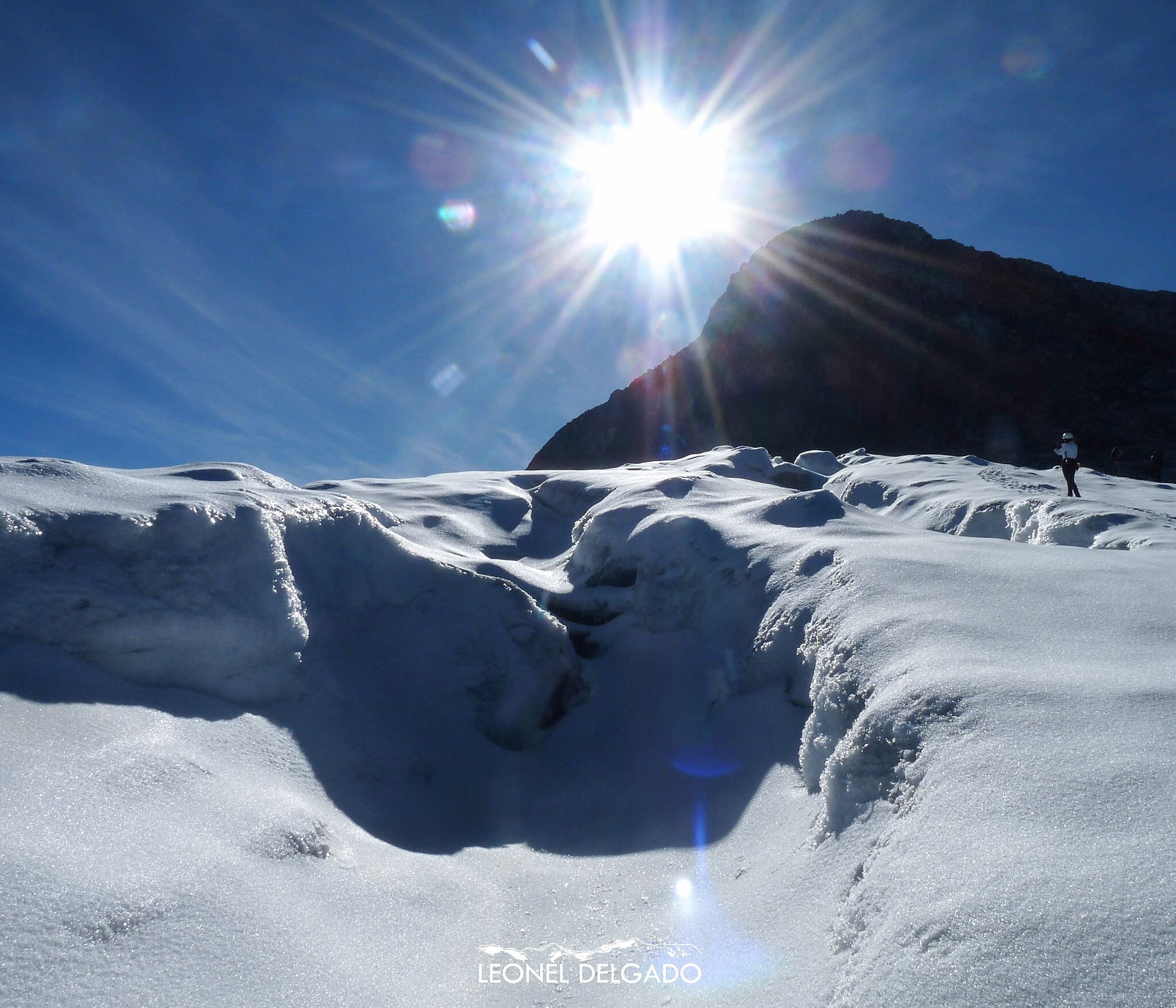
Venezuela once had six glaciers in the Sierra Nevada de Mérida mountain range, situated around 5,000 meters above sea level. By 2011, five of these glaciers had vanished, leaving only the Humboldt glacier. Recent assessments have revealed that the glacier melted much faster than anticipated, shrinking to an area of less than 2 hectares. Consequently, its classification was downgraded from glacier to ice field.
The disappearance of these glaciers marks a significant consequence of human-caused climate change. Even traditionally icy regions like Iceland have experienced glacier loss, but Slovenia and Venezuela are unique in being the first to lose their last glaciers since the 18th century.
The disappearance of these glaciers is more than a symbolic loss; it has serious environmental implications. The melting ice from Slovenia’s glaciers flows into the Black Sea, while La Corona contributes to the Caribbean, both adding to global sea level rise. This rise threatens coastal communities worldwide.
The loss of glaciers in Latin America, such as those in Colombia, Ecuador, Peru, and Bolivia, is expected to have even greater social impacts due to the large populations relying on glacier-fed water sources. Mexico’s last glacier, Gran Norte, is also predicted to disappear within the next two decades.
The Intergovernmental Panel on Climate Change (IPCC) predicts that 18 to 36 percent of global glacial mass will vanish by the end of this century due to rising temperatures.
The loss of La Corona, the last of Venezuela’s “Five White Eagles,” glaciers that once crowned the mountains above Mérida marks the end of an era and serves as a dire warning about the effects of climate change. The disappearance of these glaciers underscores the urgency of addressing global warming before more natural wonders are lost.
Copyright @smorescience. All rights reserved. Do not copy, cite, publish, or distribute this content without permission.
SUBSCRIBE TO OUR NEWSLETTER
.......... ..........Subscribe to our mailing list to get updates to your email inbox.
Monthly Newsletter