Originally found in the south-central United States and northeastern Mexico, red-eared slider turtles have become one of the most popular pets around the world. They are smaller than other turtle species, cost less, are easy to take care of, and can eat a wide variety of food.
These terrapins have a single small red stripe where one would expect their ears to be. They can slide smoothly off logs and rocks into the ponds around which they live, giving rise to their name.
Knowing about red-eared slider lifespans helps pet owners take the best care of them – but this information is important to wildlife biologists who study how they affect their environment.
Sliders in the wild
In the wild, red-eared sliders usually live up to 20 years but some can live much longer than that. They generally reach sexual maturity when they are between 3 to 5 years old, which is much earlier than many other turtle species.
Their native habitat includes the south-central United States, east towards West Virginia, and west towards New Mexico. There are large populations in the Mississippi River basin and their range also extends south beyond the Rio Grande River.
However, because of human introductions, they can now be found on every content except Antarctic!
Invasive sliders
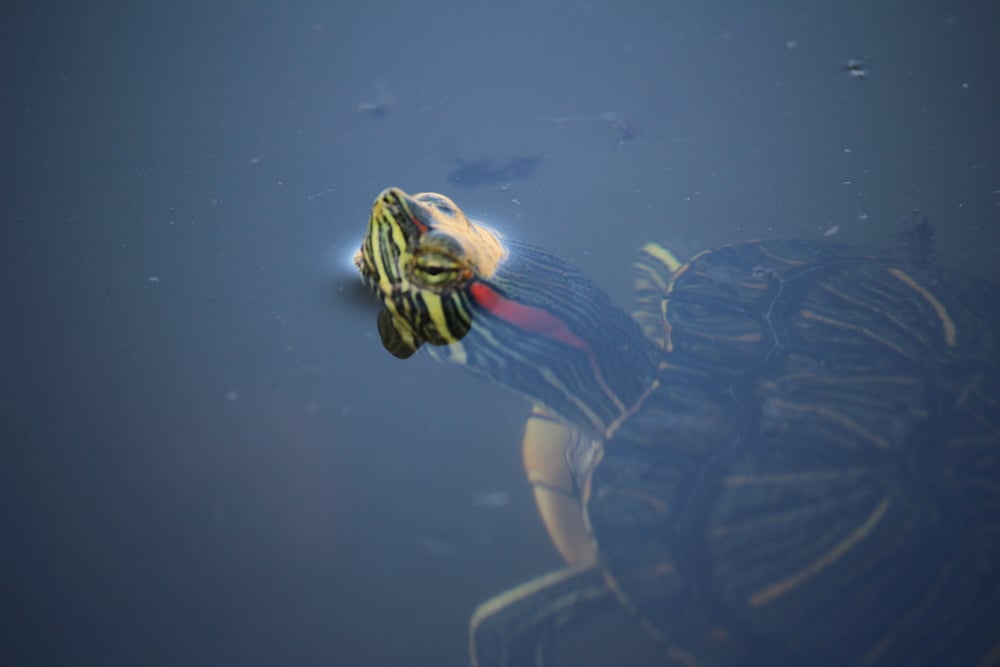
Red-eared slider in a freshwater body, Credit: depositphotos.com/Kronos86
Unlike other turtles, red-eared sliders are successful invaders because they are very good at taking over new environments due to their rapid growth, omnivorous eating habits, and aggression toward other turtles.
Introduced globally by the pet trade, they thrive where other turtles struggle, outcompeting natives for food and space and pushing them into more dangerous areas. Left unchecked, their dispersal can spread diseases and parasites to vulnerable native species, endangering ecosystems worldwide. They are considered one of the top 100 most invasive species globally.
Sliders as pets
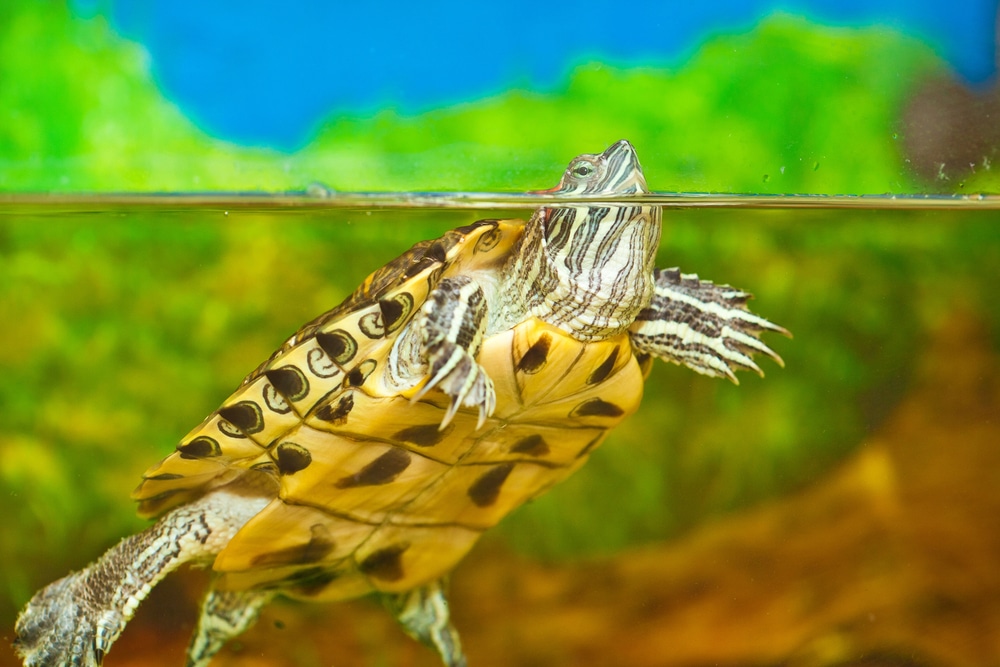
Red-eared slider swimming in an aquarium, Credit; depositphotos.com/Devin_Pavel
The oldest known captive red-eared slider lived to be forty-one years old! Pet red-eared sliders have even been passed down from one generation of a family to another. However, on average, you can expect them to live between 20 and 30 years with the proper care. They may live longer as pets than they would in the wild, but this can vary.
It is important to remember how long-lived these animals are if you are planning to get them as a pet, and that they can easily grow to more than a foot long. Their size and longevity are two of the reasons why many pet turtles are released into environments where they do not belong when their owners have trouble taking care of them.
Responsible slider ownership
Red-eared sliders are often sold without buyers understanding how to take care of them. Though they start small, they outgrow tanks rapidly and their upkeep can get expensive! When released, they disrupt ecosystems and affect native species.
Being a responsible turtle lover means adopting them from rescue centers instead of buying, reporting illegal sales, planning for turtle care beyond one’s lifespan, and never capturing a turtle from the wild unless it needs medical attention.
References
An analysis of the live reptile and amphibian trade in the USA compared to the global trade in endangered species – The Herpetological Journal (2014).