How often do cicadas come out?

Cicada Emergence: How Often Do Cicadas Come Out of the Ground?

Table of Contents

What are cicadas?

Cicadas are insects that are known for their loud, buzzing calls which can often be heard during the summer months.


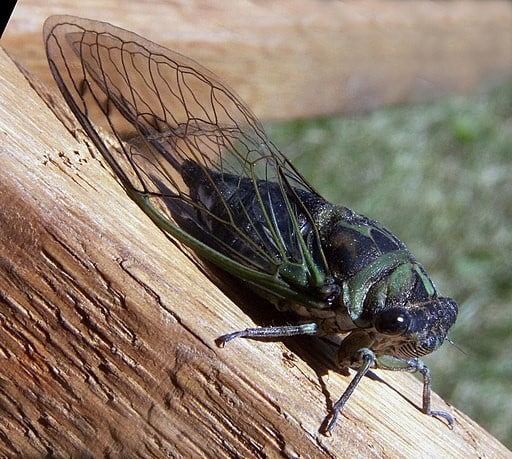
They have a stout body, large eyes, and transparent wings. They are typically brown or green in color, and range in size from a few millimeters to several centimeters in length.


Cicadas are famous for emerging from the ground in huge numbers. But how often the cicadas come out depends on the species.

Cicadas
Cicadas have a stout body, large eyes, and transparent wings. Credit: Bruce Marlin/Wikimedia Commons

There are many different species of cicadas found throughout the world. Like all insects, cicadas go through different life stages.

The life cycle of cicadas

Cicadas have two major stages in their lives—nymphs and adults.


The adults lay eggs under tree bark. When the eggs hatch, the nymphs  fall to the ground. They dig themselves into the soil. Sometimes their burrows are 8 feet deep! They spend most of their lives underground near plant roots, feeding on xylem sap.


When they are ready to emerge from underground, cicada nymphs moult  one last time. They crawl above ground and climb into trees as adults.


As an adult, cicadas only live a couple of weeks or months. They call or sing to other cicadas, trying to locate a mate. Once they have mated and the females have laid eggs, the adults die.


Cicadas do not usually affect crops and trees as badly as locusts. They appear in millions but only drink plant sap. This does not harm the plants much.


Most cicadas live for two to five years. However, they are called annual cicadas; but the reason is that they take a year to mature into complete adults. Similarly, they do not emerge at the same time in summer. As a result, cicadas show up at different times over the course of summer.

Cicada nymph moulting into adulthood
Cicada nymph moulting into adulthood. Credit: Rison Thumboor/Wikimedia Commons

Why are cicadas so unique?

Annual cicadas emerge every year, but others emerge much less often. In North America, periodical cicadas only emerge above ground every 13 or 17 years. These cicadas belong to what are called broods .


There are two major broods in North America, the 13-year brood and the 17-year brood. The nymphs can count the seasonal cycles (or years) from the pulsing plant liquid they feed on. After 13 or 17 years, they emerge as adults. They number in the hundreds of billions.

What effect does cicada emergence have on the ecosystem?

It is thought that the emergence of the 13- and 17-year cicada is a defense tactic. It is definitely a case of “safety in numbers.”


The billions of insects provide a staggering amount of food for various predators. Many birds, small mammals, and reptiles such as lizards and turtles feed on cicadas.


Unlike swarming locusts which are known to destroy vegetation and crops, cicadas can benefit the plants. The adults prune the trees by feeding on the weaker branches and leaves. When the billions of adults die, their bodies provide nutrition for the soil.


There is also a connection between North America’s periodical cicadas and wild turkey populations. When it’s an emergence year, wild turkeys thrive. Not only do they have plentiful food from all the cicadas they feed on, but they are less likely to be predated. Their natural predators, such as raccoons, opossums, and skunks, which normally feed on turkey eggs and young, are too full of cicadas. This is known as predator satiation .


Pesticides and sewage pollution which leak into the soil can kill cicada nymphs. Destruction of their habitat, such as deforestation through logging and wildfire, can kill adults. Cicada populations have been lost from some North American states. We can see the importance of these insects to other species. It is important we protect cicadas and the environment in which they live.

Listen to the incredible sound of the 17-year cicada here.

Flesch Kincaid Grade Level: 6.6


Flesch Kincaid Reading Ease: 68.2

Glossary

nymphs: an immature insect which undergoes metamorphosis (changes) before becoming an adult


moult: an insect shedding its skin to allow it to grow


broods: huge numbers of cicadas which synchronize their emergence


predator satiation: if prey is abundant, then it reduces the probability of an individual being eaten

Britannica (2023) Why Do Some Cicadas Appear Only Every 17 Years? https://www.britannica.com/story/why-do-some-cicadas-appear-only-every-17-years Accessed on 20th February 2023


Outdoor Life (2021) Wild Turkey Boom Expected to Follow Cicada Emergence. https://www.outdoorlife.com/hunting/cicadas-turkey-hatch/ Accessed on 20th February 2023


Insectic (2021) What Eats Cicadas? Natural Predators of Cicadas. https://insectic.com/cicadas-natural-predators Accessed on 21st February 2023
 

Contributors

  • Kate Lewis

    I studied for my BSc Zoology degree in Swansea University, UK in 2009 and competed my PhD in Agriculture in 2014 at Aberystwyth University, UK. I'm passionate about science, in particular zoology. I've worked in research for over 10 years. This work is usually broad and extensive. It has involved finding solutions to problems associated with farming, antibiotic resistance, animal and human nutrition, and reducing the impact of agriculture on climate change. I have had the pleasure of working both in the UK and overseas. My most enjoyable project to date, has been working along the African Rift Valley. I love talking about these topics and trying to convey my enthusiasm for them through scientific writing. Writing for Smore Magazine allows me to do that.

    View all posts

Copyright @smorescience. All rights reserved. Do not copy, cite, publish, or distribute this content without permission.


Join 20,000+ parents and educators
To get the FREE science newsletter in your inbox!