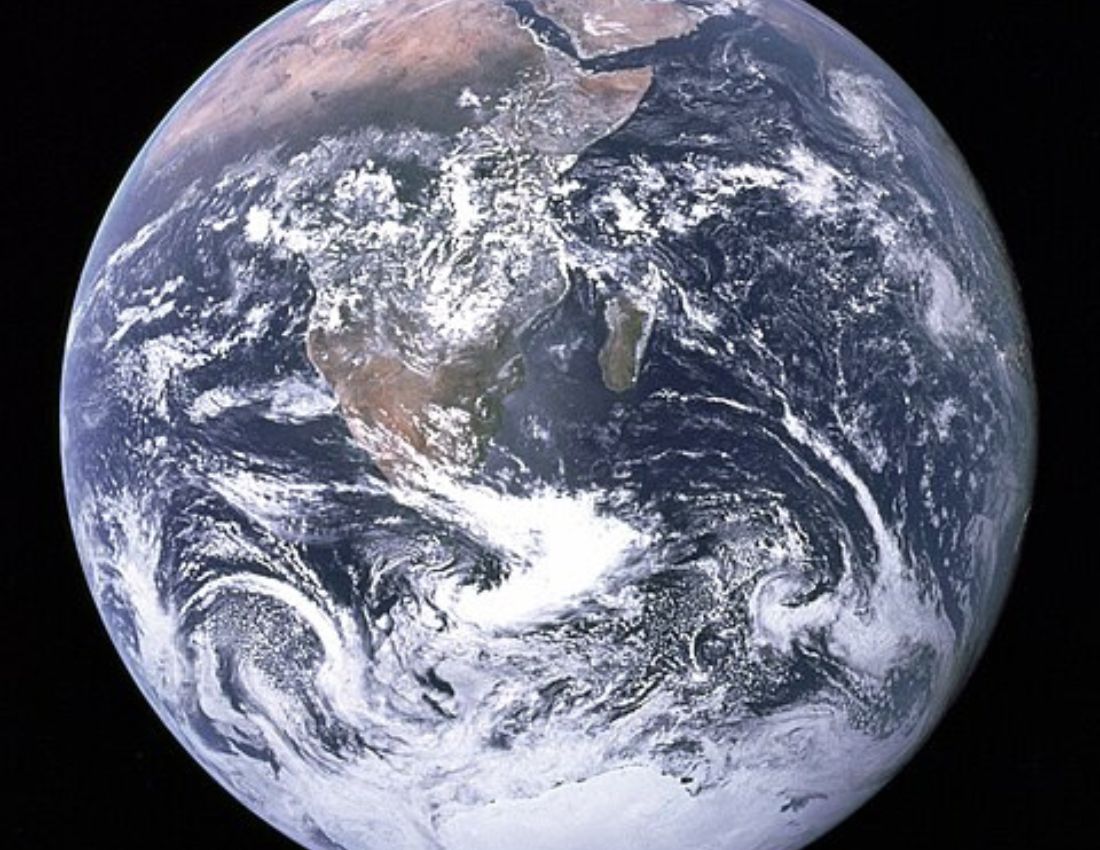
Gazing at our planet floating in space, one might ponder – what is the total mass of the Earth? This intriguing question has an unexpectedly complex answer, requiring creative approaches in astronomy. Unlike simply weighing yourself on a bathroom scale, precisely calculating Earth’s mass across its rock, water, and air proves remarkably tricky.
Yet astronomers persist, driven to quantify one of Earth’s most fundamental properties.
The concept of weight and mass
When we talk about the ‘weight’ of the Earth, we’re really referring to its mass. Weight is the force exerted by gravity on an object, and since Earth is floating in space, it doesn’t actually ‘weigh’ anything in the traditional sense. But it’s mass – that’s a whole different ball game.
Scientists use the law of universal gravitation , formulated by Sir Isaac Newton, to estimate the mass of Earth. This law states that every point mass attracts every other point mass with a force that is directly proportional to the product of their masses and inversely proportional to the square of the distance between their centers. By observing the gravitational pull between Earth and objects with known masses, like satellites, scientists can calculate Earth’s mass.
The gravitational constant
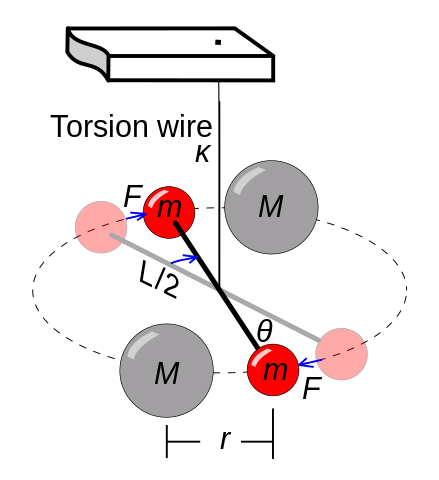
A key player in this calculation is the gravitational constant, denoted as ‘G’. Determining ‘G’ was no small feat. In 1798, Henry Cavendish performed a groundbreaking experiment using a torsion balance to measure the gravitational attraction between masses. This experiment provided the first accurate values for the gravitational constant and the mass of the Earth.
So, what’s the number? Current estimates put Earth’s mass at about 5.97 x 10^24 kilograms. That’s 5,970,000,000,000,000,000,000,000 kg – a number so large it’s hard to even fathom! This estimate has been refined over time through advancements in technology and methods.
Calculating Earth’s mass is not just a matter of numbers. It also involves understanding the mass distribution within the Earth, which affects its gravitational field. The Earth isn’t a perfect sphere, nor is its mass evenly distributed. These factors add complexity to the calculations.
Why does this matter? Knowing Earth’s mass helps scientists understand many aspects of our planet and its interactions in space. It plays a crucial role in calculating orbital mechanics , tides, and even climate models.
How does Earth stack up against other planets in our solar system? It’s more massive than Mars and Venus but lightweight compared to giants like Jupiter and Saturn. This comparison gives us a perspective on our place in the cosmos.
The quest to measure Earth’s mass doesn’t stop. As technology improves, so do our measurements and understanding. Each advancement brings us closer to the precise figure, but for now, we rely on the best estimates science can provide.
The Earth might not have a weight in the traditional sense, but its mass is a testament to the wonders of our planet.
Glossary
Mass: The quantity of matter in a body regardless of its volume or any forces acting on it.
Gravitational Constant (G): A fundamental constant used to calculate the gravitational force between two bodies.
Law of Universal Gravitation: Newton’s law states that every particle attracts every other particle in the universe with a force directly proportional to the product of their masses and inversely proportional to the square of the distance between their centers.
Torsion Balance: A scientific instrument used to measure very weak forces, such as gravitational attraction between masses.
Orbital Mechanics: The study of the motions of artificial and natural celestial bodies under the influence of gravitational forces.