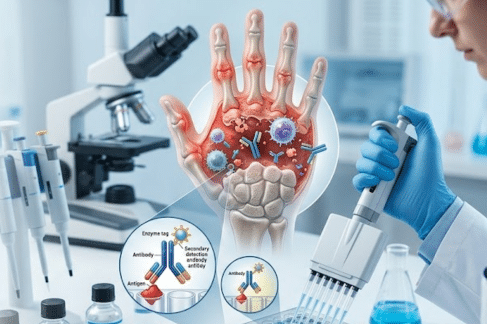
Our immune system protects our body from harmful organisms, such as bacteria and viruses. However, this protective system loses its ability to distinguish between “self” and “foreign” substances during autoimmune diseases.
When bacteria enter the body, immune cells recognize molecules on the bacteria as foreign and activate an immune response. This further leads to inflammation. During normal conditions, the inflammatory response decreases when the treat is controlled. However, during an autoimmune disease, the inflammation persists, which leads to tissue injury and organ damage over time.
While its exact cause is unknown, it can occur due to several factors:
- Genetic factors
- Infections
- Environmental exposure
- Hormonal influences
- Tissue or cellular changes
Its symptoms can vary, depending on the affected organ. However, the common symptoms include:
- Persistent fatigue or unusual tiredness
- Joint pain, stiffness, or swelling
- Muscle pain or weakness
- Recurring or persistent inflammation
- Low-grade fever
- Skin rashes, redness, or itching
- Swelling
- Digestive problems, such as abdominal pain or diarrhea
- Unexplained weight changes
- Headaches or neurological symptoms
- Hair loss
- Dry eyes or dry mouth
- Numbness or tingling
- Sensitivity to cold, particularly in the fingers and toes
- Recurring symptoms that improve and then return
Since it is a life-threatening, early diagnosis and treatment are crucial. Here is where ELISA kits come into play.
What is ELISA?
ELISA stands for enzyme-linked immunosorbent assay. It is a plate-based technique used to detect and quantify the presence of autoantibodies. It relies on antigen-antibody interactions. This technique is known for high sensitivity, specificity, compatibility, versatility, and affordability.
ELISA kit is used to detect various inflammatory biomarkers in autoimmune diseases. Many of these biomarkers are proteins released by immune cells or tissues in response to inflammatory signals. These biomarkers can provide information about immune activity and inflammation.
Common inflammatory biomarkers include:
- Interleukin-6 (IL-6)
- Tumor necrosis factor-alpha (TNF-α)
- Interleukin-1 beta (IL-1β)
- Interleukin-17 (IL-17)
- C-reactive protein (CRP)
- Interferon-gamma (IFN-γ)
Researchers measure these biomarkers during autoimmune diseases. This helps them understand the intensity and characteristics of inflammatory responses.
How Does an ELISA Kit Detect Inflammatory Biomarkers?
In order to detect inflammatory biomarkers, researchers use a sandwich ELISA format. In this method:
A capture antibody and a detection antibody are used to detect the target biomarker. The biomarker is captured between two antibodies and forms a sandwich-like structure.
After this, an enzyme-linked substrate is added to produce a detectable signal. It usually produces a color change, which is directly proportional to the amount of biomarker present in the sample.
Role of ELISA in Autoimmune Disease Research
Study Cytokine Activity
Cytokines are responsible for communication between immune cells. Abnormal cytokine signaling can activate immune cells during autoimmune inflammation. This further leads to tissue damage.
Researchers use ELISA kits to measure cytokine concentrations and investigate these signaling pathways. For instance, they compare IL-6 or TNF-α levels between healthy control samples and samples from individuals with an autoimmune condition.
This further helps researchers investigate:
- Which cytokines are associated with a particular disease model?
- How does cytokine production change during inflammation?
- Do experimental treatments reduce inflammatory signaling?
- How do immune cells respond to specific stimuli?
Compare Biomarker Levels
ELISA can also help researchers compare inflammatory biomarker concentrations between different experimental groups. For example, researchers may compare samples from healthy controls with samples from an autoimmune disease model.
If a particular biomarker is present at higher or lower concentrations in one group, researchers can investigate whether the difference is associated with inflammatory activity or a particular biological process.
Researchers can also compare biomarker levels between untreated and treated groups. Such comparisons may provide insights into how an experimental intervention affects inflammatory signaling.
Understand Disease Progression
Autoimmune diseases can fluctuate between periods of relatively low activity and inflammatory exacerbations. So, researchers use ELISA assays to measure biomarkers at different experimental time points.
For example, samples collected before and after an inflammatory stimulus or treatment can be analyzed for changes in cytokine concentrations. Researchers can then determine whether biomarker levels increase, decrease, or remain relatively stable.
This helps researchers understand relationships between inflammatory signaling and disease progression in experimental models.
Evaluate Potential Treatments
ELISA kits are also help evaluate potential therapeutic approaches. Researchers may test whether a drug, biologic, antibody, or other intervention affects inflammatory pathways.
For example, an experimental treatment may be expected to reduce TNF-α or IL-6 production. ELISA testing can provide quantitative measurements that researchers can compare between untreated and treated experimental groups.
However, changes in an individual biomarker should generally be interpreted alongside other experimental findings rather than being used alone to determine treatment effectiveness.
The Bottom Line
Now that you know how ELISA helps in autoimmune disease biomarker detection and research, what are you waiting for? Find a trusted source to buy ELISA kits online that can support your experiment and provide you with reliable and reproducible results.
Copyright @smorescience. All rights reserved. Do not copy, cite, publish, or distribute this content without permission.
SUBSCRIBE TO OUR NEWSLETTER
.......... ..........Subscribe to our mailing list to get updates to your email inbox.
Monthly Newsletter