The Grand Canyon is like a work of art, and it is still in progress! The rocks that form this masterpiece are over a billion years old. After the rocks piled up, they were pushed into a plateau. The Grand Canyon was carved into its current form by natural processes over the past 5 to 6 million years. How did this wonder of nature, the Grand Canyon form, and how did we learn about its formation?
The Grand Canyon, Credit: Wikimedia/Tuxyso
What types of rock can be found in the Grand Canyon?
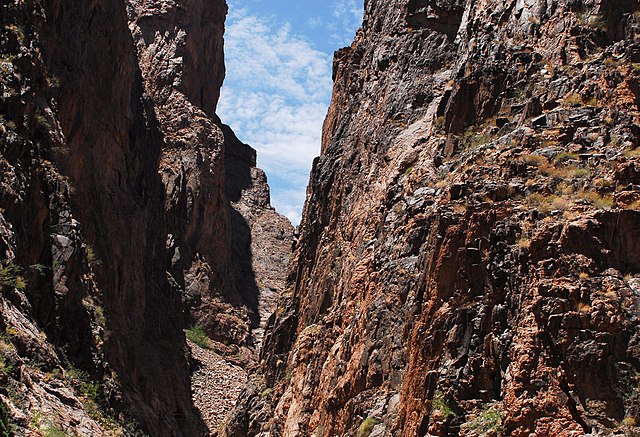
The lower layers of the Grand Canyon are made of igneous and metamorphic rock. Igneous rock is formed when molten rock from inside the Earth’s surface cools down and solidifies. Molten igneous rock can come from volcanoes or other cracks in the Earth’s surface. Metamorphic rock is formed when different types of rock are put under pressure. This is like what happens when you scoop up some snow and pack it into a snowball. The same material gets packed tightly together to form a new shape. On top of the igneous and metamorphic rock layers are many layers of sedimentary rock. Sedimentary rock forms from materials like sand and pebbles packed together over time. So, layer upon layer of rock formed over time… but there is one more important detail. The rocks that make up the Grand Canyon were once under water!
Basement rocks of the Grand Canyon, Credit: Wikimedia/Grand Canyon National Park
How did the Grand Canyon lift out of the water?
Everywhere you look in the world, there are layers of different types of rock. So, how did the Grand Canyon become what it is today? After the rocks piled up about 70 million years ago, this massive structure was pushed above the water. Imagine that the surface of the Earth is a gingerbread cookie, decorated with candy and frosting. The gingerbread can be broken into pieces, and when those pieces move, the candy and frosting moves too! Just like this, the Earth has giant plates that can move around, making structures on the surface move with them. Millions of years ago, the plates under the Grand Canyon shifted, lifting it out of the water and into the tall and far-reaching Colorado Plateau. Although it is called the Colorado Plateau, this wide span of land reaches into multiple states. The Grand Canyon as we know it today spans four states, including Colorado, Arizona, Utah, and Nevada.
How did the plateau become carved into the Grand Canyon?
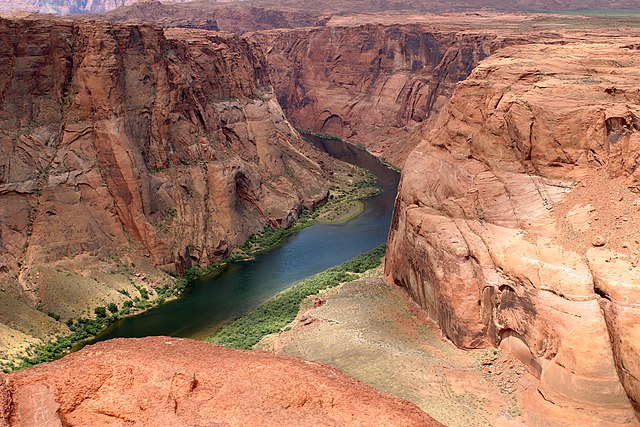
About 5 to 6 million years ago, water from the Rocky Mountains spilled down and formed the Colorado River. This river heavily flooded the area, carrying sharp rocks and sediment that slowly carved away layers of the plateau into the Grand Canyon that we know. It has taken millions of years for the canyon to become as long, deep, and wide as it is today. Every carving reveals more layers of sediment and different types of rock. The river continues to slowly carve its masterpiece, and in the future the canyon will be even wider than it is now.
But if the Colorado River carved out all of that rock, where did the rock and sediment get carried to? It is possible that all of this rocky material was washed away into the ocean. But the Colorado River no longer reaches the ocean today. In addition to the Colorado River, many volcanoes erupted over 2 million years ago, which also helped to carve the canyon.
Colorado River, Credit: Wikimedia/Adrille (edit by Aqwis)
How do we know how the Grand Canyon formed?
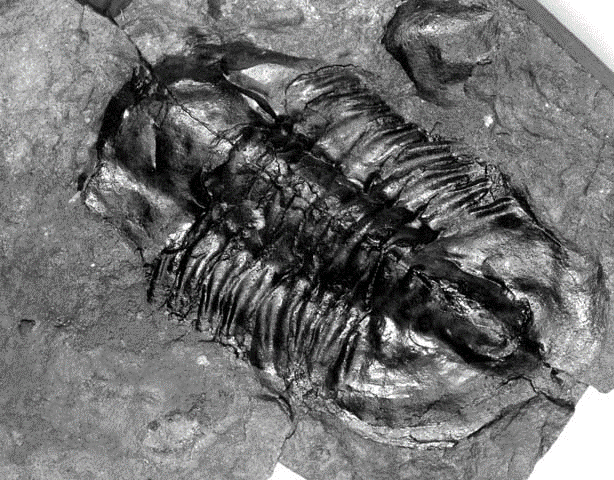
Geologists have tricks and tools to learn how old different structures are. There are multiple helpful ways to date rocks. One way is called absolute dating . Absolute dating combines different areas of science, including geology and evolution . Scientists have been able to learn when different animals existed throughout history by studying evolution. Absolute dating means that we can find fossils of those animals and decide how old the rocks are based on the time the animal lived. Since we know the Grand Canyon was once under water, there have been fossils found in the rock from ancient sea creatures. This was one of many clues that geologists used to determine the ages and qualities of rocks in today’s Grand Canyon.
Another way to date rocks is called relative dating . If you dig deep into the ground in your own backyard, you’ll start to see multiple layers of different kinds of rock and material. Relative dating is a rule that says the newest rocks should be at the top, and the oldest rocks should be deep in the ground. Sometimes this is not true. For example, some rocks can shift on top of others, even though they are older. So, it is important to combine the tools of relative dating and absolute dating to help us to make better conclusions about how old rocks are throughout the world.
Trilobite fossil found in the Grand Canyon, Credit: Wikimedia/Grand Canyon National Park
Is there another Grand Canyon anywhere on Earth?
The Grand Canyon is a beautiful and unique formation. But America is not the only place you can find a canyon carved out by a powerful river. Peru, China, Namibia, and other places throughout the world have large and impressive canyons, with many layers of rock. The Grand Canyon is large, but Nepal actually has the largest canyon in the world.
What about outside Earth? There is actually a canyon on Mars, too! That’s right; other planets can have similar rock formations to the ones we see on Earth. Even though Mars is very different from Earth, scientists have also found water in the canyon on Mars.
Canyon valley on Mars, Credit: Wikimedia/NASA / JPL-Caltech / Arizona State University
Flesch Kincaid Score: 64.7
Flesch Kincaid Reading Level: 8th & 9th grade
Glossary
Igneous – a type of rock formed when hot magma cools down
Metamorphic – a type of rock formed when different rocky materials are put under high pressure
Sedimentary – a type of looser rock formation that contains sand, pebbles, and other small rocks
Plates – large slabs of rock under the Earth’s surface that can move and shift landscapes
Absolute Dating – a tool scientists use to determine how old rocks are based on fossils found in them
Evolution – the study of different types of organisms and animals over the history of the Earth
Relative Dating – a tool scientists use to determine how old rocks are based on how deep they sit in the Earth