From colossal giants that once traversed lush Triassic and Jurassic landscapes to the feathered predators reigning over the Cretaceous skies — dinosaurs have enthralled us for centuries now. These ancient behemoths are a bit of mystery in natural history; were they large and scaly or feathered and swift? We still don’t know!
So, grab your best khakis and step into the Mesozoic era with us as we geek out on ten of the coolest dinosaurs to have ever walked the planet.
Table of Contents

Tyrannosaurus rex
Any list featuring dinosaurs (cool or not) would be incomplete without this one. The T-Rex, or as I like to refer to them, the antagonists of every Jurassic Park movie ever, are the most popular dinosaurs ever known. This apex predator dominated the late Cretaceous period and terrorized large and small dinosaurs alike. Funnily enough, although the T-Rex is without a doubt the most celebrated dinosaur of all time, we still know shockingly little about how it actually looked. A new study revealed that, contrary to popular belief, dinosaurs (more particularly theropods) didn’t have openly visible and uncovered teeth, like crocodiles today. Instead, scientists speculate that theropods like the T-Rex rather had their teeth covered up behind their lips, like common garden lizards. Not as scary.

Triceratops
If you’re looking for examples of bulky and scary-looking herbivores from the late Cretaceous period, the Triceratops is a worthy answer. Few dinosaurs capture the imagination quite like the Triceratops. With its three imposing facial horns and intricately frilled neck, this iconic herbivore from the late Cretaceous period is a testament to the diverse and awe-inspiring creatures that once roamed our planet. Triceratops, whose name translates to “three-horned face,” was a colossus of its time, reaching lengths of up to 30 feet and sporting a massive skull adorned with armor-like bony plates. Its trio of horns, particularly the prominent nasal horn, are believed to have served both defensive and social functions, a striking example of evolutionary adaptation.
(Fun fact: It’s not just a late Cretaceous trend; even today the animal kingdom boasts multiple examples of herbivores that can pack a punch themselves. From elephants and hippos to kangaroos and gorillas; these leaf eaters can do more than just fend for themselves when required.)

Stegosaurus
Similar to the Triceratops, the Stegosaurus is another impressive herbivore. A relic of the Jurassic period , the stegosaurus or “roof lizard” was a marvel that wandered the Mesozoic era some 150 million years ago. Its iconic feature, the large plates running along its back, baffles scientists even today (Remember how little we actually know about dinosaurs?) Were the plates used for thermoregulation, display, or perhaps both? The answer is, we don’t actually know. However, what we do know is that these plates weren’t even the Stegosaurus’ coolest feature. One of the lesser known facts about the Stegosaurus is that they had a thagomizer on the end of their tails. The thagomizer is a cluster of spikes that dramatically hung off the end of the dinosaur’s tail and was potentially what these animals used to strike and defend themselves against any possible predators or threats.
Ankylosaurus
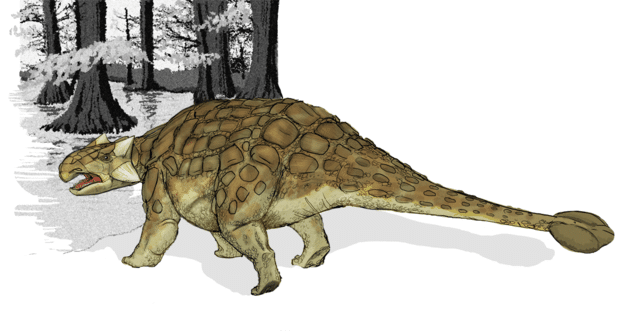
The tank of the Cretaceous period, this dinosaur looked more like an ancient Roman warship than it did an animal. The ankylosaurus wasn’t a very tall dinosaur—it only stood about 5.6 feet tall—however, it weighed a whopping 8,000 kilograms. For scale, that’s just as heavy as a T-Rex that was usually 12–13 feet tall!

The most distinctive feature of Ankylosaurus was its heavily armored body. It had a wide, low-slung profile and numerous bony plates embedded in its skin, which acted as a form of protection against predators. These plates formed a sort of armor along its back and sides.
Similar to how Stegosaurus had tails that terminated in thagomizers, Ankylosaurus had tails that terminated in club-like structures. These tails could grow as long as 2 feet and were around 20 kilograms heavy. These herbivores used their tailclubs to clobber any potential predators.
Saltasaurus
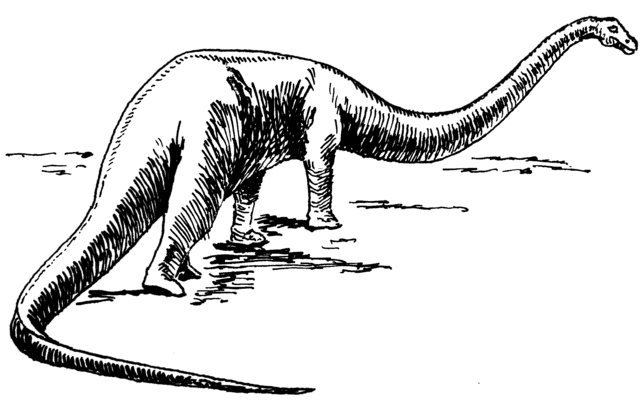
Contrary to the image the name might conjure, Saltasaurus aren’t imaginary dinosaurs made of salt. Rather, Saltasaurus are actually a type of sauropod—the dinosaurs with a giraffe-esque neck! With a relatively shorter neck than its sauropod cousins, the Saltasaurus (a herbivore) mainly browsed low-lying vegetation. Like many sauropods, the Saltasaurus had a whip-like tail. What sets it apart is that some species of Stegosaurus had bony knobs on the ends of their tails, which could have been used defensively against predators or for combat between individuals. Some fossil evidence suggests that Saltasaurus dinosaurs may have traveled and lived in herds, possibly exhibiting social behavior for protection against predators or other environmental pressures.

Protoceratops
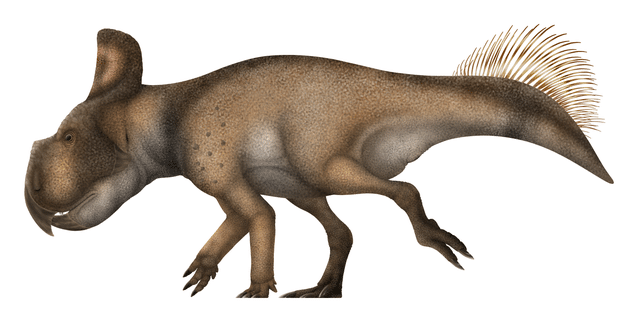
Thought to roam the cold deserts of Mongolia, this dinosaur was a small but feisty herbivore of the late Cretaceous period. These dinosaurs, part of the ceratopsian group of dinos, were characterized by their distinctive frills and beak-like mouths. Unlike larger ceratopsians, the Protoceratops lacked the distinctive horns that adorned the heads of most of their larger cousins, like the Triceratops.
(Fun fact: In a way, the Protoceratops still exists in the lands it came from; it is still celebrated in Mongolian lore!)

Velociraptor
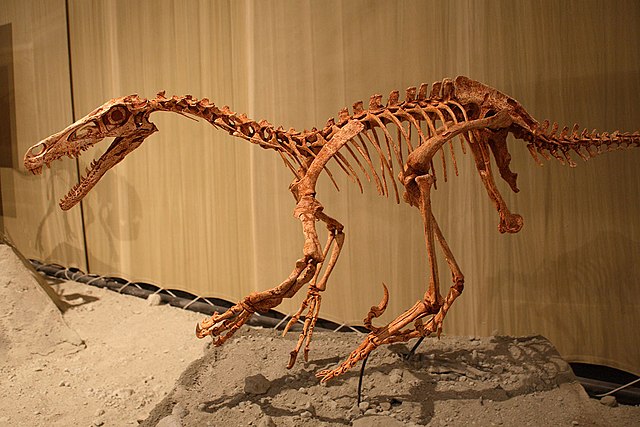
The velociraptor is to Gen Z kids what the T-Rex was to Millennials. The star of the Jurassic World franchise, this dinosaur takes center stage as one of the more iconic species of the Cretaceous period. Similar to the T-Rex, when it comes to raptors, we’ve got a bit of unlearning to do. For starters, these dinosaurs were smaller (the size of a turkey) than their televised portrayal.

Similarly, as a member of the theropod clan, there is a possibility that they may have been feathered rather than scaled creatures (like reptiles). As with all things science, it’s hard to replicate scientific concepts (animals and plants or otherwise) with a hundred percent accuracy in pop culture. Yet, there are a few things that movies get right about raptors. For instance, raptors did hunt in packs and used pack coordination to ambush and overpower larger creatures.
Pterodactyl
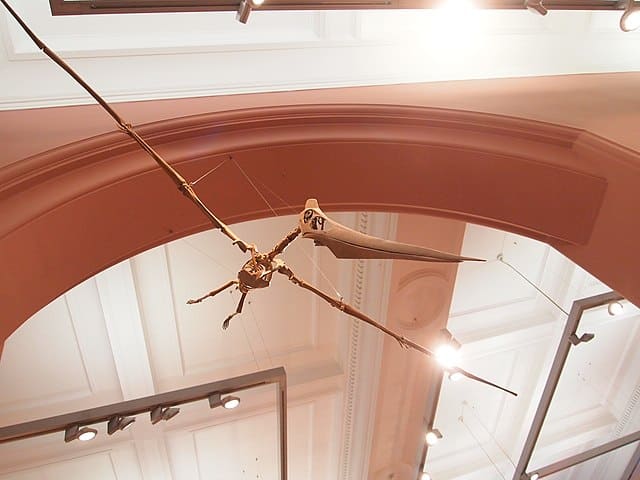
These dinosaurs are part of a larger group of animals that have the enviable distinction of being the first vertebrates that could fly. Pterodactyls flew over the chaos of the late Jurassic and early Cretaceous periods. Similar to present day birds, their power of flight was enabled by lightweight and hollow air-filled bones that made up their skeletons. The similarity with present day animals doesn’t just end there. Pterodactyls also share traits with bats. Bats and pterosaurs have wings made of elongated fingers that are connected by a thin membrane of skin.

Ichthyosaur
With elongated bodies, paddle-like limbs, and sleek snouts, ichthyosaurs cruised through the waters of the Mesozoic era. Ranging from small, agile species to colossal giants, their fossils paint a vivid portrait of their oceanic existence where they lived alongside marine reptiles, sharks, and other prehistoric sea creatures, collectively shaping the marine ecosystem of their time. Despite their success for millions of years, ichthyosaurs went extinct around the late Cretaceous period, possibly due to changing oceanic conditions and competition from other marine reptiles.
Argentinosaurus
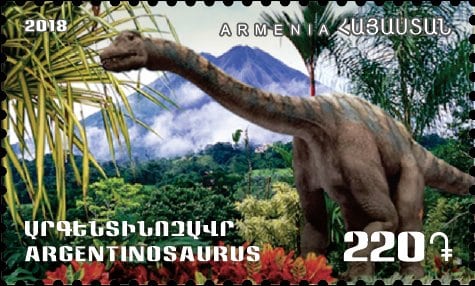
Named after the lands they once trod, Argentinosaurus are hard to fathom. Estimated to stand at towering heights of around 100 feet (30 meters) in length and weighing up to 100 tons, these colossal creatures may have been one of the largest and heaviest creatures to have ever existed. Part of the sauropod clan, these titans were herbivores and posed no threats to other dinosaurs around them.

Flesch-Kincaid Score: 62.5
Flesch-Kincaid Grade Level: 7.9
Glossary
Cretaceous period: The final period of the Mesozoic era, often referred to as part of the golden age of dinosaurs.
Jurassic period: The middle period of the Mesozoic era that along with the Cretaceous forms the golden age of dinosaurs.
Mesozoic era: Geological era spanning 180 million years, starting with the Triassic period and ending with the Cretaceous period.
Fossil: Preserved remains of ancient organisms.
References
Cullen, T. M., Larson, D. W., Witton, M. P., Scott, D., Maho, T., Brink, K. S., Evans, D. C., & Reisz, R. R. (2023). Theropod dinosaur facial reconstruction and the importance of soft tissues in paleobiology. Science, 379(6639), 1348–1352. https://doi.org/10.1126/science.abo7877
Scannella, J. B. (2023, July 9). Triceratops | Description, Size, Fossil, Diet, & Facts. Encyclopedia Britannica. https://www.britannica.com/animal/Triceratops
Black, R. (2011, May 9). The myth of the Eight-Spiked Stegosaurus. Smithsonian Magazine. https://www.smithsonianmag.com/science-nature/the-myth-of-the-eight-spiked-stegosaurus-165459353/
The Editors of Encyclopaedia Britannica. (2023, July 14). Ankylosaurus | Size, Diet, & Facts. Encyclopedia Britannica. https://www.britannica.com/animal/Ankylosaurus
Strauss, B. (2019). Interesting facts about protoceratops. ThoughtCo. https://www.thoughtco.com/things-to-know-protoceratops-1093796
Vicious Velociraptor: tales of a turkey-sized dinosaur. (2018, August 8). Natural History Museum. https://www.nhm.ac.uk/discover/velociraptor-facts.html
Machemer, T. (2021, April 16). Unique bone structure helped Long-Necked pterosaurs fly. Smithsonian Magazine. https://www.smithsonianmag.com/smart-news/unique-bone-structure-helped-long-necked-pterosaurs-fly-180977521/
Magazine, S. (2012, April 1). The prehistoric Giants Hall of Fame. Smithsonian Magazine.https://www.smithsonianmag.com/science-nature/the-prehistoric-giants-hall-of-fame-159358766/
Contributors
Copyright @smorescience. All rights reserved. Do not copy, cite, publish, or distribute this content without permission.
SUBSCRIBE TO OUR NEWSLETTER
.......... ..........Subscribe to our mailing list to get updates to your email inbox.
Monthly Newsletter