1. Studies suggest that frogs have inhabited the Earth for over 200 million years, at least as long as the dinosaurs.
2. A group of frogs is called an army, and worldwide, there are over 7000 known frog species on every continent except Antarctica.
3. The lifespan of frogs varies greatly depending on the species. In the wild, many frogs live 5-8 years, but in captivity, frogs have been known to live for more than 20 years.
4. WORLD’S LARGEST FROG: is the Goliath frog (Conraua goliath) of West Africa, which can grow up to 15 inches long and weigh up to 7 pounds.
Credit: Wikimedia/Emőke Dénes
5. WORDL’S SMALLEST FROG: is a 7-mm (0.27-inch)- long frog found in Papua New Guinea (Paedophryne amanuensis).
6. Many frogs can jump more than 20 times their body length.
7. Baby frogs are called tadpoles. They undergo metamorphosis, transforming from aquatic larvae with gills to air-breathing adults with lungs.
8. Frogs completely shed their skin about once a week. After pulling off the old, dead skin, they usually eat it.
9. Most frogs have teeth, but only on their upper jaw. These teeth hold prey in place.
10. Frogs have extraordinary night vision and are very sensitive to movement. The bulging eyes allow them to see in front, to the sides, and partially behind them.
11. Frogs were the first land animals to develop vocal cords. Male frogs use their vocal sacs to amplify sounds, and their calls can be heard up to a mile away.
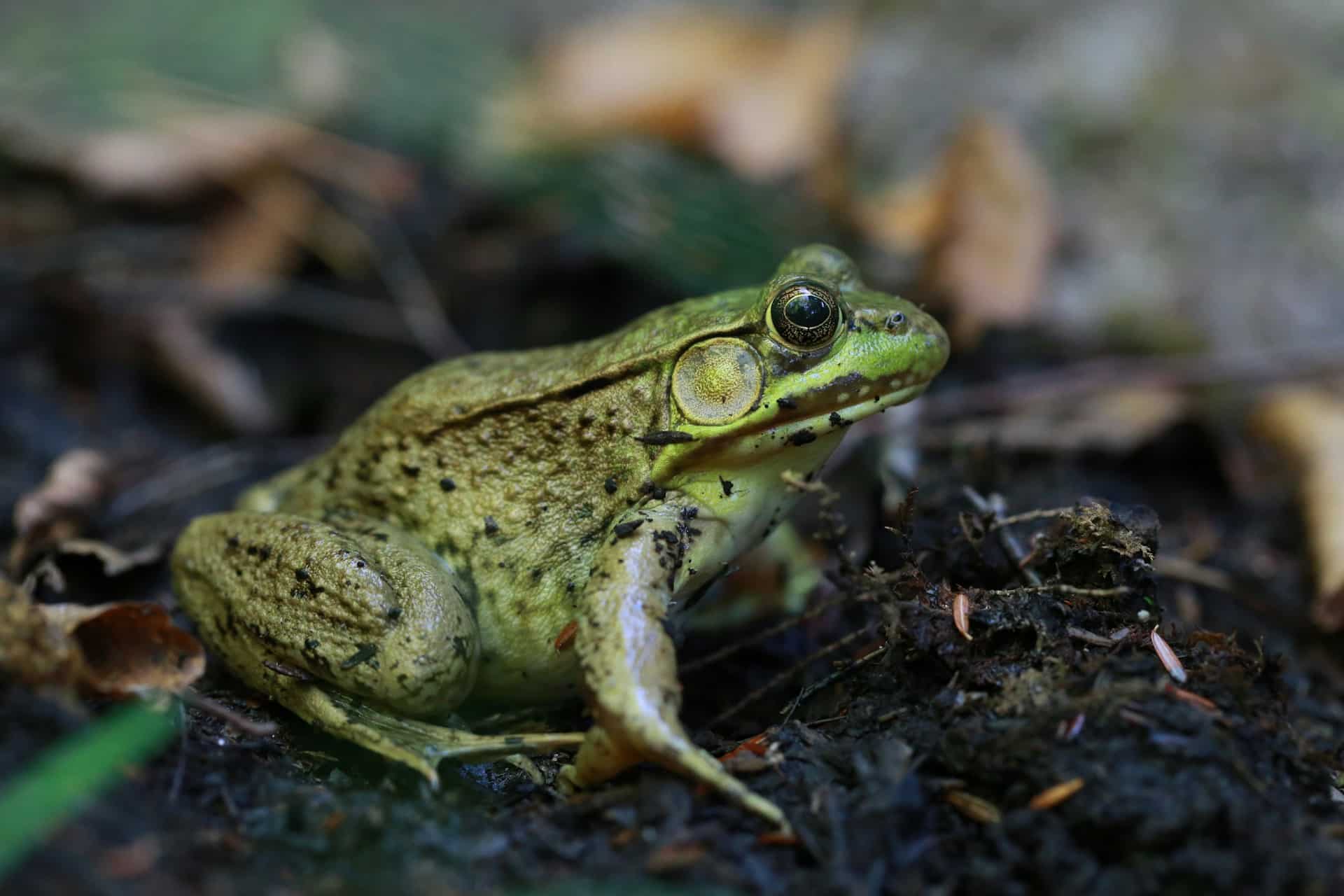
12. Frogs don’t drink water with their mouths; they absorb it through their skin in a body area known as the ‘drinking patch’ on their belly.
Credit: Julien Mussard/Unsplash
13. When a frog swallows its prey, it blinks, pushing its eyeballs down to help push the food down its throat.
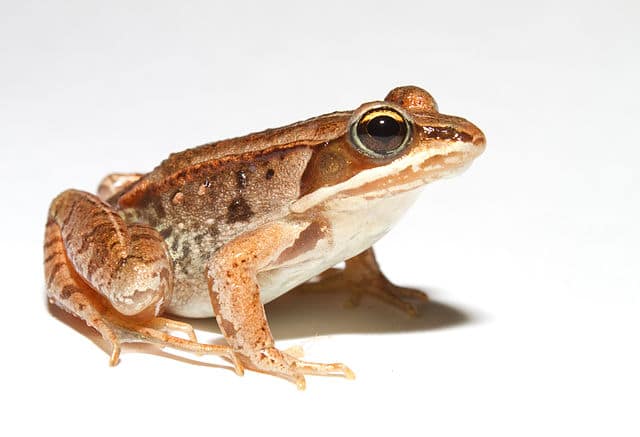
14. The Wood frog (Lithobates sylvaticus) can survive for weeks, with more than half of the body frozen, and can be found in the Arctic Circle. They produce a type of antifreeze (glucose) in their blood (that seeps the insides of cells to keep them from shrinking and dying), protecting their vital organs.
Credit: Wikimedia/Brian Gratwicke
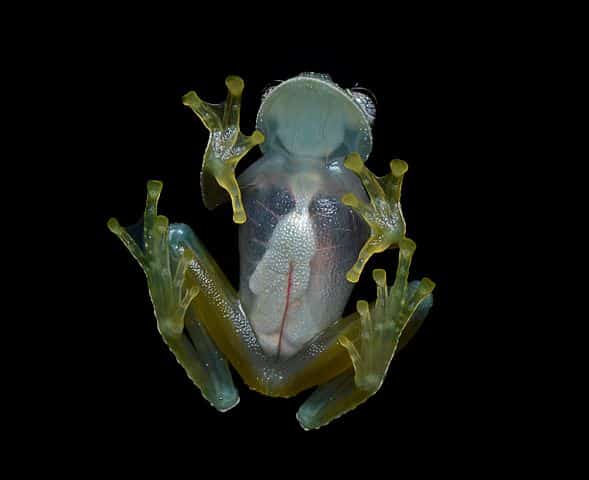
15. MOST TRANSPARENT FROG: the Glass frog (Centrolenella colymbiphyllum) has translucent skin, which allows us to see its internal organs, bones, and beating heart.
Credit: Wikimedia/Geoff Gallice
16. The Surinam toad (Pipa pipa) gives birth through holes in its back. The female’s skin grows over the eggs, and fully-formed toadlets emerge from these pockets.
17. Darwin’s frog (Rhinoderma darwinii) fathers incubate their young in their vocal sacs for several days before coughing up fully formed froglets.
18. The Waxy monkey frog (Phyllomedusa sauvagii) secretes a waxy substance from its neck and uses its legs to spread it over its body to prevent dehydration.
19. A rare frog in Indonesia, the Bornean flat-headed frog (Barbourula kalimantanensis), has no lungs and breathes entirely through its skin.
20. WORLD’S MOST TOXIC FROG: the Golden poison frog (Phyllobates terribilis) is one of the most toxic animals on Earth. A single animal measuring two inches contains enough poison to kill ten adult people.
21. Researchers have explored medicinal uses for the golden poison frog’s toxins. A synthetic version of one of the poison’s compounds was developed, promising to be a powerful painkiller.
Credit: Wikimedia/Amaury Laporte
22. The Red-eyed tree frog (Agalychnis callidryas) lays its eggs on the underside of leaves hanging over water. When the eggs hatch, the tadpoles fall directly into the water below.
23. Some frog species, including the Pacific Treefrog (Pseudacris regilla), can change color from light to dark to match their surroundings.
Credit: David Clode/Unsplash
24. The male Emei music frog (Nidirana daunchina) can change the pitch of its calls to sound more attractive to females.
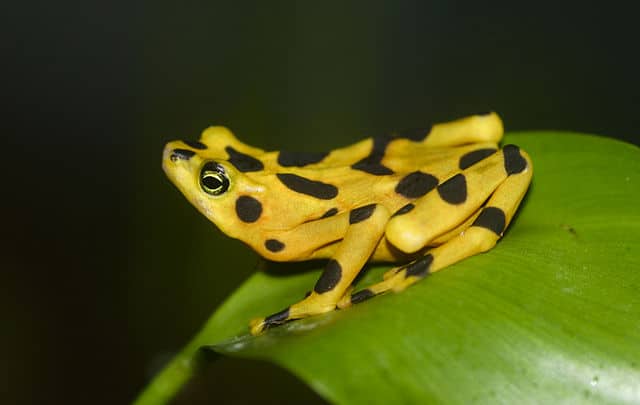
25. Panamanian golden frog (Atelopus zeteki) uses sign language to communicate in noisy environments. These amphibious frogs wave their arms to defend territory, try to attract a mate, or even greet one another.
Credit: Wikimedia/Brian Gratwicke
Copyright @smorescience. All rights reserved. Do not copy, cite, publish, or distribute this content without permission.
Join 20,000+ parents and educators
To get the FREE science newsletter in your inbox!
SUBSCRIBE TO OUR NEWSLETTER
.......... ..........
Subscribe to our mailing list to get updates to your email inbox.