Table of Contents
Television and radiation
Television: an invention that has captivated the world and revolutionized entertainment. Providing a window into faraway lands, it immerses us in diverse cultures, educates us about science and history, and serves as a staple in many households. Yet, amid these benefits, concerns have been raised about whether televisions emit radiation, a term that can often generate anxiety. But to evaluate this claim, we must first understand the concept of radiation itself.
What is electromagnetic radiation?
In the simplest of terms, electromagnetic radiation can be perceived as waves of electric and magnetic energy traversing through space. This form of energy is omnipresent and takes on various forms that we interact with daily, such as light from the sun, heat from a stove, or even radio waves that fill the air with music and dialogue from our radios.

Different types of electromagnetic radiation
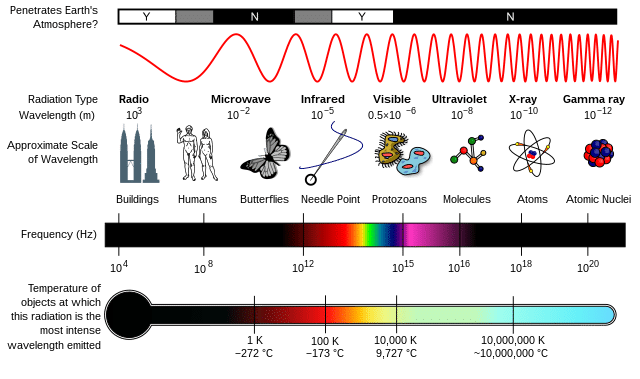
Electromagnetic radiation is an expansive term that encompasses several types, each differentiated by their wavelength . Starting from the longest wavelength with the least energy, we have radio waves, followed by microwaves, infrared radiation, visible light, ultraviolet light, X-rays, and finally, gamma rays possessing the shortest wavelength but the highest energy. Visible light that illuminates our world, the infrared that radiates heat, and the radio waves used in broadcasting are all examples of non-ionizing radiation , which is generally less harmful.
The role of cathode ray tubes in old TVs
Early televisions operated through a device known as a electrons can be precisely directed onto a screen coated with a fluorescent material. CRTs were widely used in televisions and computer monitors before the advent of flat-screen technologies.’] cathode ray tube (CRT) [/simple_tooltip]. This tube would fire a beam of electrons onto the back of a phosphor-coated screen. Upon striking the phosphors , the electron beam would cause them to light up, generating an image pixel by pixel, which our eyes would then perceive as a complete picture.

Modern television technology
As technology has evolved, so has the television industry. The bulky CRT sets have been replaced by sleek, modern televisions that employ technologies such as Liquid Crystal Display (LCD) , Light Emitting Diodes (LED) , and Organic LED (OLED) . Instead of electron beams, these modern sets use electric signals to control tiny crystals or diodes that emit light, producing an image on the screen.
Do televisions emit radiation?
Traditional CRT televisions indeed emitted a specific amount of radiation, primarily low-energy, non-ionizing radiation, which is far less harmful than the high-energy, ionizing radiation found in X-rays or gamma rays. This emission resulted from the electron beam operation inside the CRT. However, the radiation levels were well within safe limits defined by regulatory bodies and did not pose a significant risk.
Radiation from modern televisions
As technology progressed, so did the safety measures. Modern televisions using LCD, LED, and OLED technologies emit even less radiation than their older CRT counterparts. The shift away from electron beam technology and advancements in shielding and emissions controls have ensured that modern televisions emit insignificant amounts of non-ionizing radiation.
Health impacts of television radiation
While it is accurate to say that televisions, like many other electronic devices, emit radiation, it’s crucial to note that the levels are far below those considered hazardous to human health. The majority of this radiation is non-ionizing, meaning it lacks the energy to remove tightly bound electrons from atoms, reducing its potential to cause bodily harm.
Practical steps to minimize risk
Despite the minimal risks associated with radiation from televisions, it is still good practice to take some simple precautionary measures. These can include not sitting too close to the screen, limiting the amount of time spent watching TV, and using remote controls to adjust settings rather than approaching the screen.
Yes, televisions do emit a minute amount of radiation, but the levels are low and far from being harmful under normal viewing conditions. Just like everything else in life, the key is moderation and balance. By understanding the technology behind televisions and taking some simple precautions, we can continue to enjoy the magic of television while ensuring that our health is not compromised. It’s all about embracing technology wisely, ensuring it serves as a tool of enrichment rather than a source of concern.
Glossary
Cathode Ray Tube (CRT): An electronic device containing a vacuum tube in which a beam of electrons can be precisely directed onto a screen coated with a fluorescent material. CRTs were widely used in televisions and computer monitors before the advent of flat-screen technologies.
Electromagnetic Radiation: A type of energy that is all around us and takes many forms, such as visible light and radio waves. It is a combination of electric and magnetic energy traveling in waves.
Liquid Crystal Display (LCD): A display technology that uses the light modulating properties of liquid crystals to produce images. LCDs are common in televisions, computer monitors, and smartphones.
Light Emitting Diodes (LED): A semiconductor device that emits light when an electric current passes through it. They are used in a wide range of applications including lighting, digital displays, and televisions.
Organic LED (OLED): A type of LED in which the emissive electroluminescent layer is a film of organic compounds that emit light in response to an electric current. OLED technology is used in modern televisions and displays for its ability to produce brighter, crisper displays and better viewing angles.
Non-Ionizing Radiation: This type of radiation is not strong enough to remove tightly bound electrons from atoms and thus, is generally less harmful. Examples include radio waves, microwaves, visible light, and infrared radiation.
Ionizing Radiation: This type of radiation carries enough energy to detach electrons from atoms or molecules, thus ionizing them. It’s a higher-energy form of radiation that can be harmful in large doses. Examples include X-rays and gamma rays.
Wavelength: The distance between successive crests of a wave, especially points in a sound wave or electromagnetic wave. It is usually denoted by the Greek letter lambda (λ).
Phosphors: Substances that exhibit the phenomenon of luminescence, meaning they emit light when they are excited by radiation. They were used in the screens of older televisions to create the picture.
Electrons: Subatomic particles that carry a negative electric charge. They are one of the basic constituents of atoms.
Diode: An electronic device that conducts electricity in only one direction.
Contributors
Copyright @smorescience. All rights reserved. Do not copy, cite, publish, or distribute this content without permission.
SUBSCRIBE TO OUR NEWSLETTER
.......... ..........Subscribe to our mailing list to get updates to your email inbox.
Monthly Newsletter