Stars appear to twinkle when seen from Earth, but that’s just an illusion caused by our atmosphere distorting the starlight. Stars themselves also have a subtle, innate “twinkle” caused by ripples of gas on their surfaces. Now, for the first time, researchers have simulated this effect in 3D models to determine precisely how much stars should twinkle on their own.
In a new study published in Nature Astronomy, a team led by Northwestern University scientists created the first simulations showing energy rippling out from the core to the surface of a massive star. In another first, they converted the rippling gas waves into sound waves, allowing listeners to hear the twinkling and roiling insides of stars. The results are strangely fascinating.
What are stars?
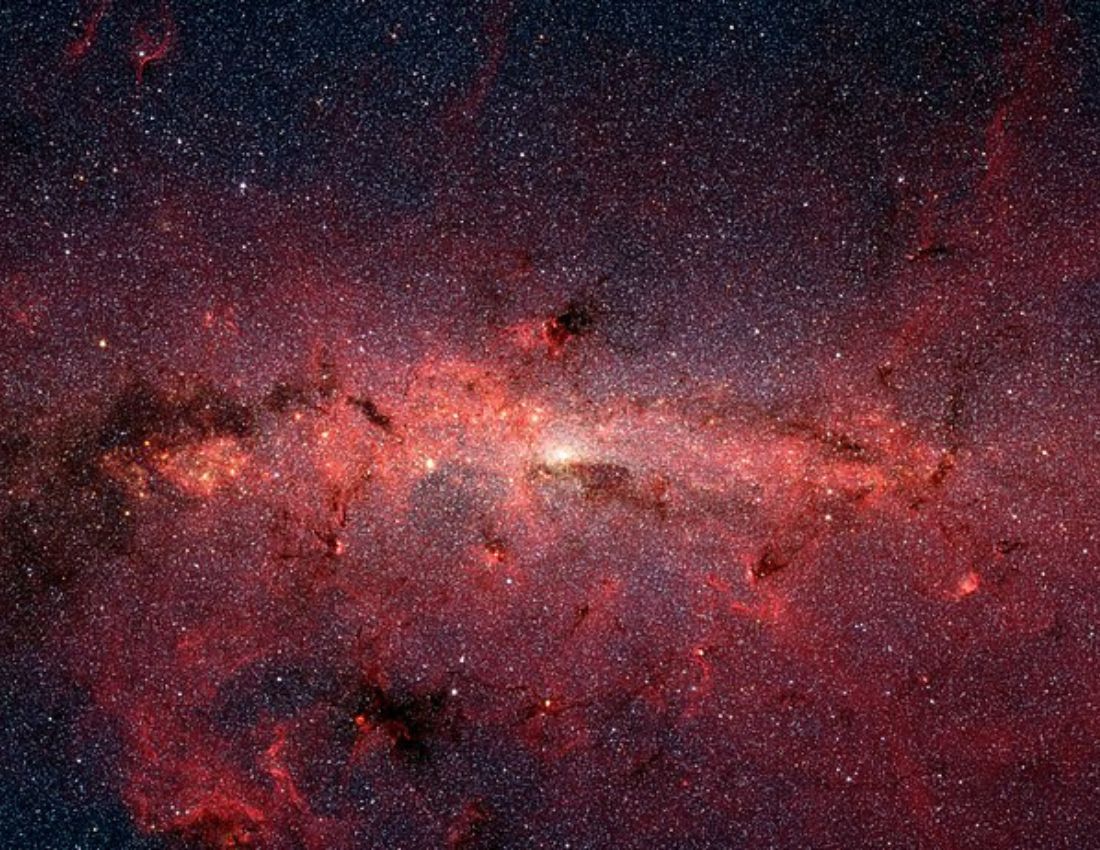
Astronomers estimate that there are a whopping one septillion stars in the universe. That’s 1,000,000,000,000,000,000,000,000 stars. Our galaxy – the Milky Way, has one billion. The secrets of the vast infinity of space are slowly being unraveled, and stars are integral to the life cycle of galaxies.
Stars are massive clouds of hot gas. Most of the star is made up of hydrogen. The structures of stars (and what’s inside them) change as they age. The Sun is about halfway through its life cycle.
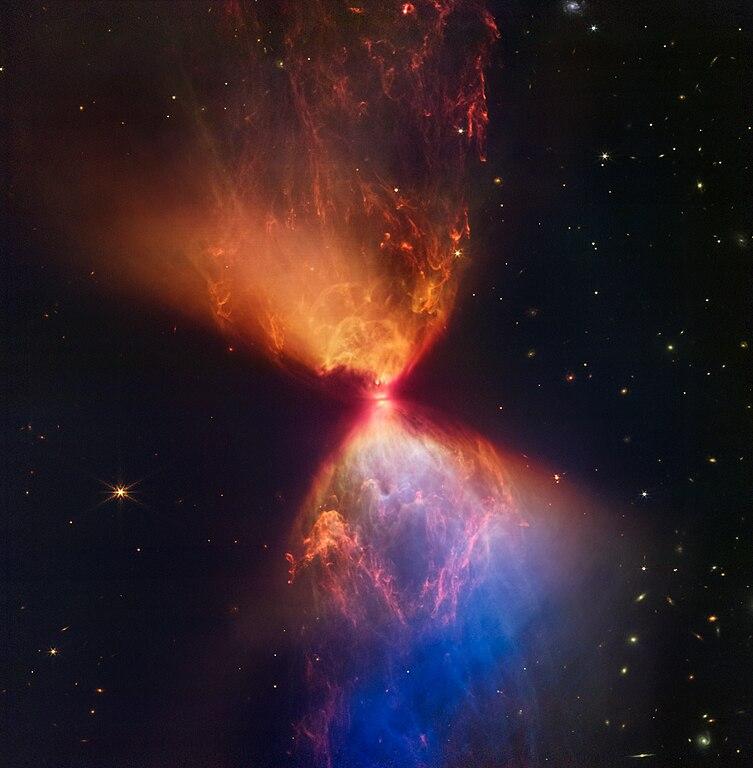
All stars begin as large clouds of gas and dust. Stars are the primary source of heat in galaxies, and the centers of new stars can be very cold. Gasses and dust freeze together in clusters. The clusters spin and move around. As they bump into each other, they generate friction and heat. Clumps slowly become bigger and bigger, eventually becoming big enough for the star to have a gravitational force of its own. This force pulls more and more mass together, generating more and more friction and heat, making a protostar. It’s a star baby!
A star’s adult phase lasts millions of years. It continues to accumulate mass, which increases its gravity too. Eventually, the force is strong enough to merge hydrogen molecules to make helium. This process is known as nuclear fusion, and it releases a tremendous amount of energy. Fusion takes place in the hot, high-gravity core. Stars exist as stable hydrogen-to-helium machines for millions, billions, or even trillions of years. All the while, they blaze with heat, warming up galaxies around them. Smaller stars burn more slowly than larger ones.

Stars tend to die in a blaze of glory in their old age. They eventually run out of hydrogen to convert into helium. The core collapses. Since the dense mass that gives the star its gravity is gone, it puffs into an enormous cloud. Small stars puff away their gasses entirely, leaving only their core behind. Giant stars become supernovas, which are massive explosions. The core either becomes a black hole or a different type of star.
What does a star’s twinkle sound like?
The vacuum of space is absolute silence. There’s nothing to carry sound. In this quietude, it’s difficult to imagine the constant deafening roar from the stars.
Think about the last time you boiled a pot of water. At first, the water at the bottom of the pot is much hotter than the surface. Eventually, the heat is distributed evenly through the pot of water. As molecules heat up, they rise. Cooler ones fall. Finally, a chain of molecules is formed, leading to a convection current. Stars are like big pots of water. Hot gasses escape to the outside of the stars. Cooler gasses fall inward to the core, ready to be heated.
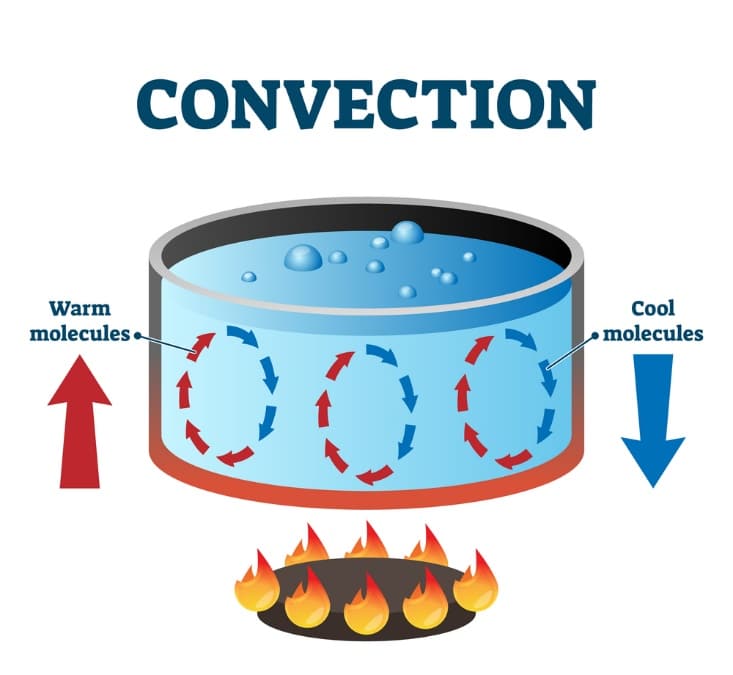
As gasses move from cooler to warmer areas, they create waves that bounce around differently. These waves bouncing around cause the entire star to vibrate like a bell ringing. Unfortunately, the telescopes we have right now can’t quite capture the interior of a star. Luckily, the movement of waves creates dim and bright spots on the surface of stars. This ebb and flow of light is one part of a star’s “twinkle.”
Daniel Lecoanet, an Assistant Professor at Northwestern University and author of the study that pioneered the technique, spoke of the star’s “twinkle.” “Different types of waves in stars (including sound waves) make the star look momentarily brighter or dimmer. So, although we cannot “hear” the sound waves, we can “see” them.”, he says.
Professor Lecoanet and his team have measured these waves and converted them into sound. We now know exactly what “Twinkle, Twinkle, Little Star” would sound like if it were sung by an actual star! Using more than one human sense can deepen our understanding of the world.
“We are still using telescopes to measure the brightening and dimming of stars caused by waves. However, we also found that it was very useful to also take the results and then play it back as sound… the ear is sensitive to different types of patterns than the eye, and we noticed some features by listening that we hadn’t appreciated”, stated Daniel.
Each star has a unique sound
Each star also has a unique structure and pattern that alters how sounds are produced. The team also characterized these patterns for different stars. By modeling this on a computer, they turned each star into a distinct instrument. Taking this further, they also passed songs we already know through each star’s blueprint. Talk about an astronomically good remix.
Capturing the blueprints of these stars can provide valuable information on what the interior of different stars might look like. Astronomers can also use this process to age a star and identify whether it’s a baby, adult, or close to the end of its life. Using the information we already get from telescopes, we’ve unlocked more of the universe’s myriad mysteries.
Right now, the team at Northwestern has only applied the technique to massive stars, as the patterns of brightness and dimness are easier to see. They want to look closer to home next, applying the method to our Sun. “This would allow us to answer many current mysteries about what is going on in the core of the Sun,” stated Lecoanet.
Contributors