Whenever you think of deadly and dangerous, you might usually think of apex predators, or large carnivores like sharks or lions. However, as you dig deep into this article, you will realize that size doesn’t matter, nor does the position the animal holds on the food chain. For example, sharks kill just six humans every year, and lions kill 22 humans on average every year. Quite a surprise, isn’t it?
Now the question arises, if not lions and sharks, then whom? As you will find out, most animals that are lethal to humans cause fatal diseases and release toxins that are deadly to humans. Without further ado, let’s take a look at the 10 deadliest animals to humans.

Click here to download this poster
10. Hippopotamus (Hippopotamus amphibious)
500 deaths per year

Hippos are large, aggressive, and territorial—a recipe that has perfected an animal’s lethality. Unsurprisingly, hippos kill 500 people every year in Africa, compared to just 22 by lions. They charge and capsize boats, drowning some people onboard and killing the rest. A giant 1500kg mammal with large, sharp teeth is the last thing you want to face in Africa. Hippos can swim six times faster than a regular human can in water. They run at speeds of 12mph in water, faster than Michael Phelps did with a monofin. Hippos are surprisingly very fast on land as well, clocking speeds of 19mph or 30 kmph.
9. Elephants (Elephantidae family)
500 deaths per year
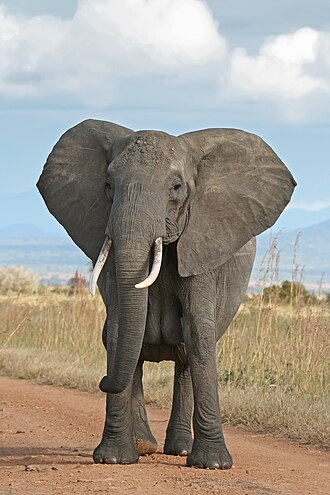
Elephants are mostly viewed as gentle giants. However, constant encroachment on their habitat has led to an increasing frequency of encounters between humans and elephants. Their sheer size and weight make them deadly during encounters with humans, leading to deadly conflicts. Groups of elephants often enter human dwellings and villages, where they trample humans who get in the way of these charging behemoths. In this way, elephants kill around 500 people every year.
8. Saltwater crocodile (Crocodylus porosus)
1,000 deaths per year

Hippos aren’t the only water-dwellers in this list. Crocodiles are already deadly, killing thousands of people every year. However, most of these kills are opportunistic, as these reptiles don’t see humans as prey.
Saltwater crocodiles, on the other hand, see humans as potential prey and food. They are the largest known crocodilians and are agile and fierce. Males can weigh up to 1,300 kg and can grow as long as 6 meters. They can swim at a speed of 18 miles per hour.
They also have a bite force of 3,700 psi, the strongest bite force among all animals. Clearly, if a saltie has locked on you as a potential prey, your chances of survival are faint.
7. Ascaris roundworms (Ascaris genus)
2,500 deaths per year
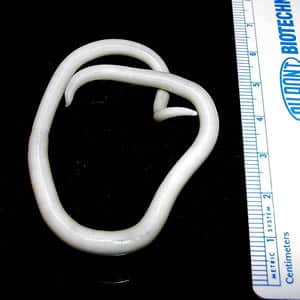
Ascaris roundworms are parasites, which means they live on or in another animal, known as the host, and harm it. Ascaris roundworms are transferred when a person accidentally ingests their eggs. Food or drink contaminated with human feces is usually the source of infection caused by Ascaris eggs. The worms reside in the small intestine, where they eat and reproduce. The resulting disease is known as Ascariasis, and is characterized by symptoms such as fever, abdominal pain and swelling, and shortness of breath. The disease is quite fatal, killing 2,500 people every year.
6. Scorpions (Scorpiones order)
2,600 deaths per year

Now, we have our first animal that relies on delivering deadly venom to kill its prey. Unlike poisonous animals, which secrete toxins, venomous animals deliver the toxin through bites, or in this case, through a stinger. Scorpions produce venom to subdue their prey. However, 25 species of scorpions release venom that is fatal to humans. Mostly, people accidentally step on scorpions with bare feet, and in such cases, to avoid getting crushed, scorpions sting the person. It is a defense mechanism, rather than an offensive measure.
However, there are methods to identify poisonous scorpions. As a general rule of thumb, the lethal ones have thick stinger tails and small pincers. Every year, around 2,600 people die from scorpion stings. The most lethal one is the Indian red scorpion (Hottentotta tamulus).
5. Assassin bugs (Reduviidae family)
10,000 deaths per year

Assassin bugs are aptly named as they spread fatal Chagas disease through their bite. Chagas disease kills approximately 10,000 people every year. Chagas disease is caused through a parasite called Trypanosoma cruzi. Assassin bugs act as vectors, passing on the parasite through their feces and bites.
Assassin bugs are also known as ‘kissing bugs’ as they tend to bite people’s faces when they sleep.
4. Saw-scaled viper (Echis carinatus)
138,000 deaths per year
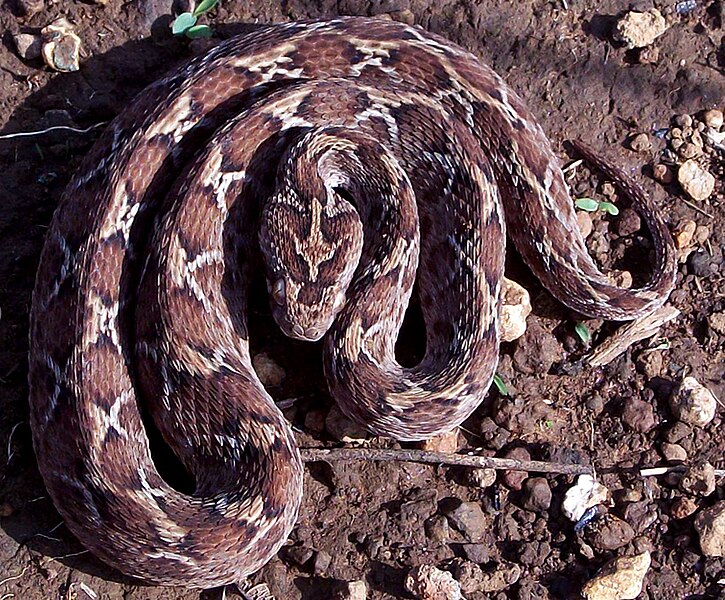
Snakes are high up on the list, with their venomous bites leading to 138,000 deaths every year. The saw-scaled viper holds the top spot among snakes as the deadliest, based on its mortality rate. This snake is not the most toxic, but its aggressive nature makes it more lethal than the most venomous species of snake, the shy inland taipan.
Potent venom and presence in highly populated areas make the saw-scaled viper a snake that instills fear.
3. Freshwater snails (Gastropoda class)
200,000 deaths per year
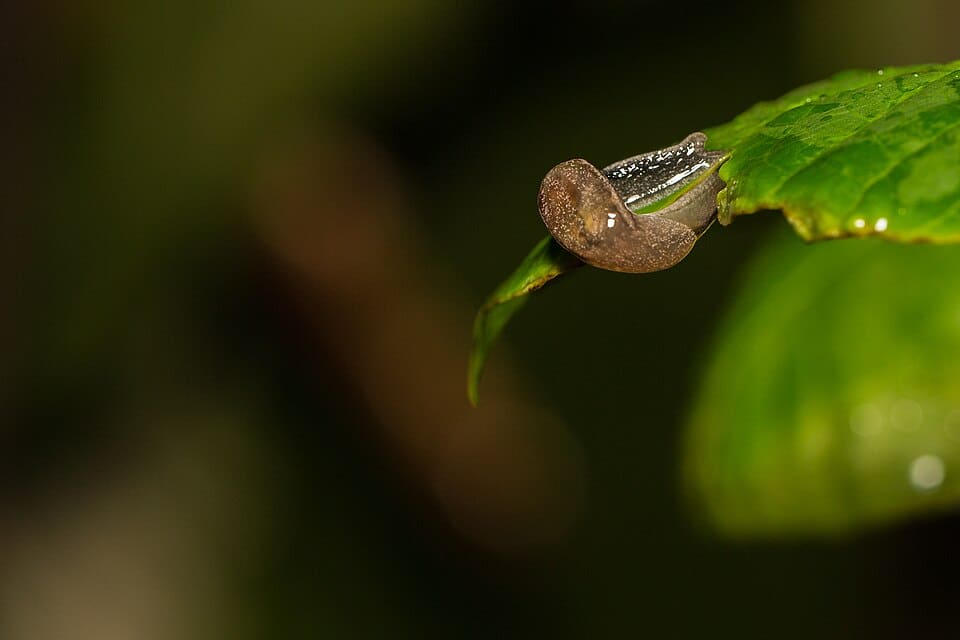
Freshwater snails are the surprise entry. However, snails cause a disease called schistosomiasis or ‘snail fever’, which has been marked as the second most “socioeconomically devastating disease” after malaria by the World Health Organization (WHO). The disease causes as many as 200,000 deaths every year.
The snails act as vectors for parasitic flatworms known as flukes. These flukes live and develop in snails before being released into water. Humans become infected when the flukes penetrate the skin through contaminated freshwater. Notably, a snail species, Schistosoma, harbors a nasty species of fluke, and causes ‘snail fever’.
2. Humans (Homo sapiens)
431,000 deaths per year

Aside from mosquitoes, the most lethal animal to us is ourselves. By far, we are the deadliest mammals, registering 431,000 deaths every year through homicide. We develop sophisticated weapons and frequently utilize them in conflicts and wars.
Climate change will negatively impact human health, increasing the likelihood of individuals being susceptible to diseases. The frequency of natural disasters is expected to increase, and food and water supplies are likely to become contaminated due to pollution.
Also, we cannot ignore the anthropological sins that have been destroying the natural world, like climate change. Climate change alone is estimated to cause 150,000 deaths every year. As per the WHO, climate change between 2030 and 2050 will be the root cause of 250,000 additional deaths due to disease and malnutrition.
1. Mosquitoes (Culicidae family)
725,000 to 1,000,000 deaths per year
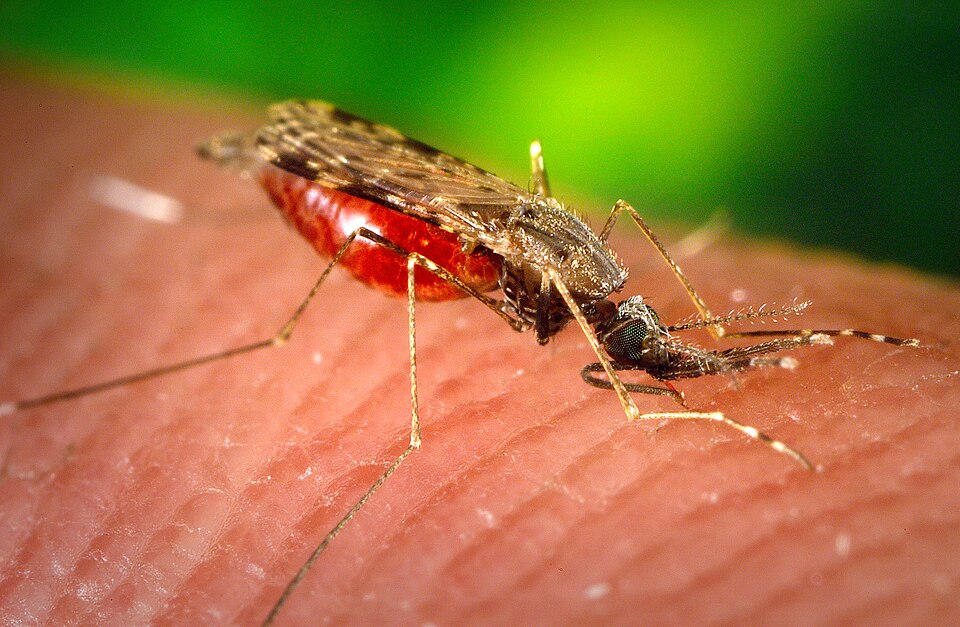
Finally, to top it off, we have a small yet dangerous insect— mosquitoes. They kill 725,000 to 1,000,000 people annually. However, they do not set out to kill; instead, they are carriers or vectors of pathogens and parasites that cause fatal diseases such as malaria and dengue. For example, Plasmodium species are protozoans that cause malaria. During a blood meal, mosquitoes transfer parasites through their bite.
The highest number of fatalities is caused by malaria, spread by the female Anopheles mosquito. In addition to malaria, diseases such as dengue are also transmitted by mosquitoes.