Our planet is changing around us, and so much remains a mystery. It’s vital that scientists get as much information as possible. They try to understand exactly what is happening and where. It’s a tough job. Earth is a huge place. It’s impossible for researchers to be everywhere all of the time. And some places aren’t healthy for people to be! Deep seas, blistering deserts, and frigid mountains are dangerous.
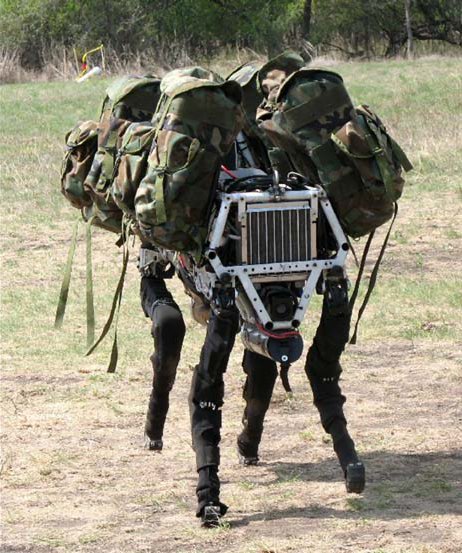
That’s where robots come in. They’re like detectives of nature. Equipped with sensors and cameras, these machines can go where humans can’t. By constantly collecting information, they tell us important things. Is the environment healthy? Does it need help? If something is wrong, like too much pollution or not enough clean water, robots identify the problem quickly. The faster the problem is figured out, the quicker scientists and leaders can act to fix it.
Robots can do many things that people can’t, Credit: Wikipedia/ DARPA
Some of the most common monitoring robots are those that track air quality. These work entirely on their own, collecting information on how air quality is changing. They can even move from place to place to see if there are particular locations which need a little extra help. Imagine if these robots were deployed all around California. As soon as a wildfire began, the robot would sense the drop in air quality and alert local firefighters.
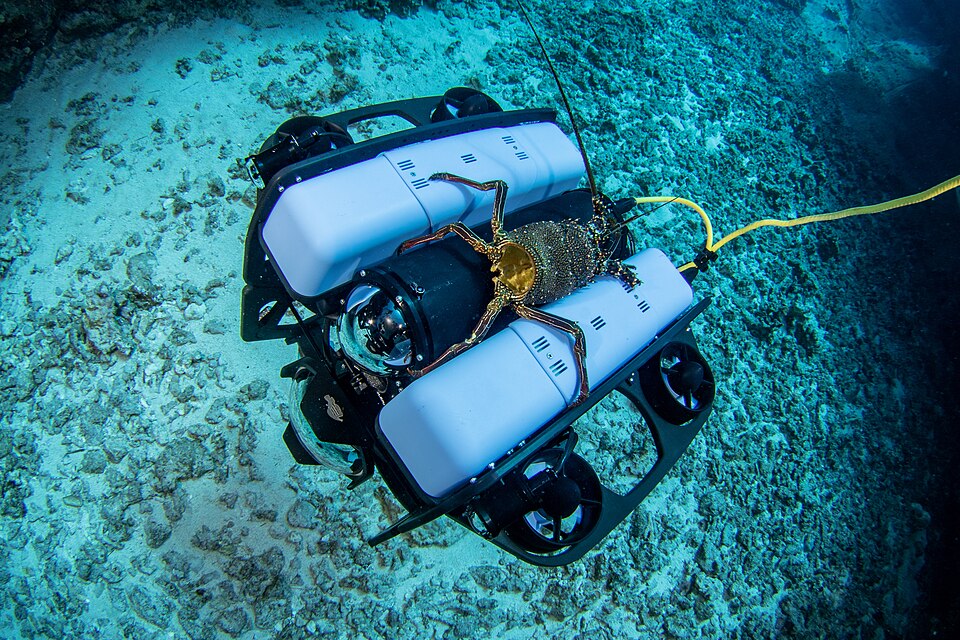
Ocean biologists rely more and more on unmanned robots that act independently of a navigator. These can go far deeper than a human body could ever survive, and spend hours at a time on the ocean floor. They can track things like how salty the ocean is, how temperatures are changing, or even how much carbon dioxide is dissolved into the water.
To build robots tough enough for wild environments, scientists often turn to nature for ideas. This is called biomimicry—a fancy word for copying nature’s best designs.
A robot inspired by nature, Credit;Central Intelligence Agency
Freshwater biologists are constantly trying to tackle the challenge of monitoring lakes and streams. Robots that can move around are best, since they can monitor bigger areas. For inspiration, researchers turned to one iconic insect: the water strider.
What is the Marangoni effect?
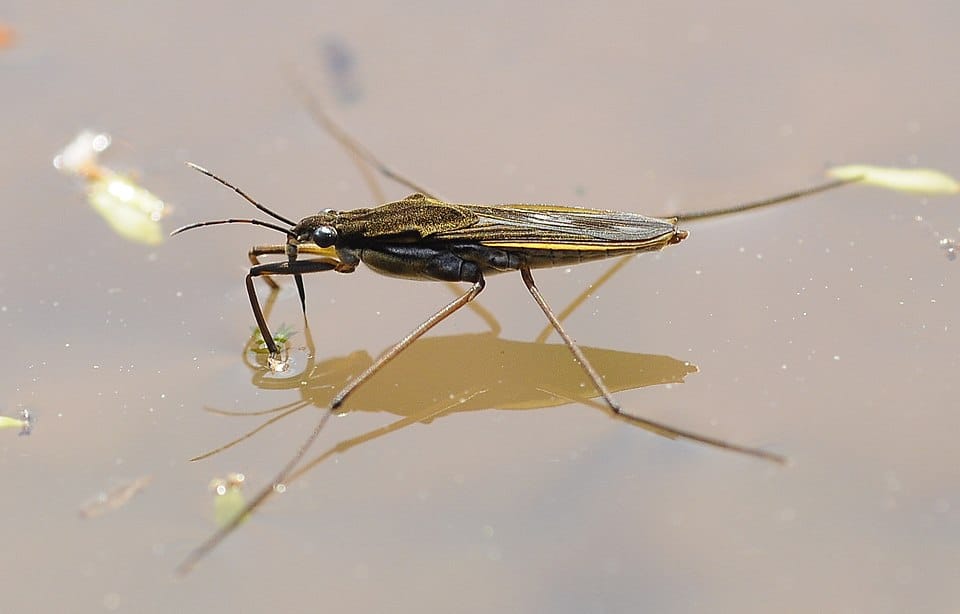
Have you ever seen a water strider run out across a puddle or pool? It’s an incredible sight. They seem to float across the water like ghosts. Where each leg stands are little ripples. Their legs barely touch the water, but with a flick, they dart forward in a straight line. Sometimes they pause, still as a shadow, then suddenly zip away in a sharp, graceful burst. It’s like watching a tiny dancer on invisible ice—light, fast, and effortless. Scientists wanted to capture this movement and replicate it in robot form.
A water strider running across a pond, Credit:Wikimedia/Webrunner
Water striders move the way they do thanks to something called the Marangoni effect. Even though water looks smooth, there’s actually a thin “skin” on the surface, known as surface tension—a tight layer that helps hold the water together, almost like a stretched elastic sheet.
Temperature, soap, or some chemicals can change the surface tension of water. Water gets “pulled” from an area of low surface tension to an area of high surface tension. Water striders coat their legs with chemicals that change surface tension. They use the push and pull of changes in surface tension to accelerate, reaching speeds of up to 70 cm/s!
The Marangoni effect and water striders have inspired new, self-propelling robots.
Why should robots be edible?
“Leave no trace” is a saying you might see on signboards in national parks or along hiking trails. It’s an important thought. Humans have already left their footprint on the world, and many believe that we should do all we can to reduce that.
A team from the Ecole Polytechnique Fédérale de Lausanne (EPFL) believes that the sentiment applies not only to hikers and nature lovers, but to scientists, too. They decided to not only take inspiration from the water strider to create a robot, but to go one step further and make the robot out of edible fish food!
“While the development of miniature swimming robots for natural environments has progressed rapidly, these typically rely on plastics, batteries, and other electronics, which pose challenges for mass deployment in sensitive ecosystems,” PhD student Shuhang Zhang informed the EPFL communications team. “In this work, we show how those materials can be replaced by completely biodegradable and edible components.”
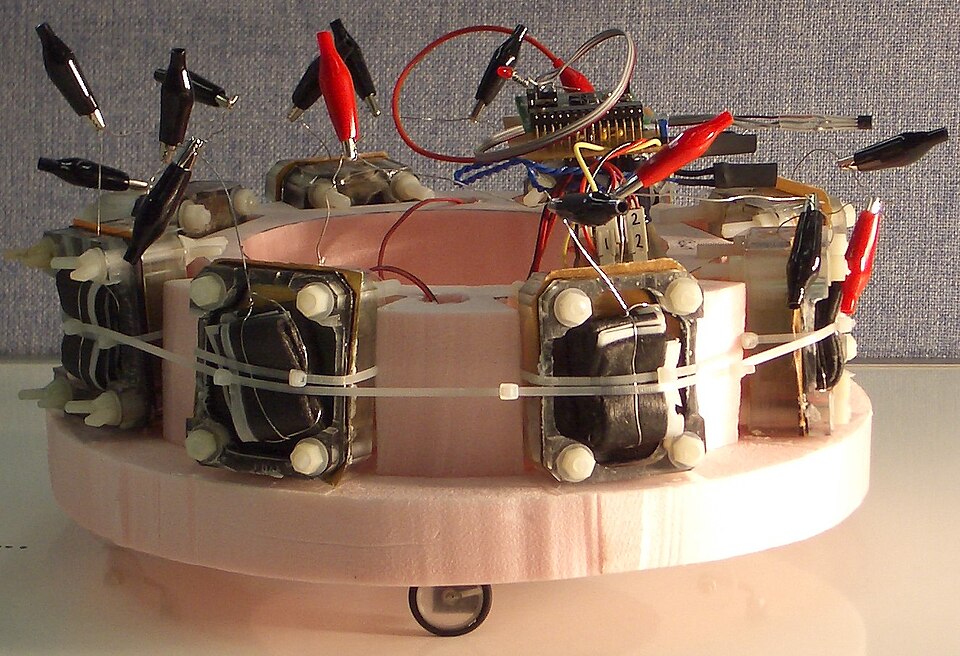
Ecobot II, a robot designed to be eco-friendly and self-sufficient, Credit: Wikipedia/Ioannis A. Ieropoulos
The clever robot uses chemicals just like the water strider does. If you’ve ever made a volcano in school, you’re probably familiar with the explosive mix of baking soda and citric acid. When the robot hits water, the barrier between the two dissolves, and boom! The harmless gas carbon dioxide rushes out. The gas pushes the water around, changing the surface tension. This little robot takes advantage of the Marangoni effect!
It can move and collect data, but the EPFL team wanted to take this one step further. They thought that instead of simply taking data from the environment, they could give something useful back. Imagine an environmental monitoring robot made of traditional materials like plastic or metal. Once it’s done its work, it becomes just another piece of debris. What if instead of just collecting data, the robot could provide something in return?
They then built another version of the robot from fish food!
An unmanned marine robot, Credit:Wikimedia/ Yoleeth
“The replacement of electronic waste with biodegradable materials is the subject of intensive study, but edible materials with targeted nutritional profiles and function have barely been considered, and open up a world of opportunities for human and animal health,” said Dario Floreano in an interview with EPFL. He is another researcher on the team.
We are just beginning to unlock the potential of these types of ideas. Environmental science has often meant just taking data, rarely giving something back to nature. This represents a paradigm shift of how we think about science. Reciprocity could be one of the core values of environmental research.
The Laboratory of Intelligent Systems at EPFL has created a wide variety of edible robotics, and are hopeful that their work will bring great change. It’s more than just smart engineering. It’s a new way of thinking about our relationship with the natural world.