1. Seals are closely related to bears, weasels, raccoons, and even skunks! They evolved from a weasel-like ancestor that lived on land about 23 million years ago.
2. There are 33 different species of seals, divided into two main groups: eared seals (sea lions and fur seals) and true/earless seals.
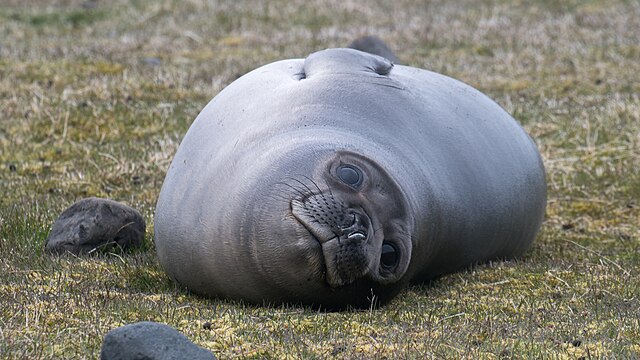
3. The largest seal is the southern elephant seal, with adult males weighing up to 8,800 lbs (4,000 kg) and measuring up to 20 feet (6 m) long. An adult male is about the same weight as a pickup truck!
4. Elephant seals can hold their breath for over 2 hours, longer than any other non-cetacean mammal. This allows them to dive deeper than 5,000 feet (1,500 m) in search of food.
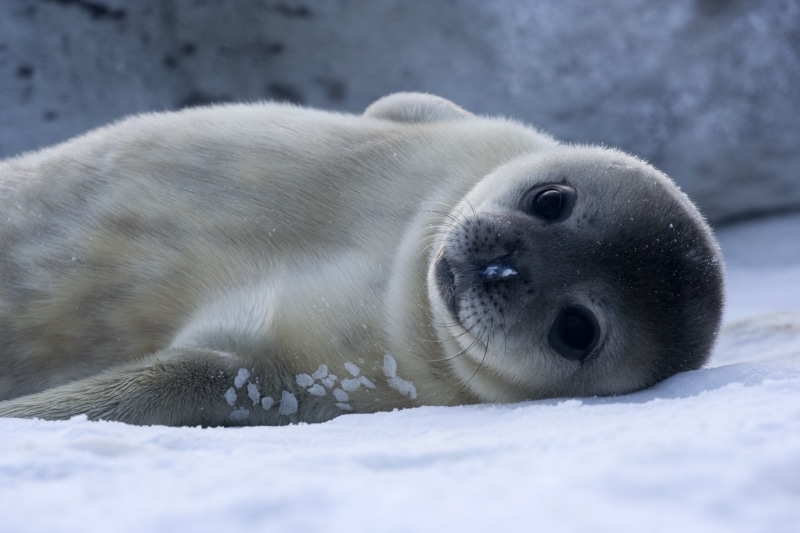
5. Baby seals are called pups. A pup can gain up to 7.7 lbs (3.5 kg) per day while nursing from its mother’s fat-rich milk.
Baby Weddell Seal, Credit: Wikimedia/Samuel Blanc
6. Seals can sleep underwater! They can stay submerged for over 2 hours by slowing their heart rate and selectively cutting off blood supply to certain organs.
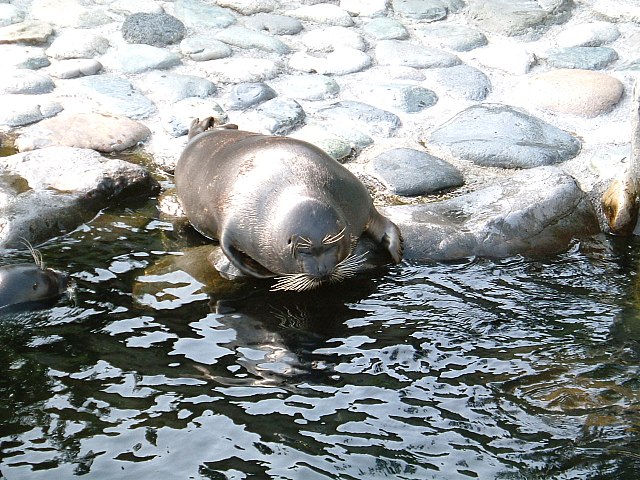
7. The Baikal seal is the only remaining freshwater seal species found in Russia’s Lake Baikal. It can dive over 1,600 feet (500 m) deep.
Baikal seal, Credit; Wikimedia/Uryah
8. Seals have an incredibly acute sense of smell and hearing, allowing them to track prey and communicate over long distances. Their whiskers can detect tiny movements in the water.
9. Seals were once thought to be cross-breeds between dogs and fish due to their dog-like barks and marine lifestyle. We now know they descended from a weasel-like land mammal.
10. Ringed seals build birthing lairs by scratching snow drifts above breathing holes in the Arctic ice. This protects pups and polar bears from freezing temperatures.
11. The Mediterranean monk seal is one of the world’s most endangered marine mammals. Due to hunting and habitat loss, only a few hundred remain.
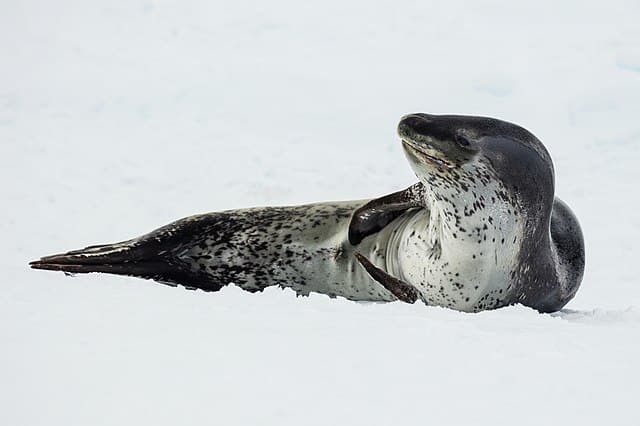
12. Leopard seals get their name from their dark spotted coats. They are one of the few seals that actively prey on other seals, as well as penguins and fish.
Brown Bluff–Leopard seal, Credit: Wikimedia/Godot13
13. Seals have rotating hind flippers that allow them to be more agile swimmers compared to sea lions, which have smaller flippers.
14. The whiskers on a seal’s muzzle are highly sensitive, allowing the seal to track prey movement and navigate underwater by detecting tiny vortices and vibrations.
seal in a pool of water, Credit: Andrii Khrystian/Unsplash
15. Seals lose up to 50% of their body weight during breeding season when males fast for 2-3 months while guarding their harems
Copyright @smorescience. All rights reserved. Do not copy, cite, publish, or distribute this content without permission.
Join 20,000+ parents and educators
To get the FREE science newsletter in your inbox!
SUBSCRIBE TO OUR NEWSLETTER
.......... ..........
Subscribe to our mailing list to get updates to your email inbox.