The natural world dazzles with its vibrant hues, from the ethereal glow of bioluminescence to the kaleidoscopic palette of poison dart frogs. Let’s learn more about some of the most beautiful animals with pattern on Earth.
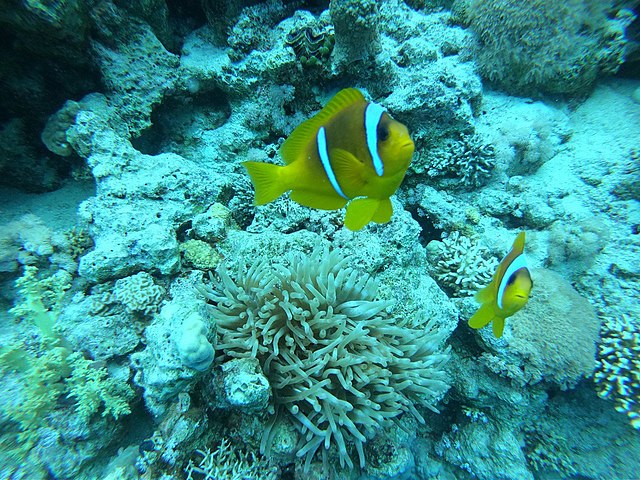
10- Clownfish
Clownfish, Credit; Wikimedia/Rosmarino22
Where they live: Clownfish are primarily found in the warm waters of the Pacific and Indian Oceans, including the Great Barrier Reef, the Red Sea, and the Maldives.
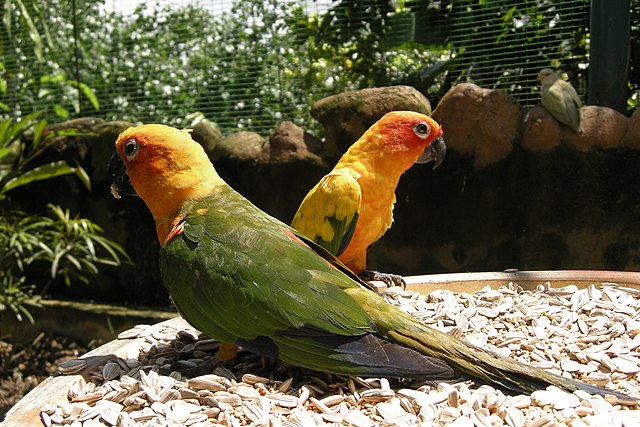
Unique Patterns: Parrots boast a dazzling array of colors and patterns, with some species, like the Scarlet Macaw, displaying a vibrant spectrum of red, yellow, and blue feathers. This vivid plumage makes them incredibly attractive and serves as a communication tool among parrots. Parrots do not depend on their diet for color pigments. These birds are amongst very few birds that can biochemically create their own colorful plumage pigments. In parrots, these molecules are chromophores known as “psittacofulvins” because parrots are the only animals that make them.
Scientific Facts: Parrots are renowned for their vocal abilities, and are capable of mimicking human speech with remarkable accuracy. Studies indicate they understand concepts like same and different, categorize objects like humans, and solve complex problems. Their social nature and ability to communicate complex ideas to one another are hallmarks of their intelligence.
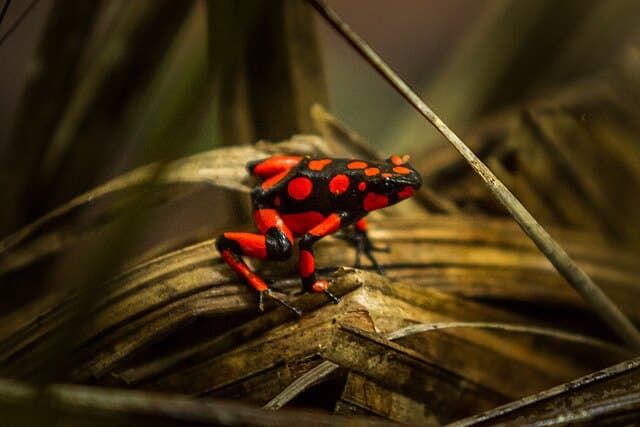
Unique Patterns: Poison dart frogs have brilliantly colored skin, which can range from vivid yellows and oranges to deep blues and greens. These patterns are not for beauty but for warning. The bright colors signal their toxicity to potential predators, a phenomenon known as aposematism. Each pattern is unique to its species and is an important survival strategy. One study demonstrated that the colors also work as camouflage.
Scientific Facts: The toxins found in poison dart frogs’ skin have been the subject of extensive research due to their potential medicinal applications. These substances can be incredibly potent, with some indigenous tribes using them to coat the tips of blow darts. The Golden Poison Frog, measuring just over an inch in length, carries enough venom to kill ten adult humans, making it one of the most poisonous animals in the world. Scientists are studying these compounds for their analgesic properties, hoping to develop new painkillers.
Scientific Facts: The mandarin fish’s skin secretes a mucous coating that is believed to protect it from parasites and predators. This coating gives the fish a slippery texture and contains compounds that are distasteful to potential threats.
Unique Patterns: The leopard’s coat, with its unique and beautiful pattern of black rosettes on a yellow-gold background, is stunning and serves as excellent camouflage. This pattern allows leopards outstanding ability to blend in with their surroundings, making them formidable ambush predators. The uniqueness of each individual’s spots can also be used for identification purposes.
Scientific Facts: Leopards are solitary creatures with remarkable adaptability, enabling them to survive in environments ranging from rainforests to arid landscapes. Recent genetic studies have shed light on the evolutionary history of leopards, revealing how they have diversified and adapted to different ecological niches over time. This adaptability has been important in the face of habitat loss and changing climates.
5- Giraffes
Giraffe, Credit; Wikimedia/Axel Tschentscher
Where they live: Giraffes are native to the savannas, grasslands, and open forests of Africa, where they roam in search of food.
Unique Patterns: The giraffe’s towering height is combined with its distinctive coat pattern, consisting of large, irregularly shaped brown patches separated by light lines. This unique pattern provides camouflage in their natural habitat, breaking up the body’s outline among trees and shadows. Interestingly, every giraffe has a different pattern, much like human fingerprints. One study described that certain giraffe spot patterns are heritable and appear to impact a young giraffe’s likelihood of survival. It is believed that these spots may also affect the animal’s ability to regulate its temperature, but their role remains unclear.
Scientific Facts: Giraffes have been the subject of scientific study for their unique cardiovascular system, which manages the challenges posed by their long necks. Their powerful hearts pump blood to the brain, overcoming the gravitational pull. Researchers are investigating how giraffes’ blood vessels and valves work, hoping to apply these insights to treat human cardiovascular diseases.
4- Tigers
Tiger, Credit; Wikimedia/ Hollingsworth, John and Karen
Unique Patterns: Tigers exhibit unique patterns of dark stripes on an orange coat, one of the most iconic in the animal kingdom. This pattern is excellent camouflage in their natural habitats, allowing them to stalk prey with stealth. Each tiger has a unique pattern of stripes used to identify individuals, like human fingerprints. This pattern is also important in communication. For example, a female tiger can use the white spots on her ears to communicate with her cubs. They act as an alert to the cubs since when a tigress senses danger, she flattens her ears, and the cubs respond by crouching down and hiding.
Scientific Facts: Tigers are apex predators and play a critical role in maintaining the health of ecosystems by controlling prey populations. However, human development has caused a significant decrease in tiger populations (approximately 97%) since the start of the last century. Therefore, they were listed as endangered by the International Union for Conservation of Nature. Genetic studies in tiger populations are being used to develop survival strategies for these endangered species.
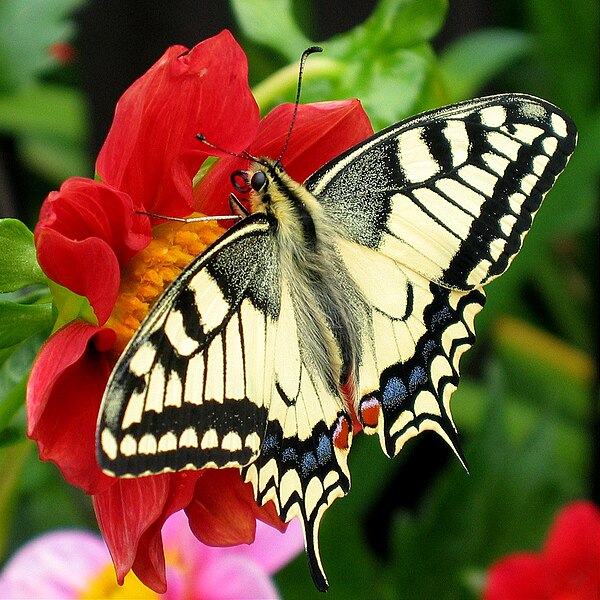
3- Butterflies
Butterflies, Credit: Wikimedia/fesoj
Where they live: Butterflies are found worldwide, from the tropical rainforests of South America to the temperate fields of North America and Eurasia.
Unique Patterns: The wings of butterflies are a marvel of nature, displaying beautiful patterns and colors. These patterns are not just decorative since they are used for camouflage and as warning signals to potential predators. Also, these patterns are essential for mate attraction. The intricate designs comprise thousands of tiny scales, reflecting light differently to produce colors.
Scientific Facts: Butterflies have been subjects of scientific study to understand the genetic and developmental processes behind their wing patterns and colors. For instance, understanding how butterflies produce their colors has inspired the development of new materials for sensors and photonic devices.
Unique Patterns: The zebra’s distinctive black and white stripes are one of nature’s most beautiful patterns. While the exact purpose of these stripes has been debated, research suggests they have several functions, including repelling biting flies under naturalistic conditions, social cohesion, thermoregulation, and predation evasion. A new study described that zebras in warmer places have more stripes. Like fingerprints, no two zebras have the same stripe pattern.
Scientific Facts: The study of zebra stripes has led to insights into evolutionary biology and animal behavior. One theory posits that stripes may have evolved to confuse predators during a chase. The pattern of a zebra’s stripes is thought to be determined by its genes, with recent studies identifying specific genetic sequences linked to stripe development. This research enhances our understanding of genetics and the role of natural selection in shaping animal adaptations.
1- Peacocks
Peacock, Credit: Wikimedia/2010468sanjana
Where they live: Peacocks are native to Sri Lanka and India but have been introduced to other parts of the world, including North America and Europe.
Unique Patterns: The male peacock’s tail, or “train,” is one of the most spectacular examples of animal patterns in nature. The iridescent plumage features eye-like patterns that shimmer in blue, green, and gold hues. The large tail is used in mating rituals to attract females and assert dominance over other males. For example, peahens usually prefer peacocks with large and colorful tails, so those peacocks get to mate more frequently and have more offspring.
Scientific Facts: The peacock’s elaborate tail has puzzled scientists for centuries, with Charles Darwin considering it a challenge to his theory of natural selection. Studies have shown that these features result from complex evolutionary pressures, balancing the benefits of attracting mates with predation risks. This ongoing research contributes to understanding sexual selection and evolutionary trade-offs in the animal kingdom.
Copyright @smorescience. All rights reserved. Do not copy, cite, publish, or distribute this content without permission.
Join 20,000+ parents and educators
To get the FREE science newsletter in your inbox!
SUBSCRIBE TO OUR NEWSLETTER
.......... ..........
Subscribe to our mailing list to get updates to your email inbox.