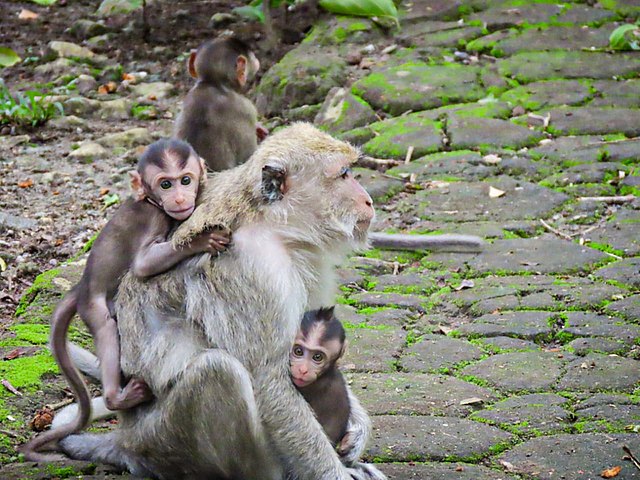
A mother monkey carrying her infant/Credit: redit: Pexels/Max Mishin/Max Mishin
Adoption across species lines? While this concept may not seem out of the ordinary among humans, it is a rarer phenomenon in the animal kingdom. In the wild, survival often hinges on fierce competition, making adoption by animals a special sight. Yet, when such instances are spotted, it challenges the notion that adoptive families are unique to humans.
To explore this complex animal behavior further, let’s look at seven amazing cases of mother animals welcoming a young one from an entirely different species.
1. Lion and leopard
Brown lioness with cubs on brown field.Credit: Pexels/Leif Blessing
In December 2018, a lioness stunned forest rangers at India’s Gir National Park by adopting an unlikely family member—a leopard cub. Nestled beside her two lion cubs, the little leopard was nursed and cared for no differently. This sight surprised everyone, as lions and leopards are usually fierce competitors.
Experts believe the lioness’s behavior might be a result of her strong maternal drive, or perhaps the young leopard’s resemblance to her own cubs. Although the leopard cub passed away after about a month and a half, this story of adoption in animals is a beautiful example of a mother’s instinct reaching across species.
2. Sperm whales and bottlenose dolphin
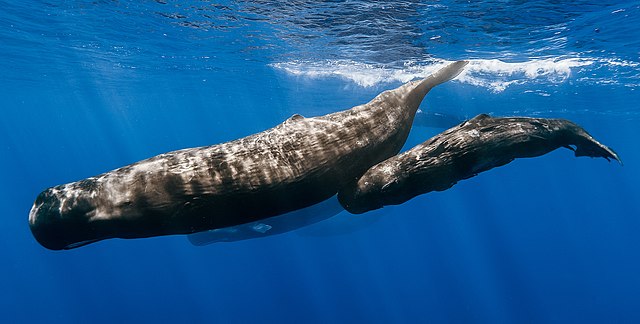
A pod of sperm whales off the coast of Mauritius. Credit: Wikimedia Commons/Gabriel Barathieu
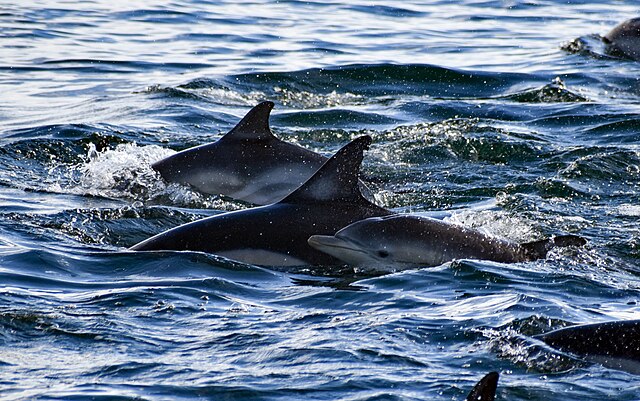
Who says dolphins and whales can’t be friends? An incredible example was found in the waters off Pico Island in the Azores in 2011, where a lone bottlenose dolphin with scoliosis (a condition that left it with a curved spine and unable to keep pace with its pod) was abandoned. While most dolphins in such a position would struggle alone, this lucky dolphin found an unexpected family: a pod of sperm whales.
Instead of rejecting the dolphin, the sperm whales welcomed it with “open fins.” This adoption case stood out as the first recorded case of sperm whales forming a friendly, non-adversarial bond with another species. Researchers believe that the dolphin may have been drawn to the sperm whales because their slower movements made it easier for it to keep up.
3. Three-fingered sloth and two-fingered sloth
Mother and baby sloth. Credit: Pexels/Miguel Cuenca
On December 20, 2020, in the rainforests of Costa Rica, a three-fingered sloth was seen carrying out the role of a doting mother for a two-fingered baby sloth. This unexpected duo was spotted in the canopy by ecotourism guides Gerald Pereira and Oscar Solano Rojas .
An interesting fact to note here is that these sloths aren’t just different in their finger count; they belong to separate families that have been evolving apart for over 30 million years! Plus, cross-species adoptions like this are extremely rare in the wild, with only a handful of documented cases. So, you can imagine the excitement of witnessing such a special case of adoption in animals.
4. Lion and oryx
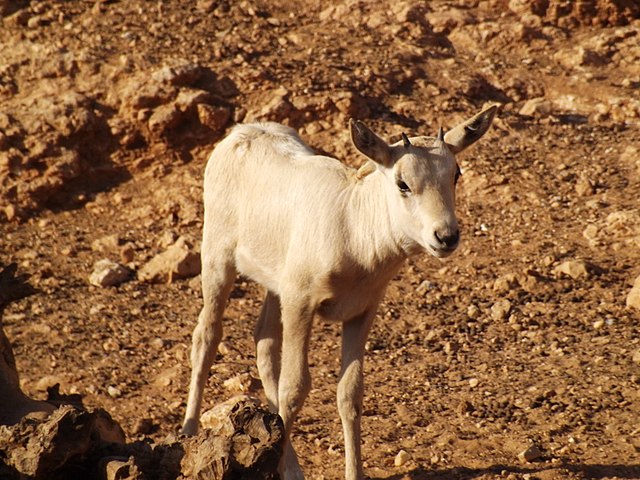
A baby Arabian oryx (Oryx leucoryx) at the Jerusalem Biblical Wikimedia Commons/ SuperJew
Zoo. Wikimedia Commons/ SuperJew
Guess who is back on our list of amazing cross-species adoptions in animals? It’s a lioness! Kamuniak from the Samburu National Reserve in Kenya took the concept of “adopt, don’t shop” to heart by adopting at least five oryx calves during her time in the park.
Kamuniak would chase away the biological parents of newborn oryxes, stepping into the role of their protector. However, in an ironic twist, this nurturing lioness ended up eating one of her adopted oryxes.
5. Bottlenose dolphin and melon-headed whale
Bottlenose dolphin and melon-headed whale Credit: Pixel/ Ricky Berge
In a surprising role reversal of our earlier bottlenose dolphin and sperm whale story, a bottlenose dolphin in the waters of French Polynesia showed strong maternal instincts by adopting a young melon-headed whale that was probably abandoned by its mother. This dolphin, already a caregiver to her own calves, took the orphaned whale under her wing.
The young whale was seen adapting swiftly to its new environment, engaging with the pod and mirroring their behaviors, such as surfing and leaping through the waves.
6. Capuchin monkey and marmoset
Close-Up shot of a pygmy marmoset perched on a tree branch Credit: Pexels/Anna Hinckel
In 2004, at the Ibura National Forest Reserve in Brazil, a capuchin monkey was observed breaking the rules of the jungle, swapping its role from a potential predator to the guardian of a vulnerable marmoset.
Known for their omnivorous diet that often includes smaller monkeys, capuchins usually wouldn’t think twice about such a meal. This makes the capuchin’s motherly behavior particularly striking, as the marmoset (one of the smallest primate species) is an unexpected choice for nurturing rather than dinner.
7. Macaque and kitten
The strong mom MacaqueCredit: Wikimedia Commons/Aswindaagna
In October 2008, a tourist in Bali stumbled upon a long-tailed macaque engaging in an act of motherly love with a tiny kitten. Now, while one might raise an eyebrow at this unlikely pair, it’s not entirely surprising. Long-tailed macaques are highly sociable animals, often found in large groups, which could explain why this particular macaque showed such affection.
Sheena Shah is a creative writing enthusiast with a master's in Plant Molecular Biology and Biotechnology. She loves everything science and literature, from dabbling in the depths of genetic code to painting lively landscapes with words. Through her writing, she tries to whisk readers away to worlds both real and imagined.