Ever wonder what secrets lie within the heart of the rainforest? In the middle of the towering trees and dense undergrowth, a rich array of plant life thrives, with each species finely tuned to its environment. In this article, we’ll take a closer look at the top 10 rainforest plants and the science behind their evolution, ecology, and importance to the ecosystem.
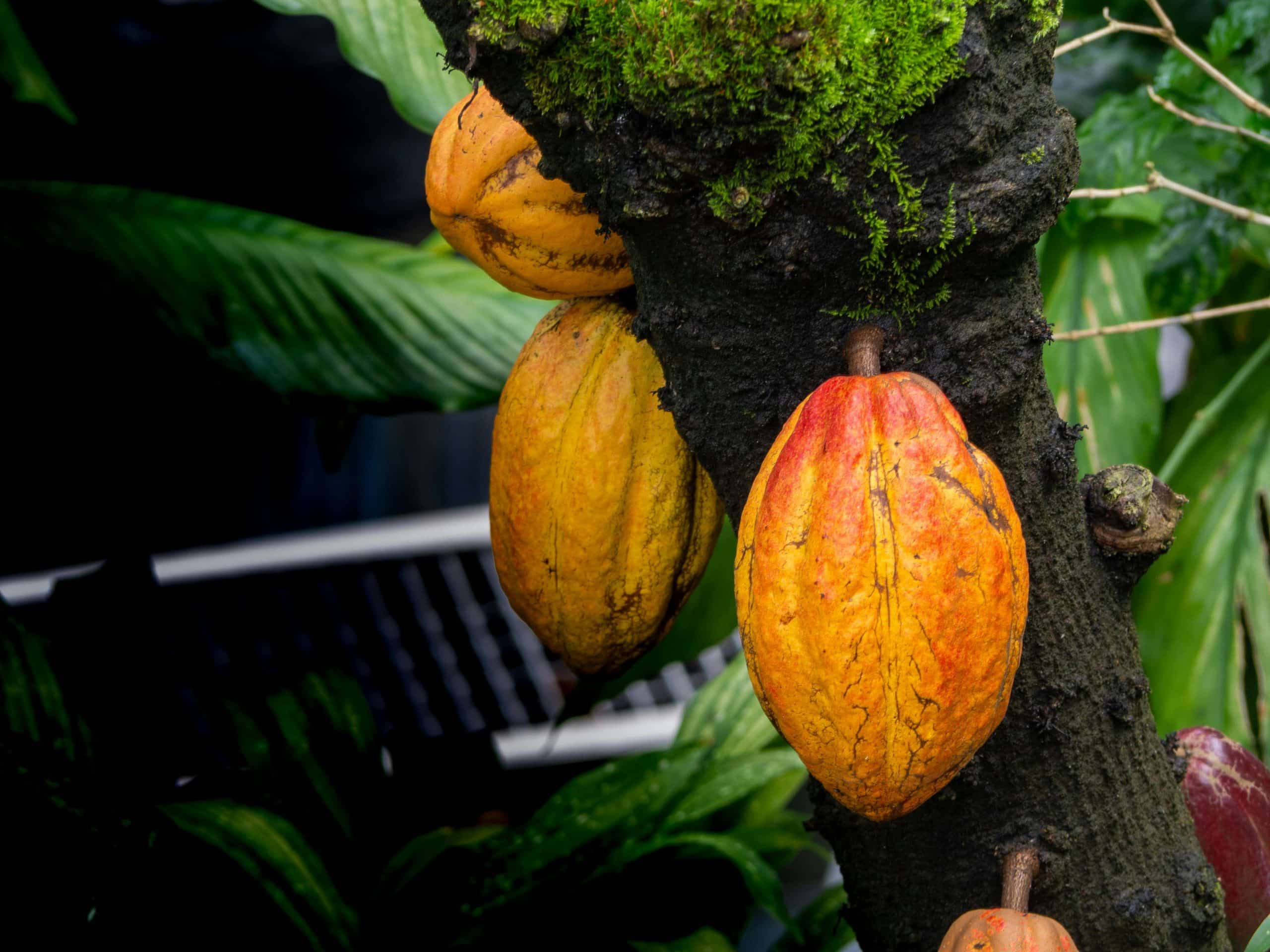
The genus name of the cacao plant, Theobroma, means “food of the gods” in Greek, a fitting name for the plant that gives us chocolate.
The cacao plant is a treasure hidden among the lush greenery of the Amazon rainforest. It is an evergreen tree that can reach 15 to 25 feet and produces pods that start green and turn reddish-brown when ripe.
Each pod contains 30 to 60 cocoa beans, which are harvested and processed into chocolate. This popular plant in the rainforest is packed with health benefits and is known to enhance focus and support heart and brain health.
Next time you savor a piece of chocolate, remember its humble yet extraordinary origins deep in the Amazon rainforest.
2. Giant Water Lilies (Victoria amazonica)
Victoria amazonica - Giant Water Lily, Credit: Wikimedia Commons/ Vinayaraj
The leaves of this famous rainforest plant are not only visually striking but also pretty strong, enough to hold the weight of a small child.
These magnificent water lilies thrive in the waters of the Amazon river basin and grow up to 10 feet (3 meters) in diameter. One of their fascinating adaptations is the girder-like ribs on the underside of their leaves, which provide the necessary support to maintain their structure on the water’s surface.
The leaves of the Giant Water Lily are armed with sharp thorns to protect themselves from predators. An interesting fact about this well-known rainforest plant is its unique flowering process. The flowers open at night and undergo a dramatic color change over their two-day blooming period.
Pitcher plants, belonging to the genus Nepenthes, are carnivorous wonders in the Amazon rainforest. Their leaves form deep cavities (pitcher-like foliage) filled with sweet-smelling liquid that attracts insects. Once lured inside, the trapped insects are gradually digested, providing nutrients to the plant.
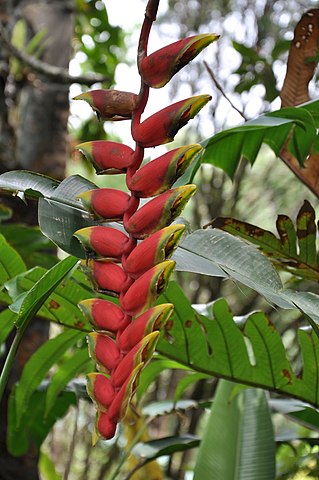
4. Heliconia (Heliconia latispatha)
Heliconia, Credit: Wikimedia Commons/ shankar s.
Heliconia flowers, resembling lobster claws, are iconic rainforest sights and exclusively depend on hummingbirds for pollination.
These vibrant plants, related to the banana family, are common in the rainforest. Also called “lobster claws” or “parrot flowers,” their beak-like bracts come in a range of colors—orange, purple, red, yellow, pink, or green.
These plants have a unique partnership with hummingbirds, providing them with food and nesting. In return, hummingbirds act as pollinators for this unique rainforest plant.
5. Coffee Plant (Coffea arabica)
Coffea arabica, Credit: Wikimedia Commons/ Alex Lomas
Do you know that bees share a special relationship with the coffee plant? The flowers of the coffee plant produce nectar containing caffeine, which attracts bees.
The coffee plant grows in the shaded understory of tropical rainforests. Reaching up to the height of 30 feet, the plants flourish in the Amazon rainforest and produce coffee beans (which are technically seeds) nestled within their fleshy fruit.
Coffee cherries typically contain two seeds and start as small, green fruits that gradually ripen into vibrant red or yellow color.
6. Passion Flower (Passiflora edulis)
Flowers of Passiflora edulis, Credit: Wikimedia Commons/Rehman Abubakr
The berry of the passion flower, often used in jams and jellies, is also known to act as a remedy for insomnia and anxiety.
Passiflora edulis has distinctive white and purple flowers that stand out in the rainforests. The flowers are pollinated by various insects, particularly the hawk moth, attracted by its nectar. The fruit of this strange rainforest plant (passion fruit) has multiple health benefits and is also used to treat cough.
This rainforest plant grows as an epiphyte on a tree and eventually kills the host plant.
Strangler figs are one of the most extraordinary plants found in the rainforests. They begin life high in the canopy, their roots descending to the forest floor. Gradually, the fig envelops its host, drawing nutrients until it dies.
Once multiple strangler figs intertwine, their lattice structure becomes strong enough to uphold its own weight. It remains standing even after the host tree decays. Despite their lethal nature to its hosts, strangler fig fruits are food for many rainforest animals.
8. Rubber Tree (Hevea brasiliensis)
Rubber tree from Pathanamthitta, Kerala, Credit: Wikimedia Commons/Vis M
One of the interesting facts about this rainforest plant is its major role in the Industrial Revolution. The latex extracted from its bark is essential for the mass production of rubber. Despite its origins in the Amazon rainforest, the tree’s seeds were smuggled to Southeast Asia, where they were successfully cultivated.
Today, there are over 1.9 million rubber trees growing in the Amazon rainforest. The rubber tree can grow to heights of 100 to 130 feet and is known to live up to 100 years in the wild.
9. Orchids
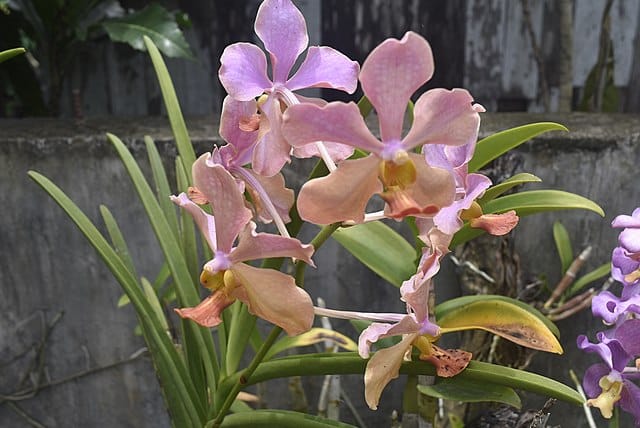
Common Orchid from the Bicol, Philippine Rainforests, Credit: Wikimedia Commons/ MarvinBikolano
Orchids are masters of adaptation. They have thin, elongated leaves, adept at absorbing moisture in the Amazon rainforest, whereas, in arid regions, this plant flaunts thick, wax-coated leaves to conserve scarce water.
Orchids can flourish in various habitats, from ground level to tree canopies, depending on what is optimal for their survival. Popular for their exquisite beauty, orchids have over 25,000 species, of which more than 10,000 grow in tropical jungles.
This rainforest plant relies on birds and insects for pollination and thrives best in humid environments.
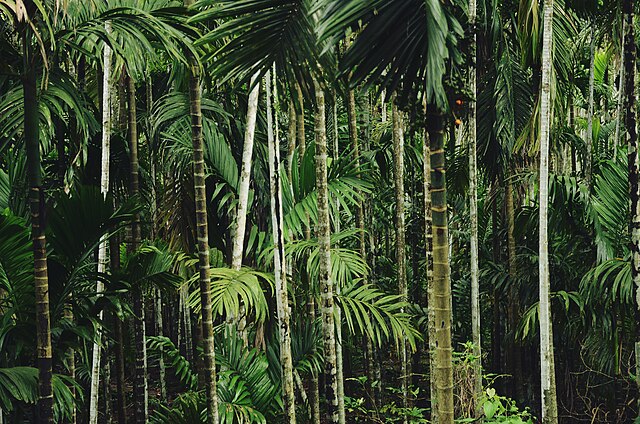
Within a single day, certain bamboo species can shoot up more than a meter, making them among the fastest-growing plants on the planet.
One of the interesting features of bamboo stems is their hollow and jointed structure. In the case of the world’s largest bamboo species, these stems can reach up to a meter in diameter, providing ample space for various creatures to inhabit.
The interconnectedness of life within bamboo groves is truly fascinating. Ants, frogs, beetles, and snakes are known to seek refuge among the towering stems. Insects, such as mosquitoes and crane flies, use the water contained within bamboo stalks as breeding grounds.
Rainforest Plants FAQ
What is the biggest flower in the rainforest?
The Corpse Flower (Amorphophallus titanum) is the largest flower structure in rainforests, reaching up to 10 feet tall. The Monster Flower (Rafflesia arnoldii) holds the record for largest single bloom, with flowers up to 3 feet across and weighing up to 15 pounds. Both are found in Southeast Asian rainforests and are known for their massive size and strong odors that attract specific pollinators.
What is the most common flower in the rainforest?
Orchids are the most common flowers in rainforests globally, with over 25,000 species. In the Amazon, Heliconia (bird of paradise family) and bromeliads are particularly abundant. These flowers thrive in the humid, warm conditions of tropical rainforests and can be found in all forest layers from canopy to floor.
What is the most unique plant in the rainforest?
The Corpse Flower (Amorphophallus titanum) from Sumatra is considered the most unique rainforest plant. It produces the world’s largest unbranched flower structure, reaching 10 feet tall, and emits a rotting flesh smell to attract beetles for pollination. Other unique plants include strangler figs and carnivorous plants like Venus flytraps.
What is the big red flower in the rainforest?
The Red Heliconia (Lobster Claw) is the most recognizable large red flower in rainforests. These striking flowers have bright red, waxy bracts that grow 12-18 inches long. Other large red rainforest flowers include red hibiscus, flamingo flowers (Anthurium), and red passion flowers, with sizes varying from 6-18 inches.
What is the most poisonous plant in the rainforest?
The Manchineel Tree (Hippomane mancinella) is widely considered the most poisonous rainforest plant. Found in Caribbean and Central American rainforests, every part is extremely toxic – the sap causes severe burns, the fruit can be fatal, and even rain dripping from its leaves can blister skin. Indigenous peoples also use Curare vine to create deadly arrow poison.
Is bamboo in the rainforest?
Yes, bamboo naturally grows in rainforests worldwide. There are over 1,400 bamboo species, with many native to tropical rainforest environments including the Amazon, Asian rainforests, and African rainforests. Some rainforest bamboo species can grow up to 35 inches per day and reach heights over 100 feet, providing crucial habitat for wildlife like pandas and various bird species.