Snow is quite common, especially during winter. But how does in form? Snow forms when water vapor (that’s the scientific term for the gas form of water) in the air freezes into small pieces called ice crystals . These tiny ice crystals join together to make snowflakes. Each snowflake is different, kind of like how every person is unique.
How salt and snow interact: Why salt melts snow?
You might have seen adults spreading salt on icy roads or sidewalks. Why do they do this? It’s because salt lowers the freezing point of water, which means that the water needs to get cooled to an even lower temperature than 0°C to freeze. What this means is when you add salt to ice or snow, the freezing point of the ice goes down. This makes the ice melt even when the weather is very cold. So the ice turns into water, and it’s not slippery anymore. The resulting salt and water solution even prevents further snow from forming on the roads.
Usually salt is spread throughout the road, so that the salt mix with snow when there is snowfall. This melts the snow. However, if the road is already covered in layers of thick ice, dumping salt will have no effect at all.
The same process is used to freeze ice cream and popsicles. Salt is added to ice that is kept in a metal jacket that lines the mould in which the ice cream is to be made. Since the freezing point has dropped, the ice starts to melt. However the ice cannot melt by itself, it needs to derive heat from somewhere. The freezing mixture does just that, and ransacks excess heat from the ice cream mix, cooling it down to the freezing point. The mix freezes and you can enjoy your cold treat. The process is not usually used nowadays, save for making kulfis, which is a kind of frozen dessert in India. Still, it can be quite fun to try it out.
Halite Crystals - Salt, Credit: Wikimedia/James St. John
How salt and snow mix affect our world?
Even though salt can be good for getting rid of ice, it can cause some problems too. When the snow and ice melt, the salt doesn’t just go away. It can end up in our rivers and in the ground. This makes the water and soil too salty, and it can make it hard for plants and animals to live there. So, while salt can be good for making places less icy, it’s also important to think about how it can harm our world.
Salt and snow are frenemies (friend and enemies at the same time). Sometimes we put salt on roads to keep them free from ice, and at other times, we use salt and snow together to make ice cream.
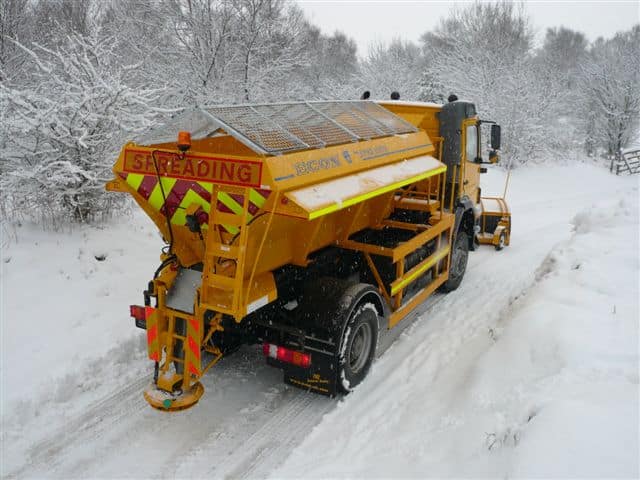
Salt spreader, Credit: Wikimedia/Tench1970
Glossary
Water vapor: This is the gas form of water. It’s what happens when water gets very hot and turns into a gas.
Ice crystals: These are tiny pieces of ice. They’re what make up snowflakes.
Freezing point depression: This is a rule in science that says when you add something (like salt) to a frozen substance (like ice), it can make it melt, even if it’s still cold.