The rise of artificial intelligence has increased demand for data storage devices that can withstand long-term use. Researchers at Microsoft have a potential solution: a data-storage system no larger than a coaster that can remain readable for at least 10,000 years— perhaps, even longer.
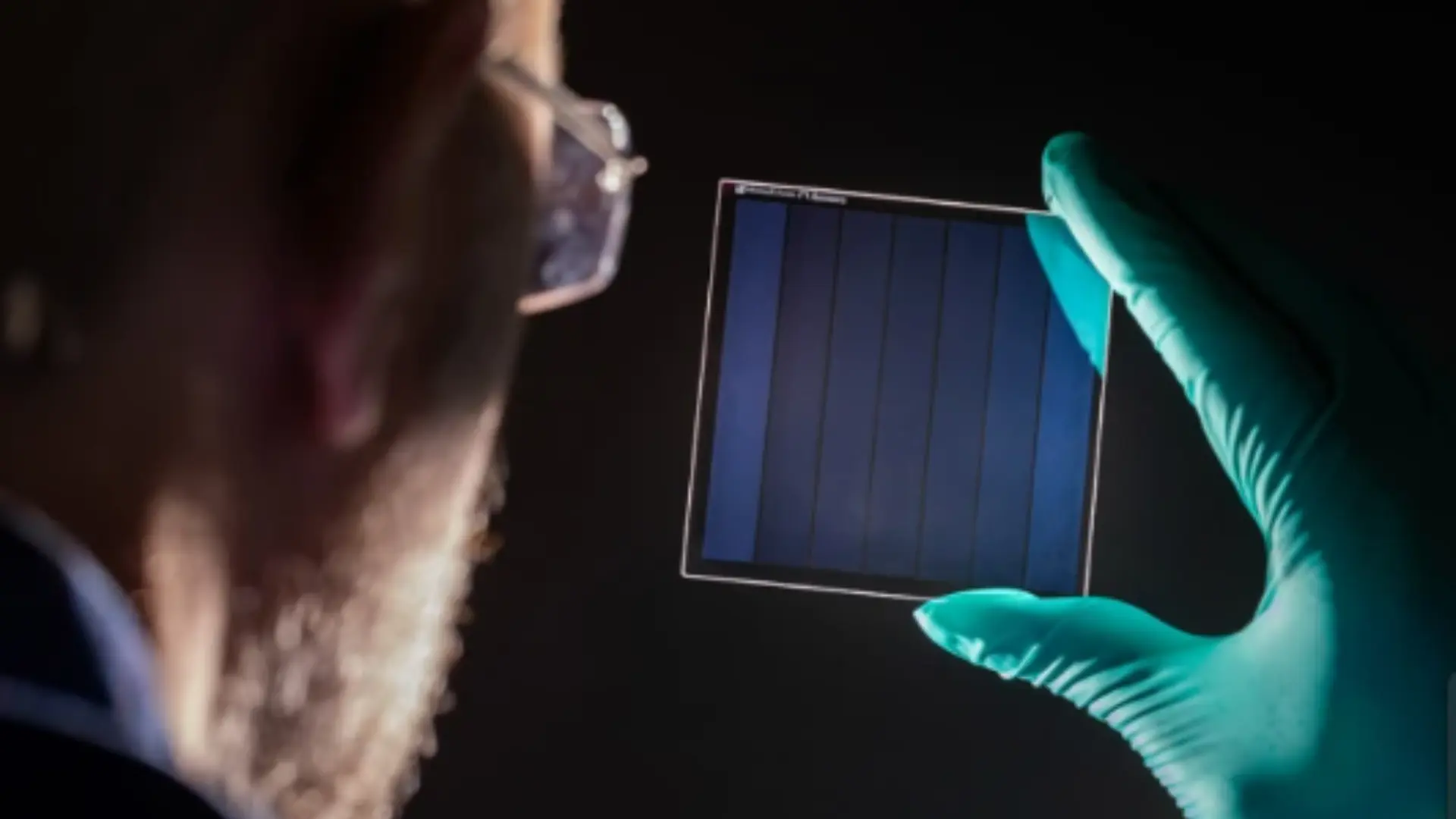
The team used a high-energy laser to etch deformations on a 12-centimeter-wide, 2-millimeter-thick square of borosilicate glass to encode information. The deformations can be read using a microscope. It can store around 4.8 terabytes, which is equivalent to 2 million books. The data is difficult to access, unlike on regular hard drives, but it is way more secure. The data can survive for 10,000 years at 290°C and for 10 times that or more if kept at room temperature. Scientists consider the difficulty of recording data a good trade-off for longevity, and the ‘glass drive’ is a “deployable archival system,” according to Long Qian, a computational synthetic biologist at Peking University in Beijing.
“By showing a complete system … they have shown how this technology can truly revolutionize the data-centre industry,” says Peter Kazansky, a researcher in optoelectronics at the University of Southampton, UK, and a previous collaborator with Microsoft on glass storage.
The technology works so well because it is immutable—once written, it cannot be changed —unlike magnetic tapes and hard drives, which store information as 1s and 0s, represented by magnetized regions on the metal tape using an electromagnet. However, these tiny magnetized regions lose magnetism over time, requiring regular rewriting of data for extended storage. Hard drives are also sensitive to temperature, which further impedes their versatility.
Kazansky and his team hold the Guinness World Record for the most durable digital storage medium for glass-based storage, achieved through laser-writing on fused silica. While Project Silica was revealed to the public in 2019, when they showcased the storage of the 1978 Superman movie on a glass platter, work has been underway since 2016.
Microsoft set different priorities as research progressed. Older versions focused primarily on enhancing data density and durability, while newer research emphasized easier data writing and faster decoding, using cheaper borosilicate glass rather than fused silica.
To store information, the team zapped precise points on the glass with a specific amount of energy by firing a laser for a few quadrillionths of a second. At each of these points, the intense burst creates a “plasma-induced nano explosion” that deforms the glass and alters how light travels through it. Researchers can read this data using a microscope that detects the shift in light’s behavior as it passes through these points. Using machine learning, the researchers can decode as many as 300 layers stacked on top of one another.
Although the results show that these data storage systems have high endurance, resilience to physical damage has not been tested, nor has resilience to corrosion. Data stored in this format is difficult to access regularly, as it cannot be modified. Since the data cannot be tampered with, it is likely to be used for keeping long-term archives of scientific data, cultural heritage records, or natural disaster repositories. This, in many ways, is similar to NASA’s Golden Record—phonograph records placed on board the Voyager spacecraft. Microsoft is collaborating with students to create a glass plate that stores key information about life on Earth.
While DNA-based data storage systems rival traditional technologies, storing and accessing data on glass is faster. Nonetheless, both systems can serve as forerunners of “write once, read many” (WORM) technology. What remains to be seen is how these models serve as the digital artifacts for generations to come.
Copyright @smorescience. All rights reserved. Do not copy, cite, publish, or distribute this content without permission.
SUBSCRIBE TO OUR NEWSLETTER
.......... ..........Subscribe to our mailing list to get updates to your email inbox.
Monthly Newsletter