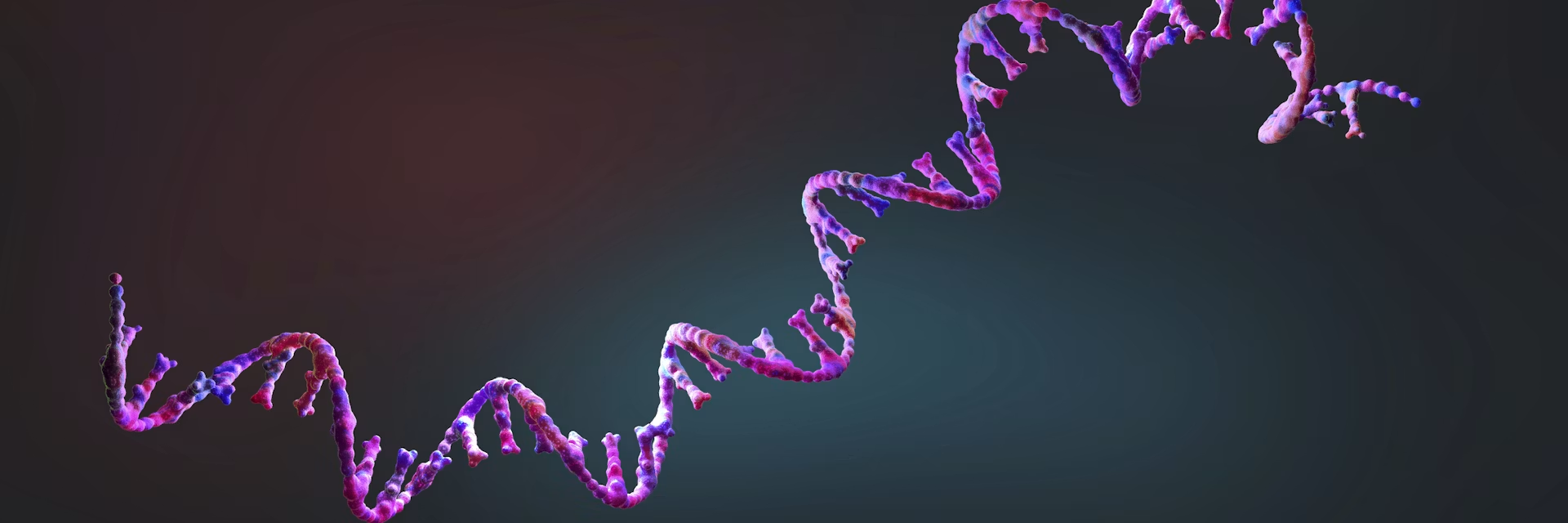
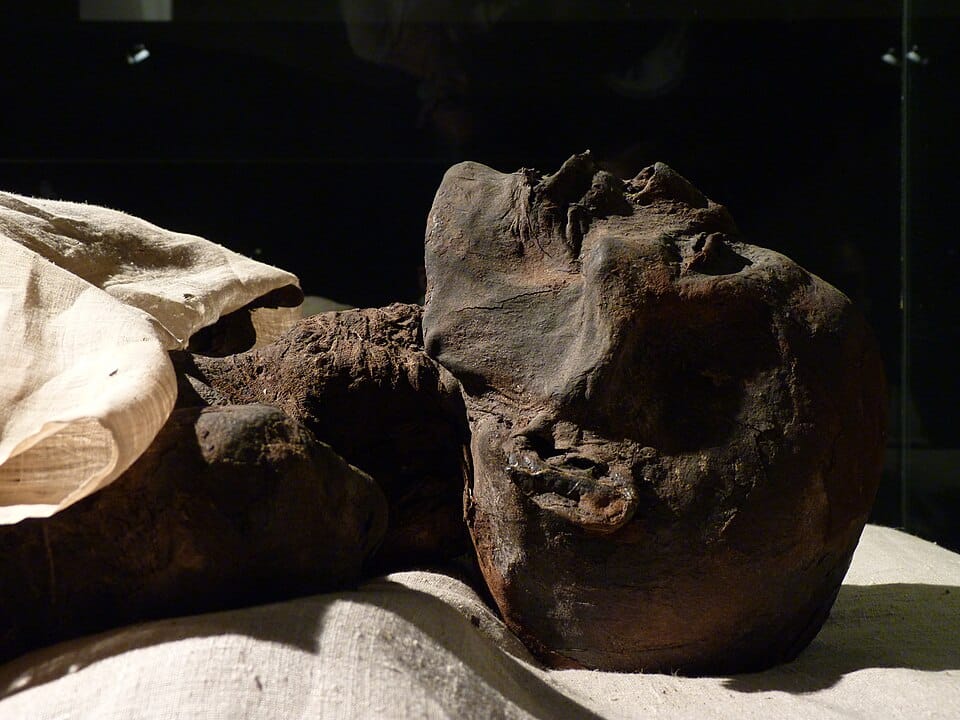
A towering ancient life form that fits no category of organisms might be a new form of multicellular life altogether; fossils of which were first discovered 160 years ago. In the 19th century, these 30-foot (almost 9 meters) tall prehistoric organisms were thought to be rotten trunks of conifers. Others argued that it was a symbiotic mass rather than a single organism.
New research by Corentin Loron, a palaeontologist at Edinburgh University and a co-lead author of the study, which was published in the journal Science Advances last month, suggests that Prototaxites is very different from any modern group. They are made of interwoven tubes, unlike block-like cells found in plants. Recent studies indicate that these organisms might have been more closely related to fungi than to plants, as they didn’t photosynthesize.
The new research focused on three Prototaxites fossils unearthed in the Rhynie chert, a prehistoric land ecosystem near Aberdeen, Scotland. The site was once an ancient hot spring like Yellowstone. The best-preserved examples of the earliest plants, fungi, and fauna that colonized land 400 million years ago during a period known as the early Devonian, are found in Rhynie chert. The well-preserved fossils found here are rich in fossilization products— long-vanished molecules detected through chemical signatures using the right tools.
The Prototaxites found have signatures that provide data on the original composition of the fossils, suggesting that they have undergone relatively little geological alteration. This also means that biomarkers suggestive of what they actually were will also exist. While fungi fossils in the chert contained compounds reminiscent of chitin and glucan breakdown, such biomarkers were not found in Prototaxites. The trend would have held up if they were fungi, as they were found in the same burial regions.
Structural features found in these fossils, such as a complex branching pattern within dark spherical spots in the fossil that could have carried out gaseous or other sorts of exchange, were distinct from fungi, living or extinct. on theae findings, Scientists don’t wish to rush categorizing these organisms because of how distinct their findings are from known organism groups.
Around 25 different species of Prototaxites are known, and they evolved into living monoliths when trees were barely a meter tall. These organisms absorbed carbon from sources in the environment rather than perform photosynthesis, like how fungi live off on decaying matter. Currently discovered fungi and algae are far too young to be compared to Prototaxites. However, some scientists are optimistic about Prototaxites being a lichen-like organism, since this study is based on features of only one species of Prototaxites.
Kevin Boyce, a professor of Earth and planetary sciences at Stanford University, said “People have compared it to specific fungi or algae in the past, and they were doing their best with the information they had at the time, but we now have a much better handle on the overall tree of life and Prototaxites is too old for those comparisons to be valid.”
Loron wants to study how Prototaxites were anchored to the ground, and whether they were upright for their complete lifespan. Follow-up studies on other tubular organisms similar to Prototaxites.
Copyright @smorescience. All rights reserved. Do not copy, cite, publish, or distribute this content without permission.
SUBSCRIBE TO OUR NEWSLETTER
.......... ..........Subscribe to our mailing list to get updates to your email inbox.
Monthly Newsletter