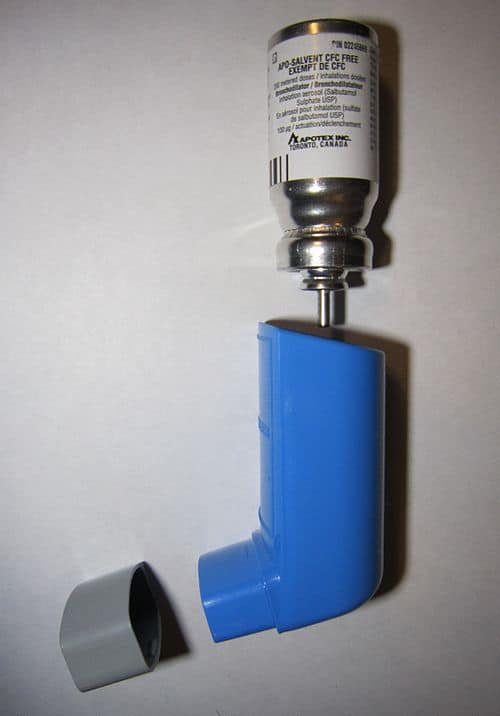
Have you ever seen someone using an inhaler? It’s most commonly used to treat asthma, a childhood disease that makes it difficult for kids to breathe. After decades of research, scientists have uncovered one possible piece in the puzzle that is asthma. The villain? Respiratory syncytial virus (RSV), a common virus that nearly every infant catches. Better yet, we might be able to prevent asthma!
Studies from Europe suggest that 1-in-7 kids develop asthma. There are many types of asthma with many causes, like allergic, non-allergic and even asthma triggered by exercise! During an asthma attack, the windpipe swells up, becoming narrower. It becomes difficult to breathe. Inhalers can treat asthma attacks. They disperse medicines in a way that is breathable. Medicines can help open the throat back up.
The best part? We already have RSV vaccines that could cut childhood asthma rates in half. What was once an unavoidable childhood disease might soon become preventable, one shot at a time.
How does RSV cause allergic asthma?
To understand allergic asthma, start with allergies. An allergy happens when your immune system mistakenly treats something harmless like pollen, dust mites or pet dander as a dangerous invader and launches an attack. In allergic asthma, this overreaction swells up and narrows the airways, making breathing difficult
For years, scientists noticed two puzzling clues. First, asthma runs in families, but not always. Kids with asthmatic parents don’t automatically develop asthma. Mothers can pass immune responses to their newborns, but these normally remain harmless.
Second, infants hospitalized with severe RSV often develop asthma later, but again, not always. The breakthrough? It’s the combination that matters. When a child has an allergic mother AND catches severe RSV as an infant, asthma becomes highly likely.
This finding is groundbreaking because it explains a long-observed mystery: why some children develop asthma while others don’t, even with similar patterns of parents and RSV infections. The important step is both happening together.
How did researchers discover this link?
Belgian researchers from the Flemish Institute for Biotechnology (VIB) and Ghent University teamed up to better understand allergic asthma. They used two approaches: published data and mouse models.
They first analyzed a large national health registry to identify patterns in real patients. Researchers tracked infants hospitalized for severe RSV infections and saw whether they later developed asthma. They also considered their parents’ allergy status.
Researchers then recreated this scenario in the laboratory using newborn mice. First, mothers were infected with a mouse version of RSV. Some mothers already had allergies, and some mice mothers didn’t. Infected mouse babies were then exposed to the same allergens. Babies whose mothers also had allergies developed asthma.
Why does this matter?
“Childhood asthma is a complex disease with many contributing factors,” explains researcher Bart Lambrecht to Science Daily (VIB-UGent Center for Inflammation Research) “We found that early-life RSV infection and genetic allergy risk interact in a very specific way that pushes the immune system toward asthma. The encouraging news is that this process can be prevented.”
New vaccines for RSV exist for both mothers and children. There’s an unprecedented opportunity to reduce the asthma burden in the next generation. Scientists plan to understand how these vaccines can work to reduce asthma, and see whether symptoms can be minimized in children who have already developed asthma.
References
On asthma attacks:https://www.youtube.com/watch?v=fNxVOc-Pxzs
How does asthma work: https://www.youtube.com/watch?v=PzfLDi-sL3w
How to help someone suffering from an asthma attack: https://www.youtube.com/watch?v=hdVKpUR513M
Copyright @smorescience. All rights reserved. Do not copy, cite, publish, or distribute this content without permission.
SUBSCRIBE TO OUR NEWSLETTER
.......... ..........Subscribe to our mailing list to get updates to your email inbox.
Monthly Newsletter