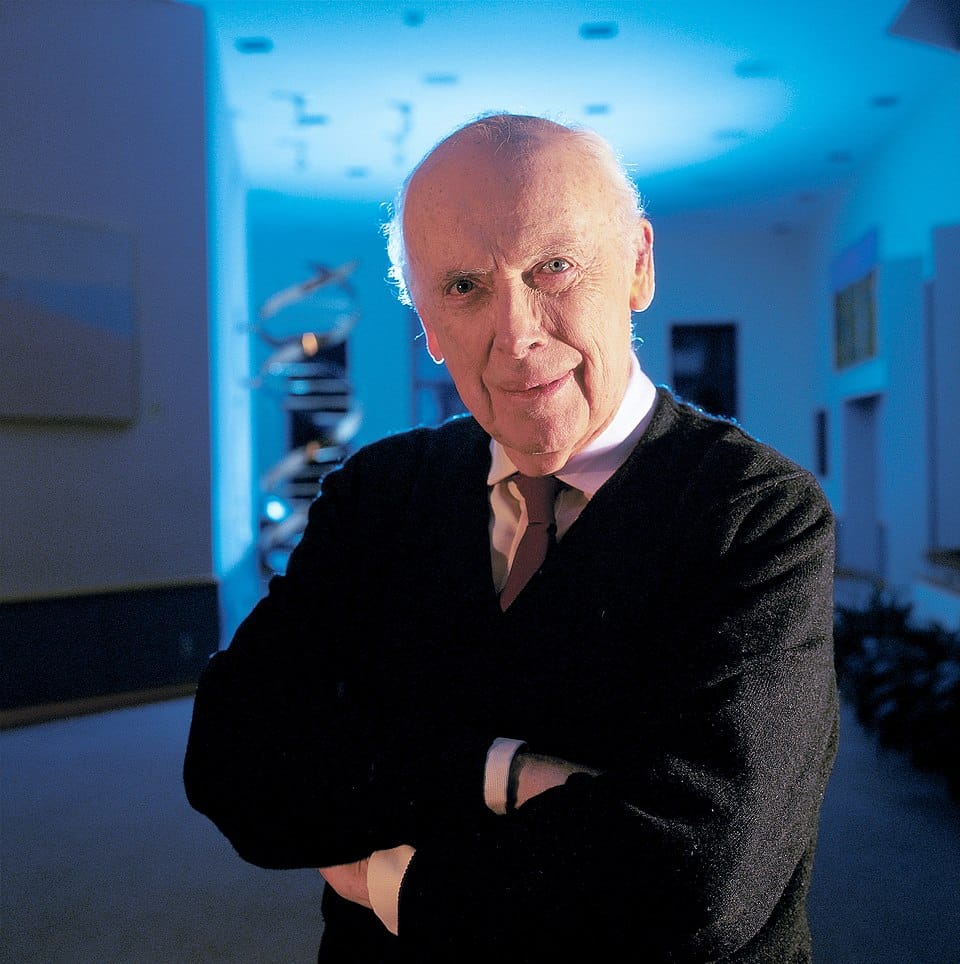
James Watson, a forerunner in divining the DNA double helix, passed away at the age of 97. His findings are the foundation of the Human Genome Project.
Without the structure of DNA, we would never have been able to decode the human genome or develop monoclonal antibodies. Francis Crick and James Watson brought their groundbreaking research into the spotlight in a 1953 paper published in Nature.
However, the coveted discovery was laced with controversy. Rosalind Franklin was an expert X-ray crystallographer who worked with Maurice Wilkins. Franklin’s X-ray image of DNA, which is also known as Photograph 51, was the holy grail for many. The tragedy is that Franklin, being a chemist at heart rather than a biologist, didn’t recognise the treasure trove she sat upon. Wilkins, on the other hand, was friends with Watson and Crick and provided them with Photograph 51 without Franklin’s permission. What Rosalind didn’t find much value in was lucrative for John Watson, as he knew that the structure of DNA was a double helix from the X-ray image.
This discovery earned Wilkins, Watson, and Crick a Nobel Prize in physiology or medicine. Since Franklin died 4 years before the awards were given, she wasn’t eligible, as the Nobel Prize is not awarded posthumously.
In the aftermath of the discovery, Watson showed immense ingratitude towards Franklin, being unkind and dismissing her role. In his book regarding the discovery of the double helix, he commented on Franklin’s appearance and wrote, “The thought could not be avoided that the best home for a feminist was in another person’s lab.”
Although this side is one of the infamous entries in his long list of unjust remarks, he has also guided and inspired female colleagues and scientists to pursue research. Nancy Hopkins, currently a vocal advocate of women in science, was persuaded to pursue her Ph.D. in an era when only a handful of women chose to build careers in science. In the 1950s and 60s, he also nurtured the careers of several women. He also spearheaded and funded the sequencing of the human genome, a feat considered unattainable at the time due to scientific constraints and ethical concerns.
In 2007, he abandoned a book tour. This time, he asserted that people of color (he referred to Black people for the most part) were less intelligent than White people. His remarks led to him being stripped of positions he held at Cold Springs Harbor Laboratory, and ultimately, in 2020, they severed ties with him. His justification of anti-Semitism sparked severe backlash in 2007.
Although his best work is the book on the double helix, one of his notable works is “The Molecular Biology of the Gene”, a visionary book in the world of genetics that combined simple language with scientific jargon.
A hero in the world of genetics, his racist and sexist comments tarnished his image in the scientific community. His comments eventually caught up with him, as he became the first living Nobel laureate to sell his gold medal in 2014, feeling ostracized by the scientific community for his remarks. However, in the years to come, people will remember his contribution to science over his misplaced comments. He was the Macbeth of science, a tragic hero.